The Fish Tank
Diesel-Electric Stealth
The Shark of Wall Street · Chapter
Forty-Five Feet Down // Hudson River
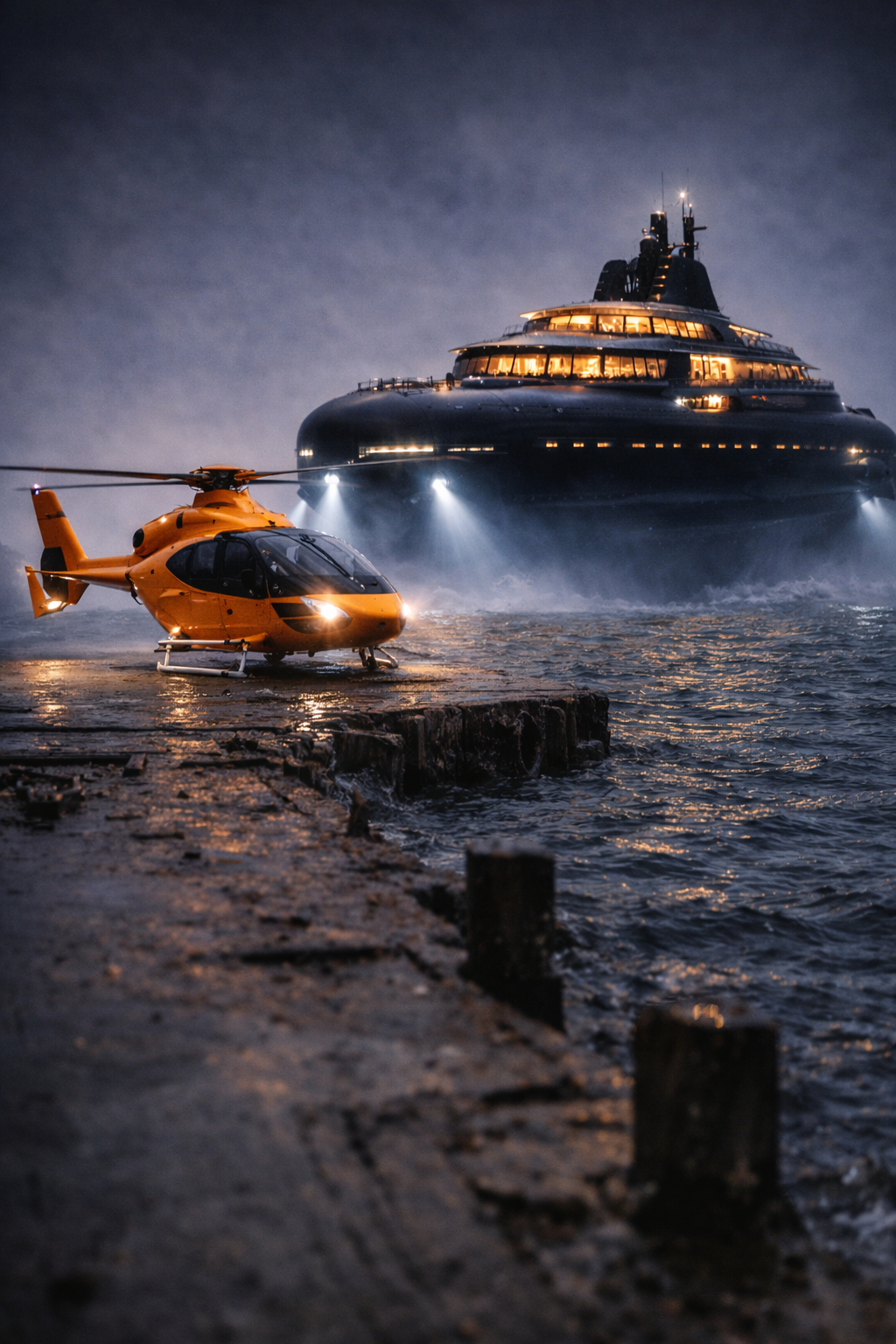
The cartel owned the streets of Manhattan. They owned the judges, the police precincts, and the docks. But they did not own the dark.
As Mia Sheng's Helicopter, after extracting Marcus Thorne, touched down on an abandoned, flooded pier in Brooklyn, the water beside them began to boil. Rising from the freezing depths of the Hudson River like a mechanical leviathan was The Fish Tank—a 120-foot, custom-built diesel-electric stealth submarine. Covered in sonar-absorbing anechoic tiles, it was a billionaire’s underwater fortress.
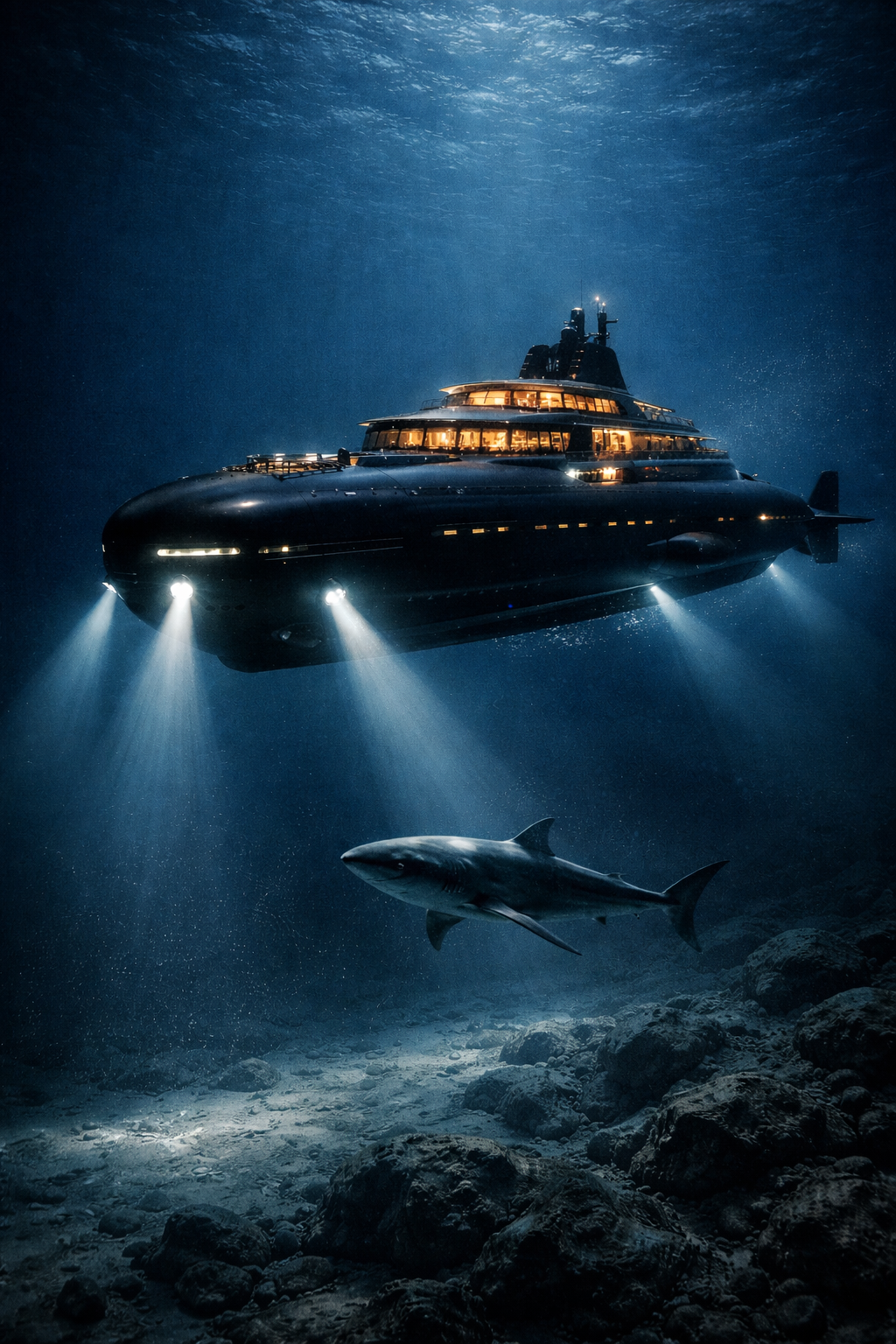
The heavy steel hatch opened, and the crew scrambled inside. The moment the hatch sealed shut, locking out the freezing rain and the threat of Reyes's hit squads, the submarine sank silently back into the pitch-black silt, forty-five feet below the city skyline.
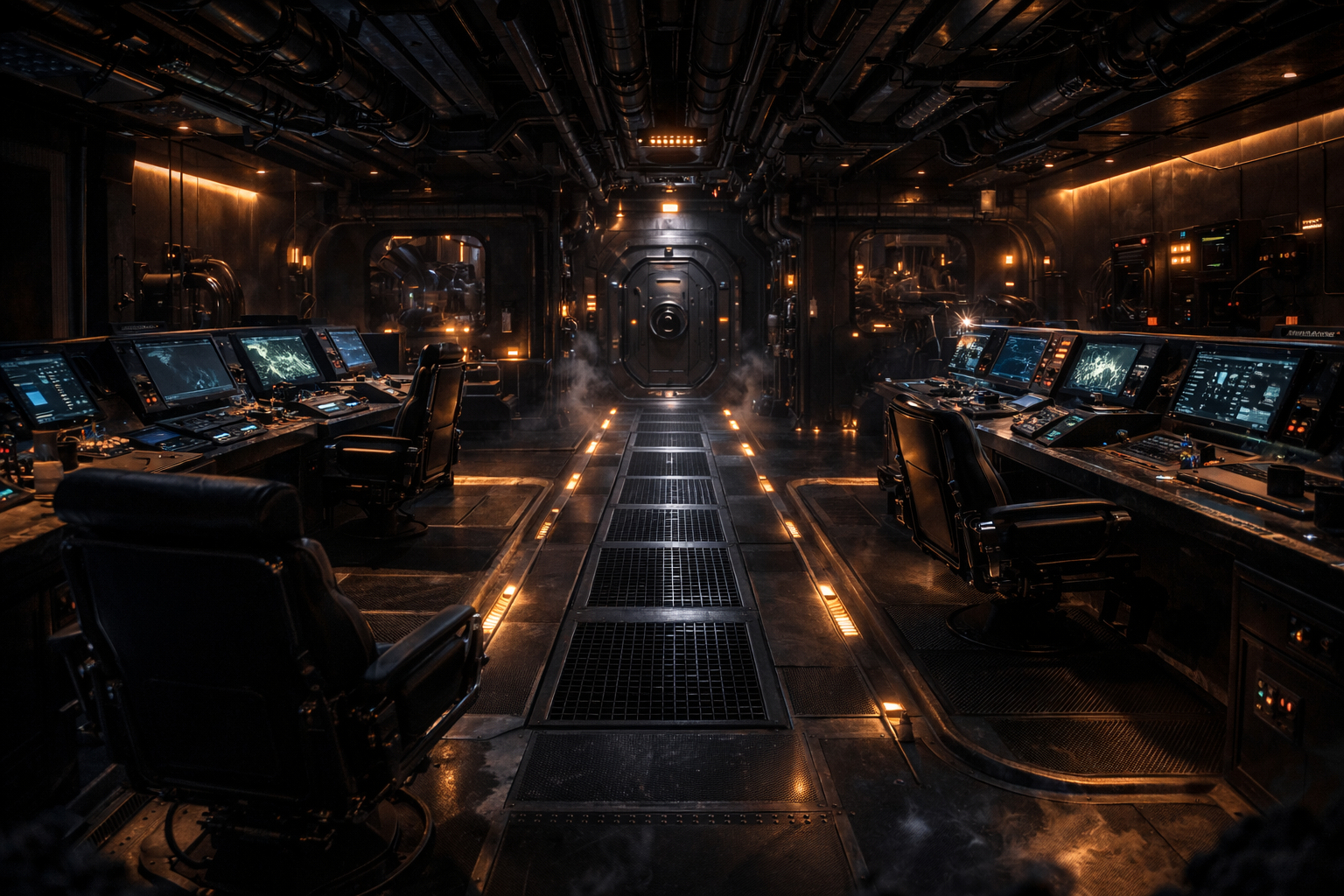
Inside, it didn't look like a military vessel. It was a masterpiece of luxury paranoia—matte black bulkheads, soft amber lighting, and the low, comforting hum of the engines.
In the primary command center, The Shark stood at the head of a massive, polished mahogany table with embedded tactical displays. He wasn't celebrating. He was surrounded by his Deep Water tech operatives, men who operated the submarine's most lethal weapon: its direct physical splice into the transatlantic fiber-optic cables buried in the riverbed.
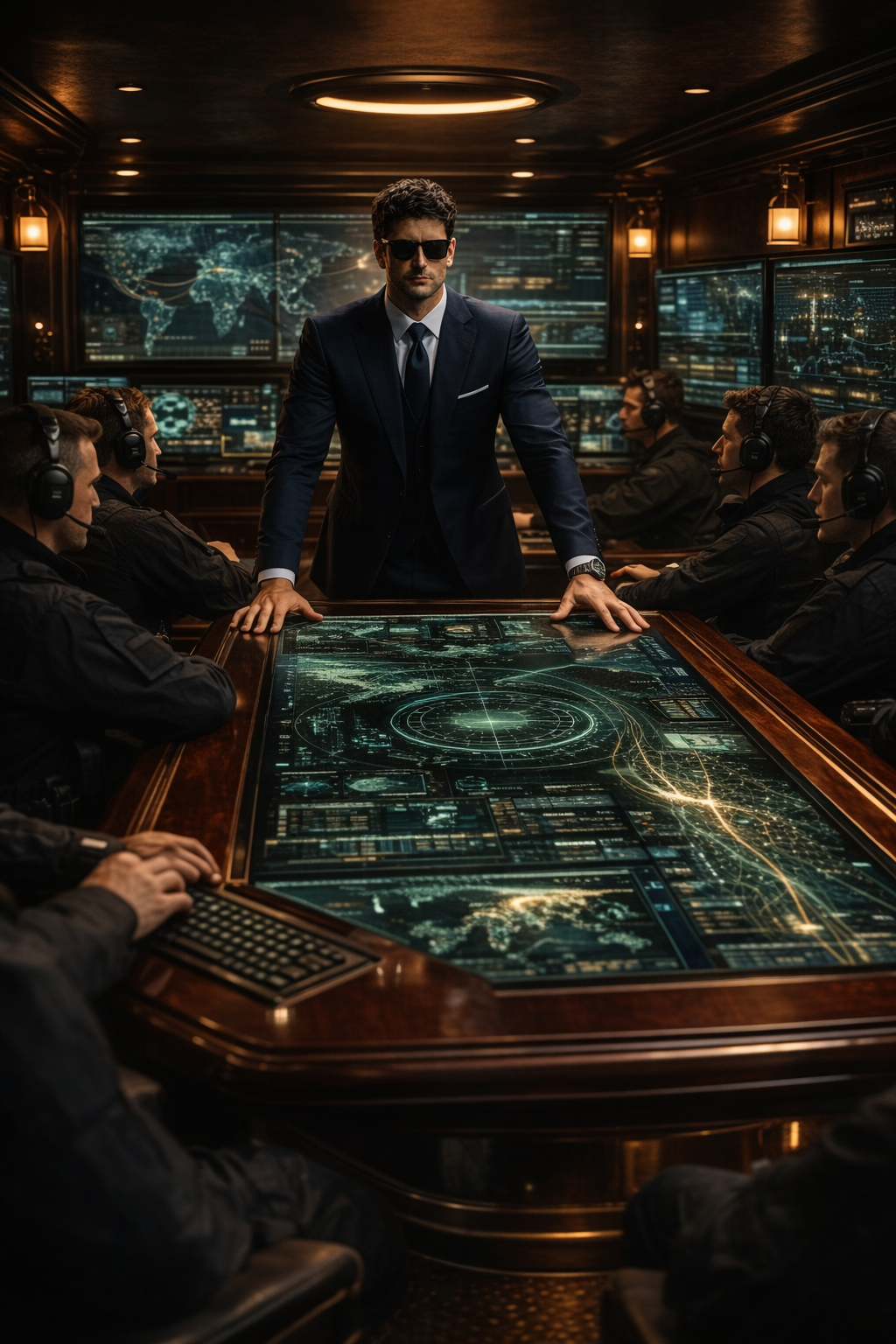
They were reviewing the routing numbers. Three billion dollars had been successfully drained from Obsidian Capital, washed through Harper's phantom art auction, and secured in offshore accounts. They had pulled off the impossible. But the adrenaline of the heist was already beginning to curdle into the claustrophobic reality of their situation.
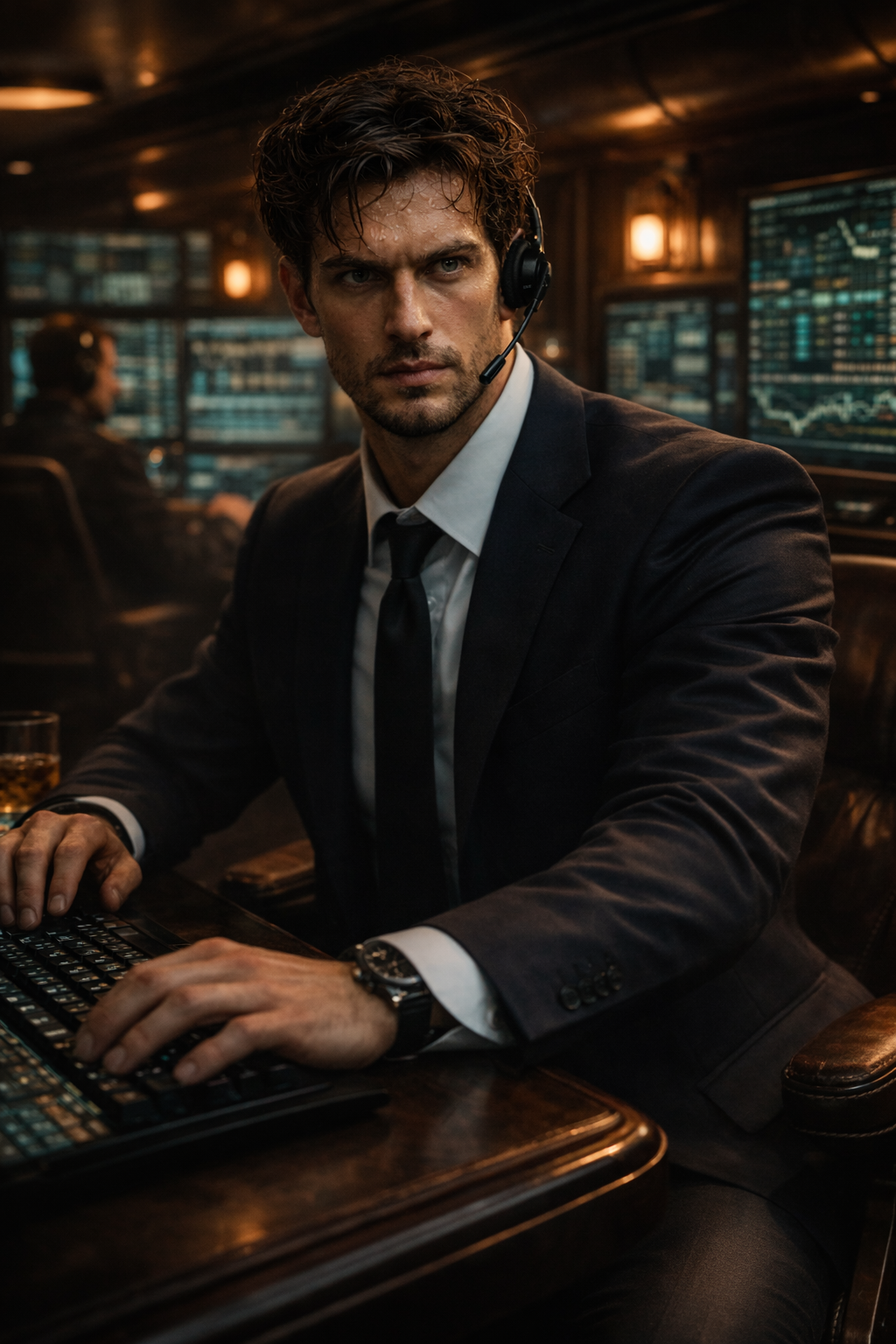
Sting Ray, The Shark’s lead quantitative analyst, looked up from his glowing terminal. "It just hit the wire, boss. The regional conflict just went hot. The algorithmic trading bots on Wall Street are already triggering massive sell-offs. The S&P futures are down four percent in ten minutes."

Marcus Thorne, shivering in a dry towel near the door, slowly walked toward the command table. The sheer trauma of his near-execution at the docks was temporarily overridden by the logistics puzzle appearing on the screens. War was terrible for humanity, but it was the ultimate catalyst for the supply chain.
"The public watches the explosions," The Shark murmured, his voice dead calm in the amber light. "We watch the liquidity. Gentlemen, we just acquired three billion dollars in liquid capital. The market is bleeding. Where are we deploying it?"
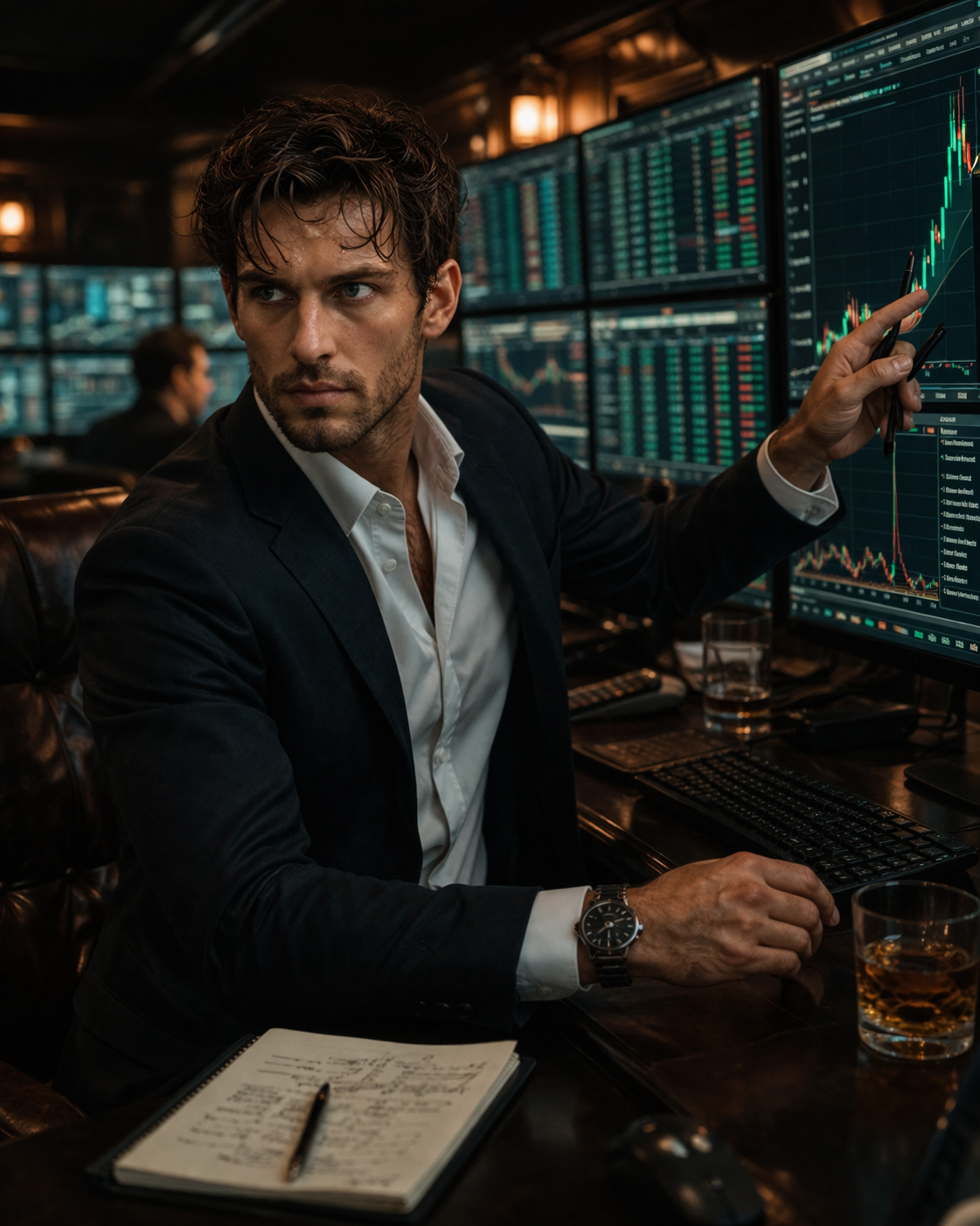
"Energy is the obvious play," Sting Ray said, pulling up a chart that showed a massive, violent green spike. "If Iran mines the Strait of Hormuz, twenty percent of the world's global oil supply is choked off instantly. Brent Crude futures just jumped nine dollars a barrel. We should take heavy long positions on domestic shale producers in Texas and the Dakotas. They'll have a monopoly within the week."
"Too obvious," Marcus croaked, his voice hoarse from the freezing rain. He stepped up to the table, pushing his wet hair out of his eyes, and tapped the digital map of the Middle East. "Every retail investor, hedge fund manager, and day trader with a pulse is buying oil futures and Lockheed Martin stock right now. The defense contractors are already priced in. You don't buy the missiles, Shark. You buy the choke points."
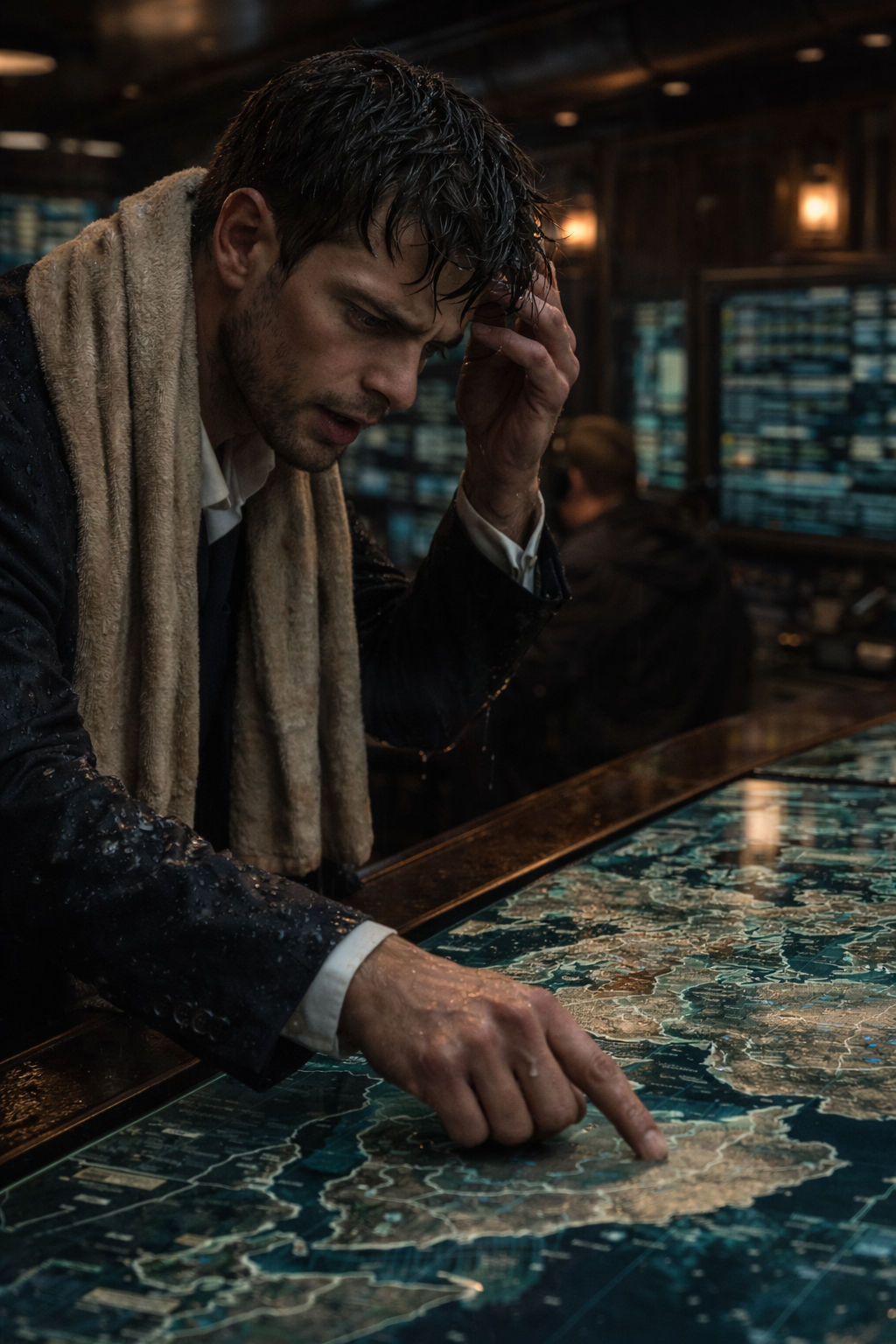
The Shark looked at Marcus, a glimmer of respect in his cold eyes. He leaned over the glowing table. "Explain, Architect."
"Look at the maritime transit lanes," Marcus said, his hands moving rapidly over the touchscreen, highlighting a narrow strip of water connecting the Red Sea to the Gulf of Aden. "The Bab-el-Mandeb strait. If the conflict escalates, commercial shipping insurers like Lloyd's of London will declare the entire Red Sea a war zone. They will refuse to cover massive freight carriers passing through the Suez Canal."
Sting Ray frowned, running the calculations in his head. "So they reroute."
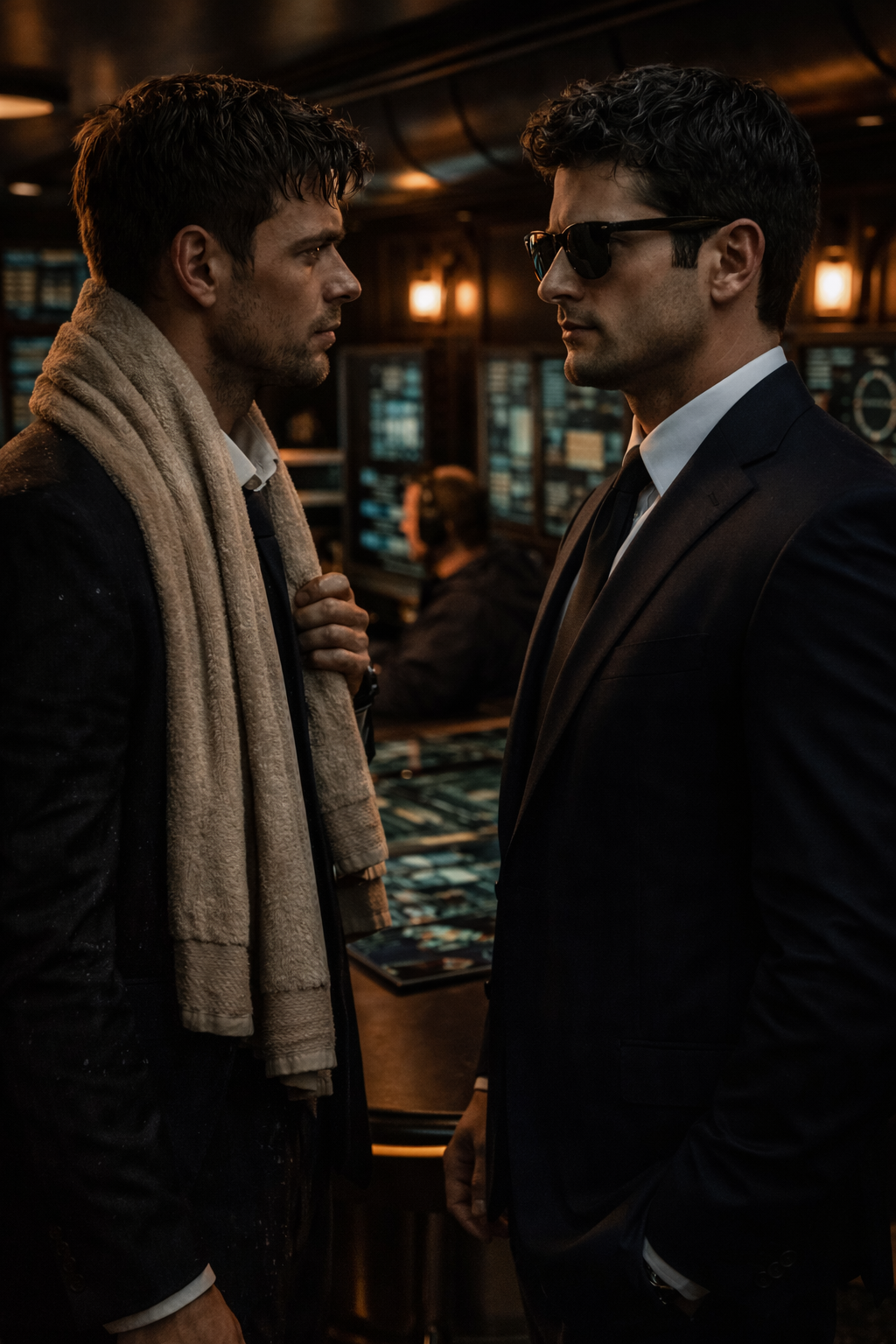
"Exactly. They reroute all global freight around the Cape of Good Hope, the southern tip of Africa," Marcus explained, the color finally returning to his face as the math took over his panic. "That adds fourteen to twenty days of transit time per ship. It burns millions of dollars in extra bunker fuel. European manufacturing runs on 'just-in-time' logistics. They don't warehouse parts anymore. If a shipment of semiconductor chips from Taiwan is delayed by three weeks, German automakers will have to shut down their assembly lines in exactly ten days."
The Shark smiled. It was a terrifying, razor-sharp expression. "So we buy out-of-the-money put options against the German industrial index. We short the European manufacturers who can't afford the delay."
"Yes," Marcus nodded. "And we use the cartel's three billion to quietly buy up the secondary maritime insurance firms. When the major insurers pull out, the shipping conglomerates will be desperate for coverage at any price. We don't bet on the war; we bet on the logistical panic."
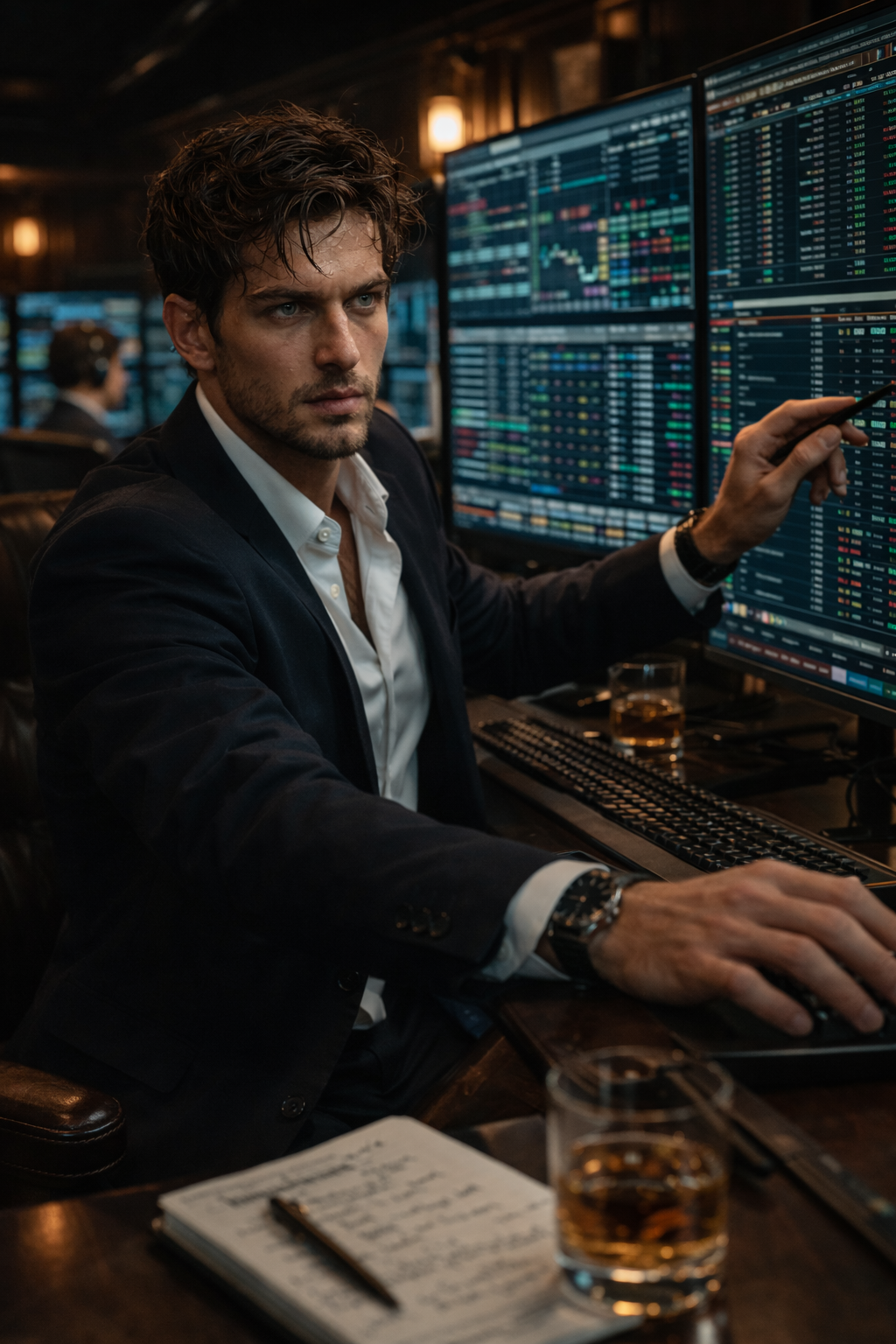
"We can go deeper," Sting Ray interjected, pulling up a new set of data streams. "If oil spikes, inflation spikes. That means the Federal Reserve can't cut interest rates to save the stock market. Emerging markets—countries like Turkey, Argentina, and Egypt—rely heavily on imported oil, and their national debt is denominated in US dollars."
"The Dollar Smile," The Shark noted.
"Exactly," Sting Ray confirmed. "As the US Dollar spikes in value due to the 'flight to safety,' those emerging countries suddenly have to pay twice as much for their oil, and their national debt becomes twice as expensive to service. They will default. I recommend buying Credit Default Swaps (CDS) against emerging market sovereign bonds."
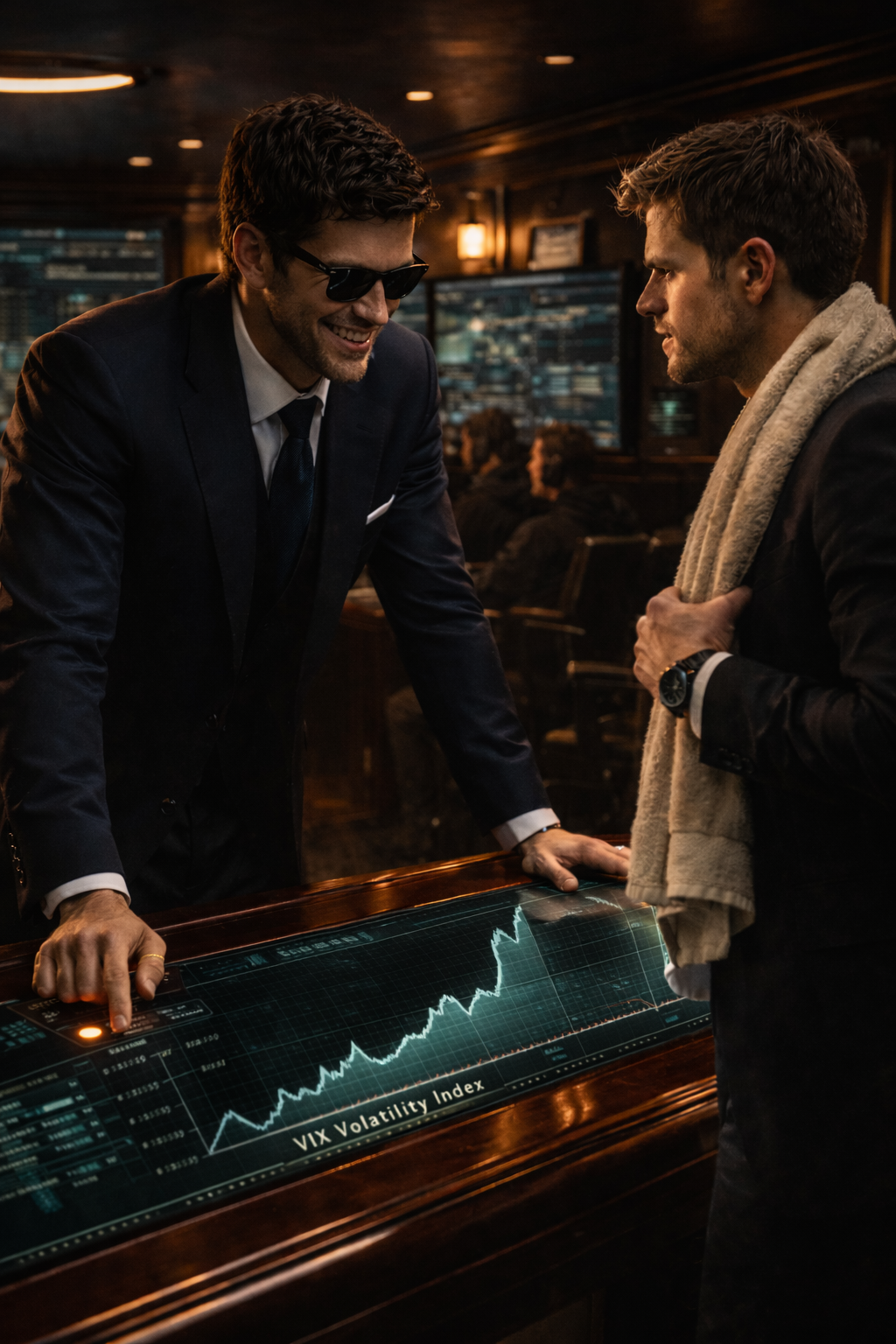
The Shark pressed a button on the console, bringing up a chart that looked like a jagged mountain range spiking straight upward. "This is the VIX. The Volatility Index. Wall Street’s 'Fear Gauge.'"
"When a war breaks out," The Shark explained, his voice echoing in the pressurized hull, "retail investors—the average citizens with 401ks—panic. They watch the news, they get terrified, and they sell their pristine, blue-chip stocks at a massive loss just to hold cash. The algorithms see the panic and accelerate the sell-off. The market crashes. Traditional banks freeze their lending because the geopolitical risk is too high."
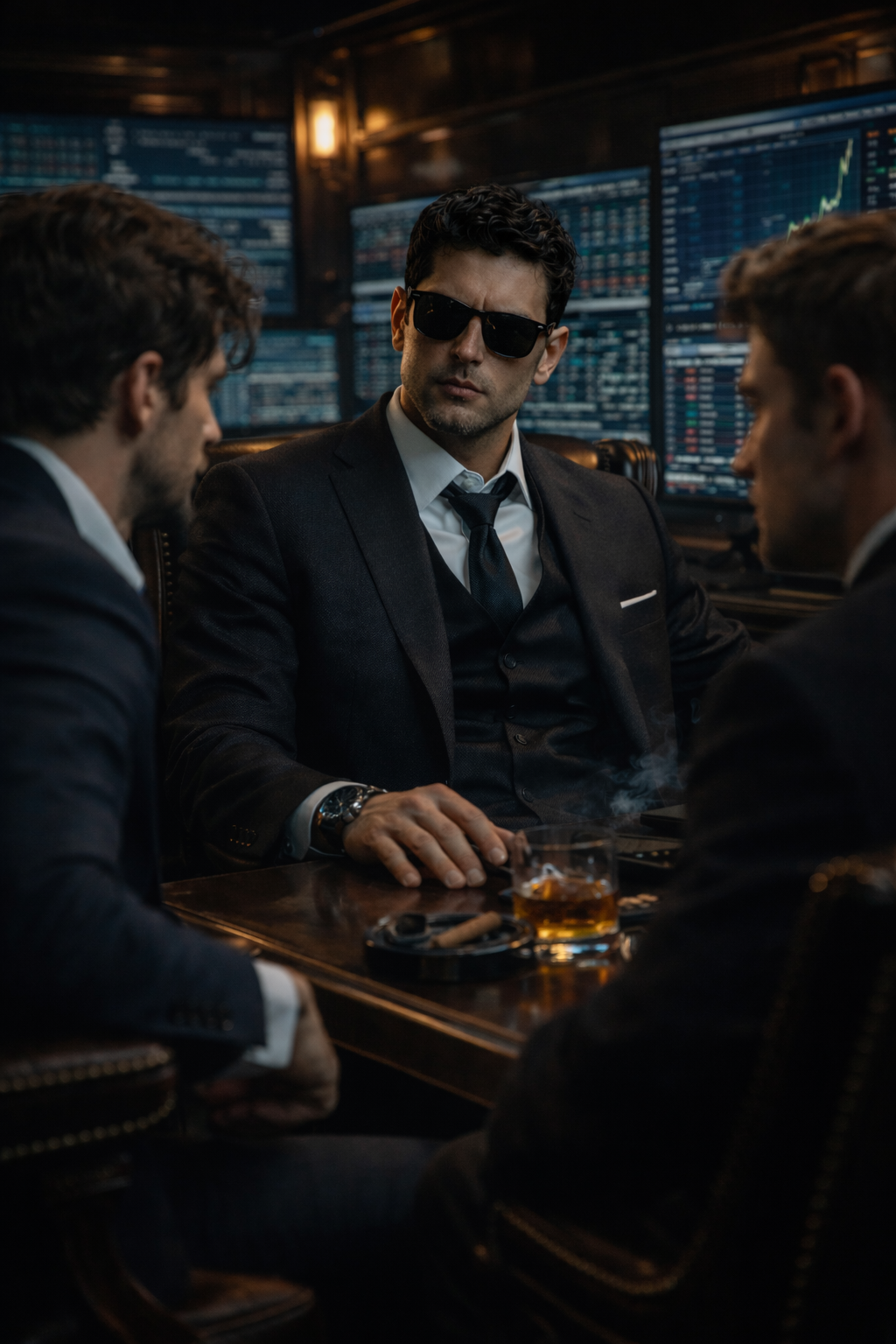
The Shark looked between the two men. "That is where we step in. War creates a vacuum of capital. When legitimate banks pull back out of fear, shadow banks like ours become the only source of liquidity on the planet. We will short the market on the way down, riding the VIX. Then, at the absolute bottom of the panic, we use the three billion dollars Harper just washed to buy up distressed corporate assets—real estate, tech firms, shipping fleets—at thirty cents on the dollar."
Sting Ray swallowed hard, the sheer scale of the operation making him sweat. "And the government sanctions? Half the globe is about to be blacklisted by the US Treasury."
"Sanctions are just a tax on doing business," The Shark replied coldly, turning his back on the screens. "When the US sanctions foreign entities, billions of dollars get trapped overseas. Oligarchs, foreign funds, even legitimate corporations suddenly can't access their money. We will offer our Dark Pool services to move that trapped capital, charging a forty percent premium for the risk. Tonight, we didn't just rob an international cartel. We capitalized a war chest."
The Shark looked at Sting Ray. "Execute the trades. All of them."
In the dimly lit auxiliary bay, the noise of the command center faded away.
Marcus Thorne stood leaning heavily against the communications console, staring blankly out the reinforced glass viewport into the murky, swirling water of the Hudson. He was soaked, shivering, and entirely traumatized. Less than twenty minutes ago, he had been waiting for a bullet to the back of the head on a rusted crane.

Footsteps echoed softly on the grated steel deck. Harper Hayes walked into the bay. She had kicked off her heels, walking barefoot, holding a crystal tumbler of whiskey. Her glamorous socialite armor was completely gone, leaving only the raw, shaken woman beneath the black silk dress.
She walked up behind him, stepping into his space. She didn't speak. She just wrapped one arm around his waist and rested her head against his shoulder, closing her eyes as she listened to the ragged, uneven rhythm of his breathing.
Marcus leaned his head back against hers. For a long, agonizing minute, they just stood there in the dark. They had survived. She had burned down a bank to buy his life, and he had jumped out of the sky to get back to her.

But the terrible, unspoken truth from their fight on the rooftop still hung in the air between them. Harper could feel the crushing weight of his trauma pressing down on her. He needed quiet. He needed absolute peace and safety. And Harper, vibrating with the manic, terrifying energy of the heist, knew she couldn't give it to him. She was a woman made of fire; she didn't know how to be still.
She took a shaky breath, pressed a soft kiss to his damp shoulder, and gently pulled away. "Get some sleep, Architect," she whispered.
She turned and walked out of the bay, leaving him to the quiet he so desperately needed.

Harper walked back into the main corridor, her bare feet cold against the steel. The adrenaline she had been suppressing to comfort Marcus suddenly roared back to life. She felt like she was crawling out of her skin. She needed friction. She needed danger to remind her she was alive.
She walked toward the command center, intending to throw herself at The Shark, to play her toxic, flirtatious games and force a reaction out of the ice-cold mastermind.
But she never made it to the mahogany table.
Sitting alone in the shadows of the navigation alcove was Mia Sheng.
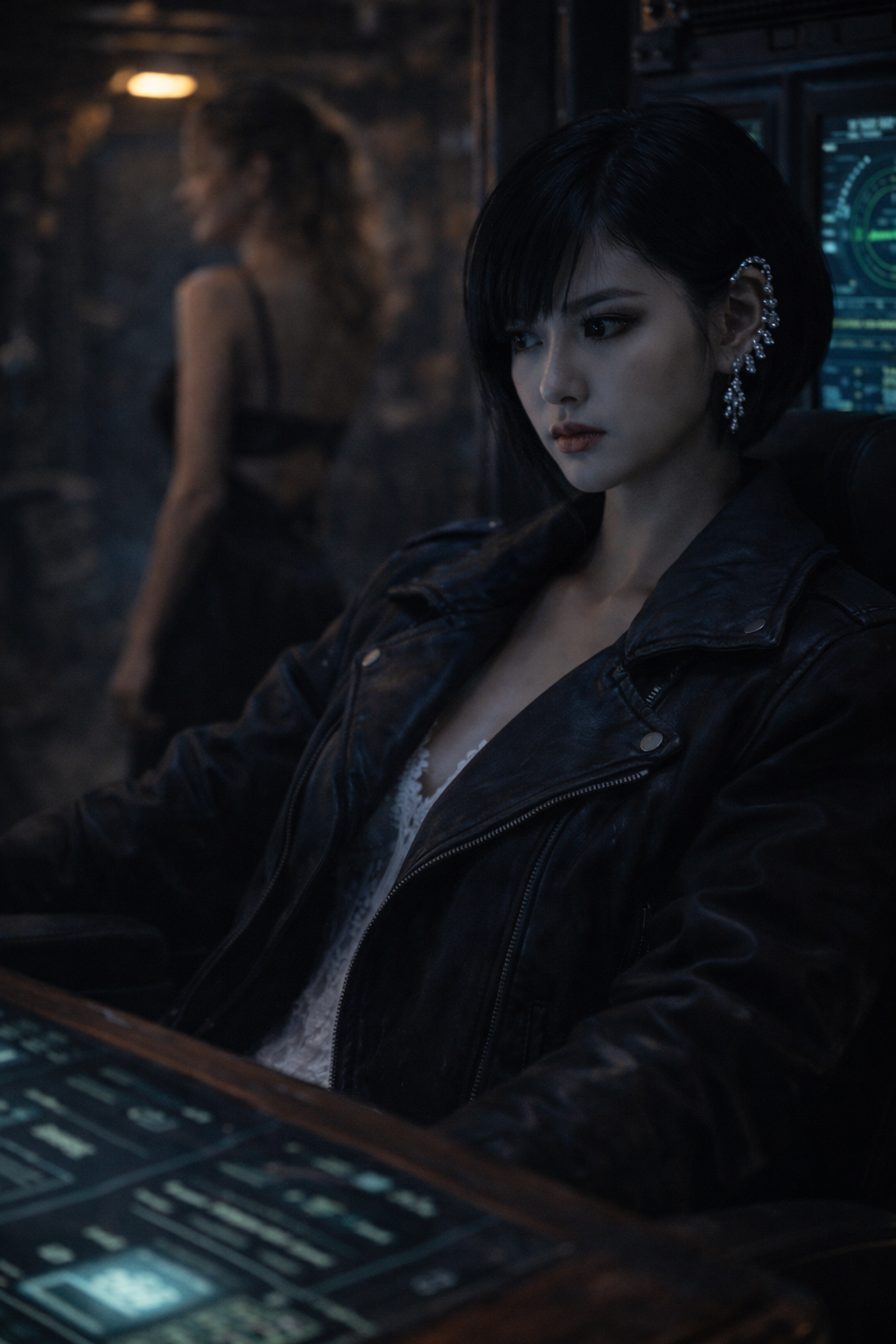
Mia hadn't changed out of her extraction gear. She was still wearing the ruined, soaked white lace of her Met Gala gown, the heavy black leather aviator jacket hanging off her shoulders. She sat completely motionless in the pilot’s chair, the soft blue light of the sonar screens casting sharp, devastating shadows across her high cheekbones.
To the rest of the crew, Mia was a machine—a stoic, flawless Valkyrie who only spoke when necessary. But as Mia watched Harper pace down the corridor, a tight, agonizing knot twisted in her chest. Mia didn't just admire Harper’s chaos. She craved it.
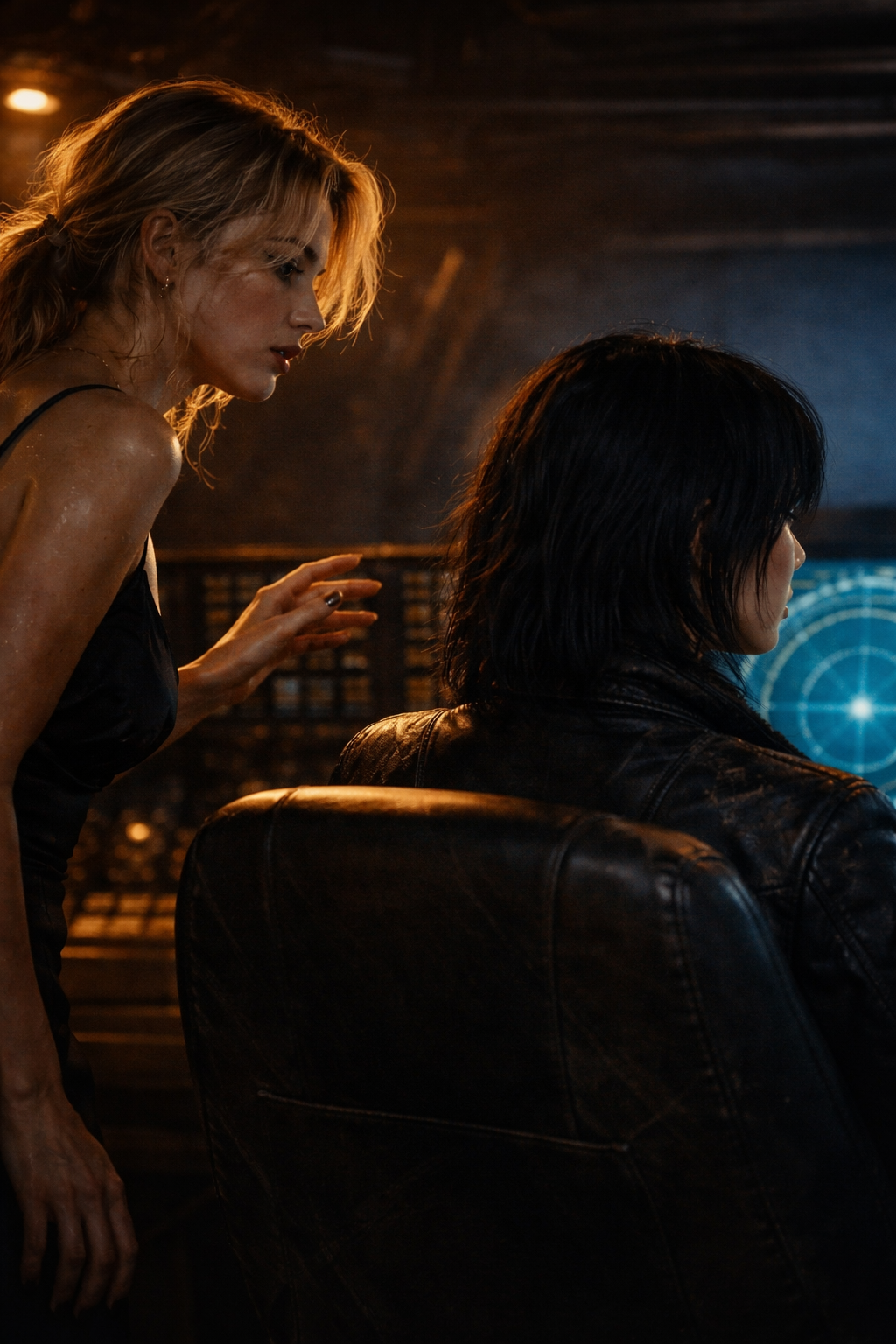
Harper stopped. She felt the sudden, crushing weight of Mia's gaze. It wasn't the cold indifference of The Shark, and it wasn't the desperate need of Marcus. It was raw, unadulterated hunger.

Harper’s lips curved into a dangerous, manic smile. She walked slowly into the alcove, invading Mia's space, leaning over the console. The scent of Macallan whiskey, rain, and expensive perfume washed over the pilot.

"You fly like an absolute demon, Sheng," Harper whispered, her voice a husky, deliberate purr. She reached out, her manicured fingers lightly tracing the wet, torn lace at the collar of Mia’s gown. "Did you ruin this beautiful dress just for me?"

Harper expected Mia to blink. She expected the stoic pilot to look away, flustered by the provocation.

Mia didn't look away.

With terrifying speed, Mia’s hand shot up, her leather-clad fingers wrapping firmly around Harper’s wrist. She didn't hurt her, but the grip was absolute, unyielding iron. Mia stood up from the console, her taller frame backing Harper up until the art dealer's spine hit the cold steel bulkhead of the submarine.
Harper gasped, the whiskey sloshing in her glass, her eyes flying wide open.
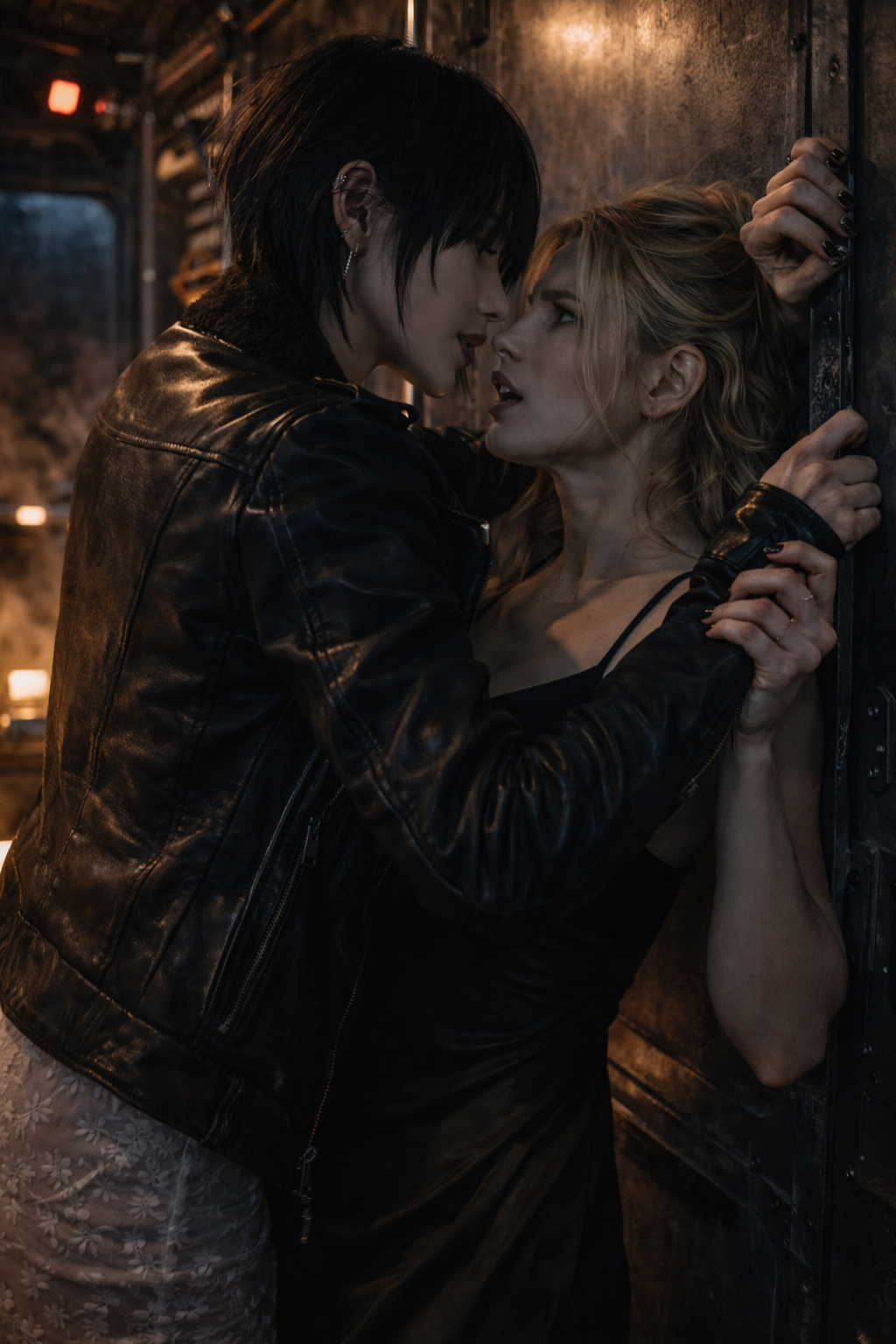
Mia stepped flush against her. The cold, wet leather of the aviator jacket pressed against the thin silk of Harper's dress. Mia leaned down, her dark, intense eyes locking onto Harper’s wide, breathless stare.
"You use seduction like a shield, Curator," Mia murmured, her voice a low, vibrating hum that sent a shockwave straight down Harper's spine. "You throw yourself at men who won't catch you, just to bleed off the adrenaline. But you're playing the wrong game right now."
Harper's heart hammered frantically. For the first time all night, the Crisis Architect had completely lost control of the narrative. "Mia—"
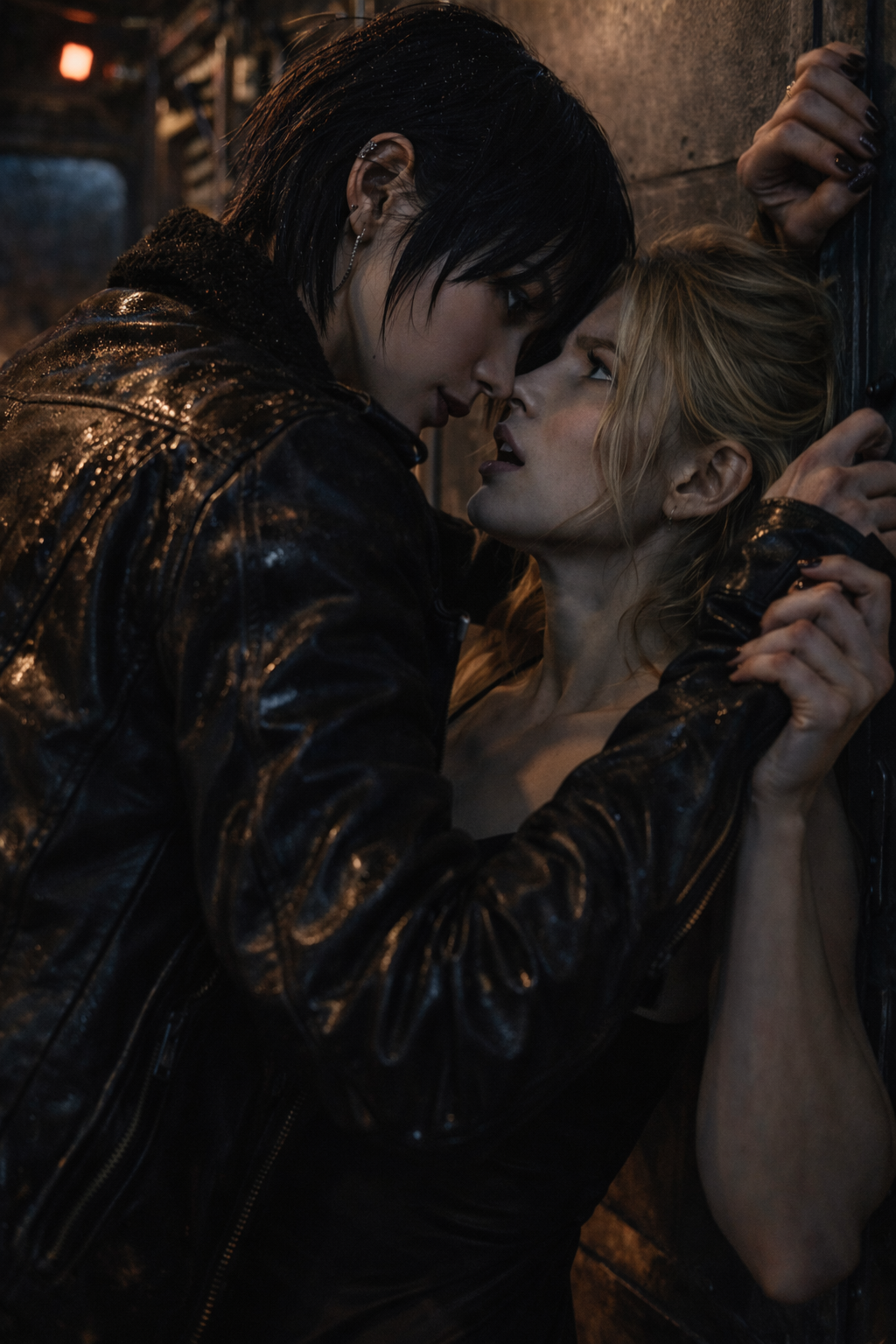
"You want friction?" Mia interrupted, her gaze dropping to Harper's lips before snapping back up to her eyes, the raw intensity in her expression stripping away every defense Harper had left. "You want someone to handle the fire so you don't burn yourself alive? Stop performing for them. Look at me."
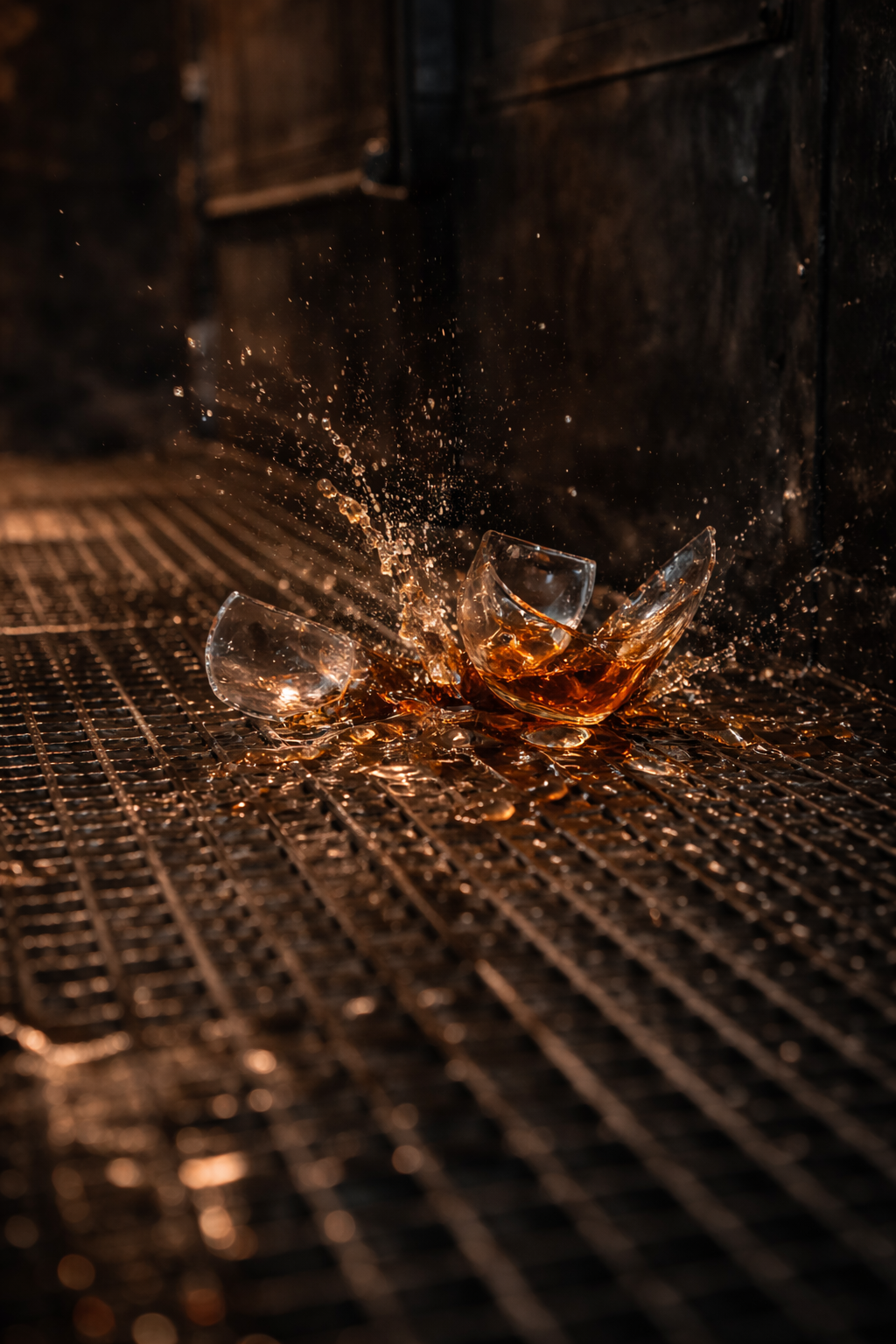
Harper stared up at the Valkyrie, the manic energy completely evaporating, replaced by a sudden, consuming heat. She didn't pull her wrist away. Instead, her breath hitched, and the glass of whiskey slowly slipped from her fingers, shattering on the steel deck below as the submarine drifted deeper into the dark.
The Submarine Toolkit