The Mayor
Modern Political Noir · Controlled Presence
Outerwear
Timepiece
The Shark of Wall Street · Dossier
Inauguration Night — January 1, 2026 — The Metropolitan Museum of Art
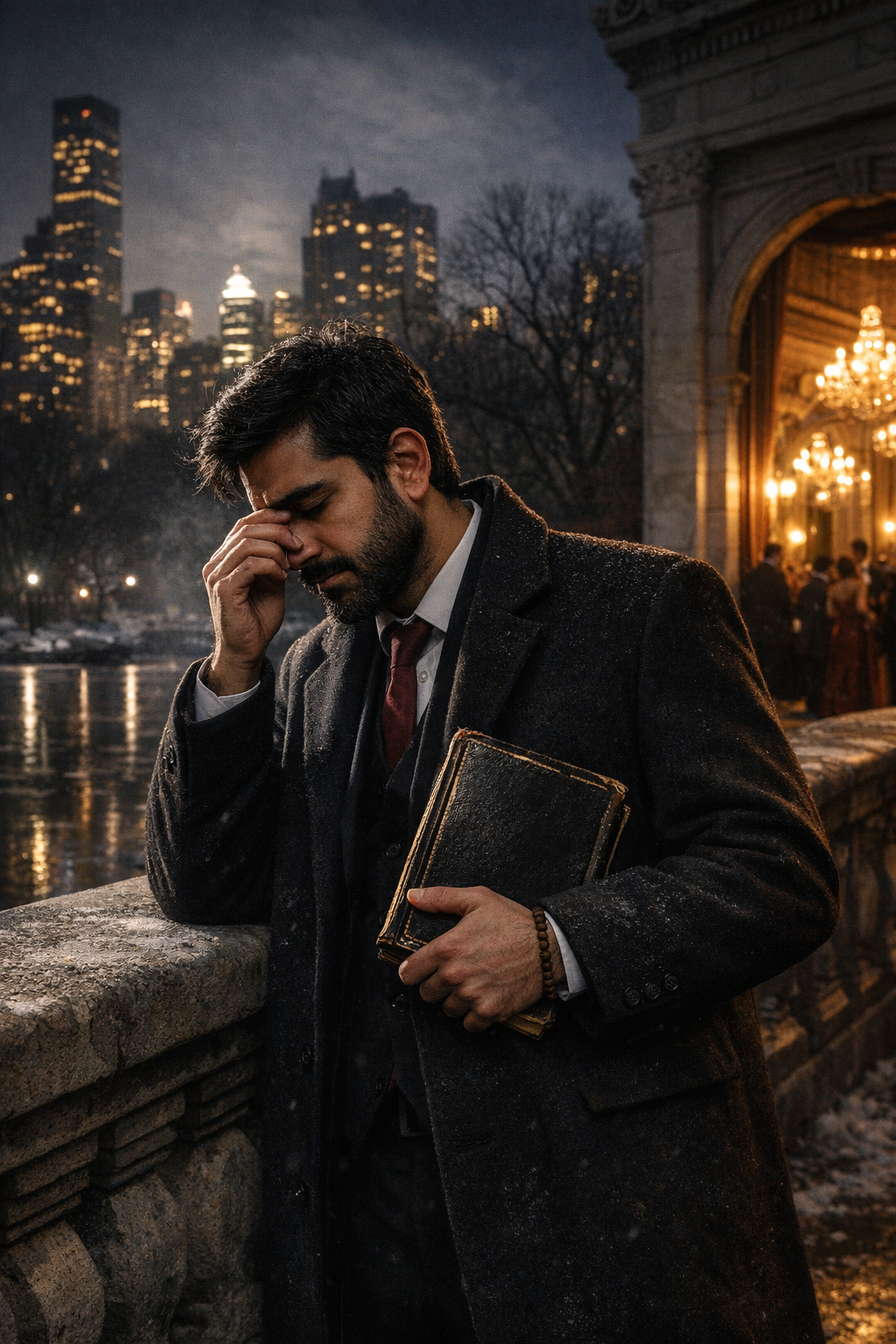
The man who owns the grid. Bespoke suits, no tuxedos — a deliberate rejection of ceremony. His presence is a suffocating weight, and every elected official in the city knows what he wants before he speaks.
Read his dossier →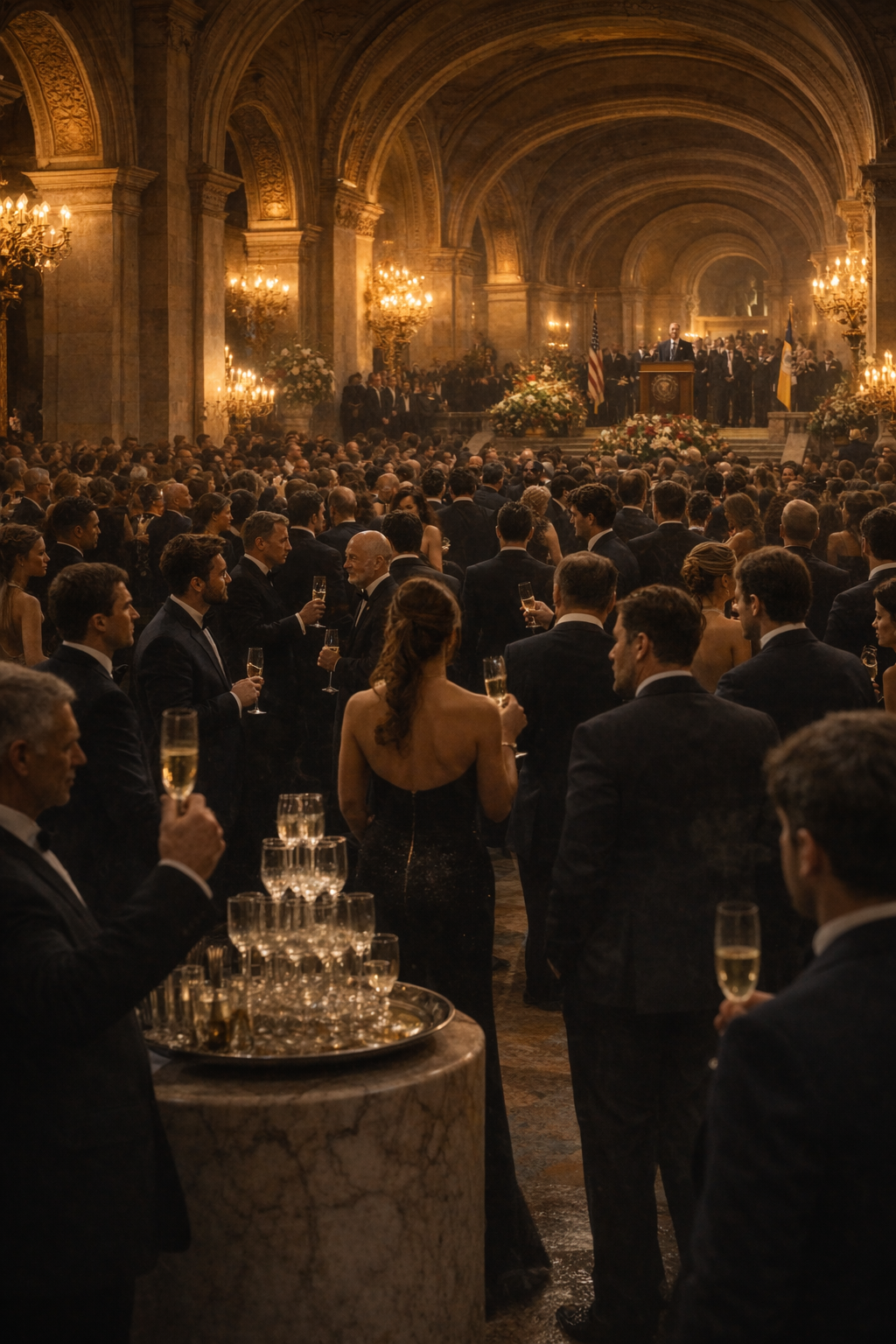
The inauguration was a victory, but the gala felt like a hostage negotiation. Under the vaulted, illuminated ceilings of the Metropolitan Museum of Art, three thousand of the city's elite were drinking champagne to celebrate a Mayor whose manifesto explicitly called for their defunding.
The Mayor stood near the reflecting pool, a glass of sparkling water in his hand, when the crowd parted. They didn't part out of respect; they parted out of gravity.
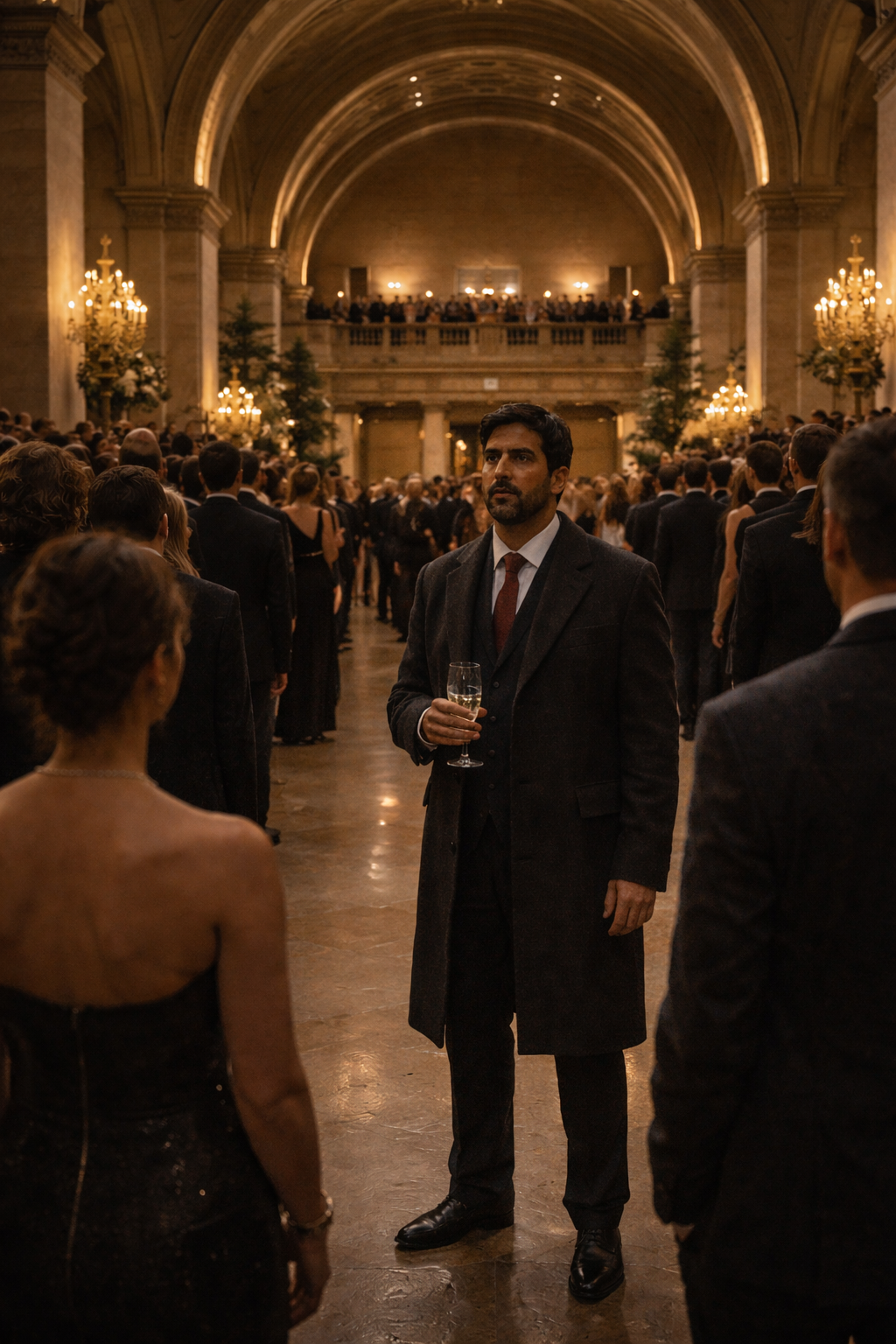
The Banker approached. He didn't wear a tuxedo; he wore a heavy, bespoke navy suit, a stark rejection of the evening's dress code. His presence was a suffocating weight.
“A two percent wealth tax. Rezoning Hudson Yards to freeze out the commercial syndicates,”
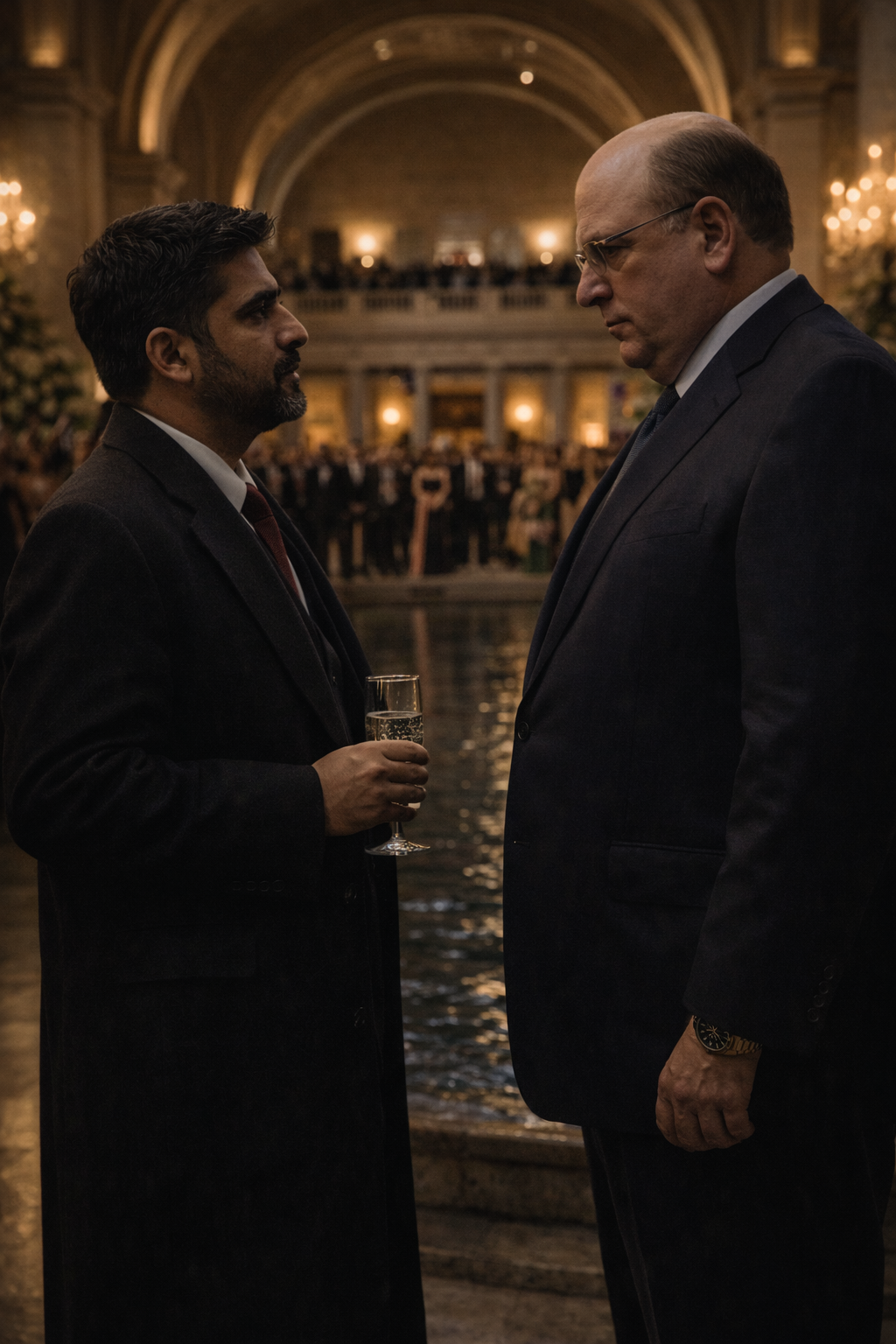
The Banker said, his voice a low, grating wheeze. He stopped too close, invading the Mayor's space. “Very poetic for the campaign trail, Mr. Mayor. Very dangerous for the city's health.”
“The city's health isn't measured by Apex Global's quarterly earnings,”
the Mayor replied, his jaw tight. “The people voted for a correction.”
The Banker smiled, a cruel, yellowed expression. “The people don't run the grid. They don't fund the municipal bonds. Men who raise taxes on my friends tend to have very short, very scandalous terms. Be a pragmatist. Play the game.”
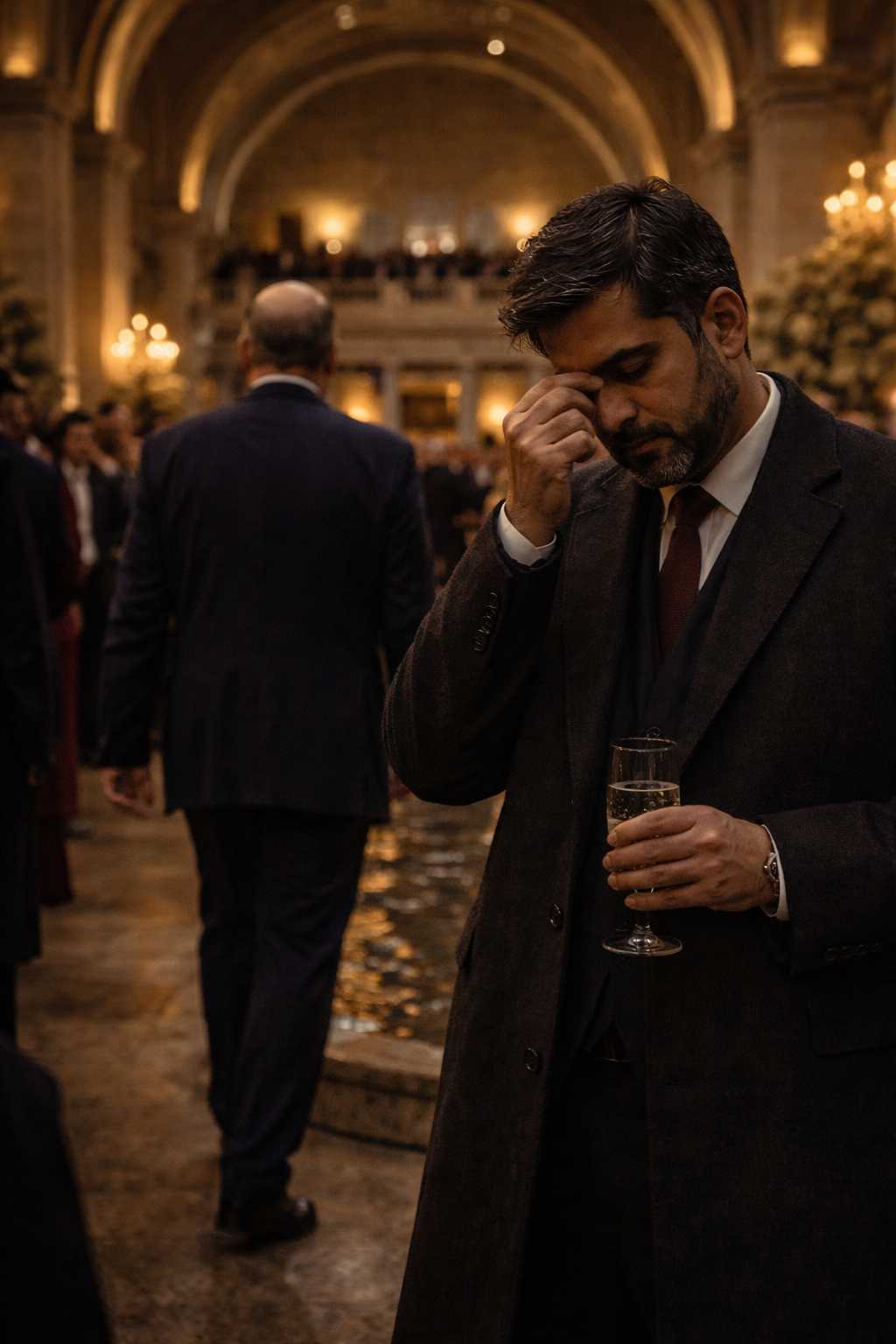
The Banker didn't wait for a response. He simply turned and vanished back into the sea of silk and diamonds. The Mayor felt a sharp, pulsing headache forming behind his eyes. He needed air.
An outsider with an uncanny instinct for markets who built an intelligence engine that threatens the old order. He doesn't wear a tie. He doesn't need permission. He came to the inauguration because he loves a challenge.
Read his story →The cold air off Central Park was the only honest thing the Mayor of New York had felt all day. He stood near the stone railing, rubbing his eyes, his fingers brushing against the thick, dark beard he hadn’t bothered to trim. The weight of the Bible he had placed his hand on earlier that morning still felt heavy on his palm.
“They say the first day is the hardest,”
a voice drifted from the shadows. “But that’s a lie. The first day is a parade. The second day is when the bill comes due.”
The Mayor didn’t turn. He knew the voice. “I didn’t think you’d come. Considering my manifesto explicitly lists your industry as a parasite.”
“I love a challenge,”
the Shark of Wall Street replied, stepping into the moonlight.
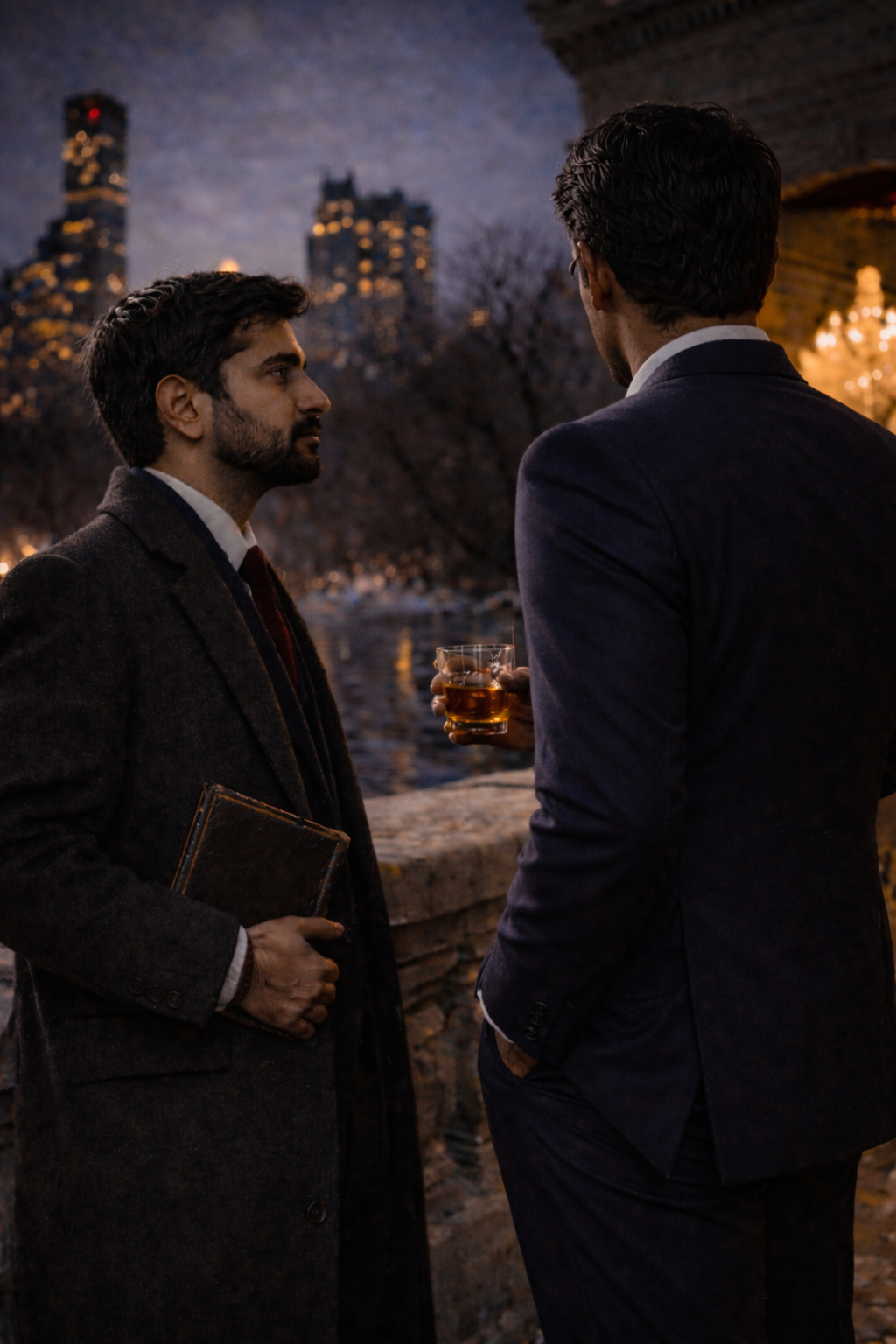
The Shark was dressed in midnight blue, holding a glass of amber liquid with the casual arrogance of a man who owned the distillery. He leaned against the railing, facing the Mayor.
“Congratulations,”
the Shark said, raising his glass slightly. “You are officially the King of New York. Sworn in, signed, sealed. How does it feel to look down on the kingdom?”
“I don’t look down,”
the Mayor corrected, his voice firm. “That’s your vantage point. I look at it.”
The Shark chuckled. “Semantics. You’re a politician now. You trade in words. I trade in reality. The reality is the world is a jungle, Mr. Mayor. You can be the tree that gives shade, or you can be the axe. I chose the axe. You chose to be… what? The gardener?”
“The root,”
the Mayor said. “Because when the storm comes — and I am bringing the storm — the axe rusts. But the root holds.”
The Shark smiled, a predator’s assessment. He set his glass down on the freezing stone ledge. “Enjoy your night, Mr. Mayor. Savor the applause. Because tomorrow morning, the markets open. And the city doesn’t run on oaths. It runs on what I provide.”
“Tomorrow morning,”
the Mayor called after him, “the rules change.”
The Shark didn’t look back. He simply vanished into the crowd, leaving the Mayor alone with the cold, the dark, and the city he had just promised to save. Shivering slightly, the Mayor turned and pushed back through the heavy glass doors into the blinding light of the Great Hall.
The youngest NYPD Commissioner in the city's history. Thirty-four years old, silver hijab, heavy brown wool coat, gold badge on her belt. She doesn't look at the crowd — she reads it. She looks for micro-expressions. She looks for anomalies.
Read her dossier →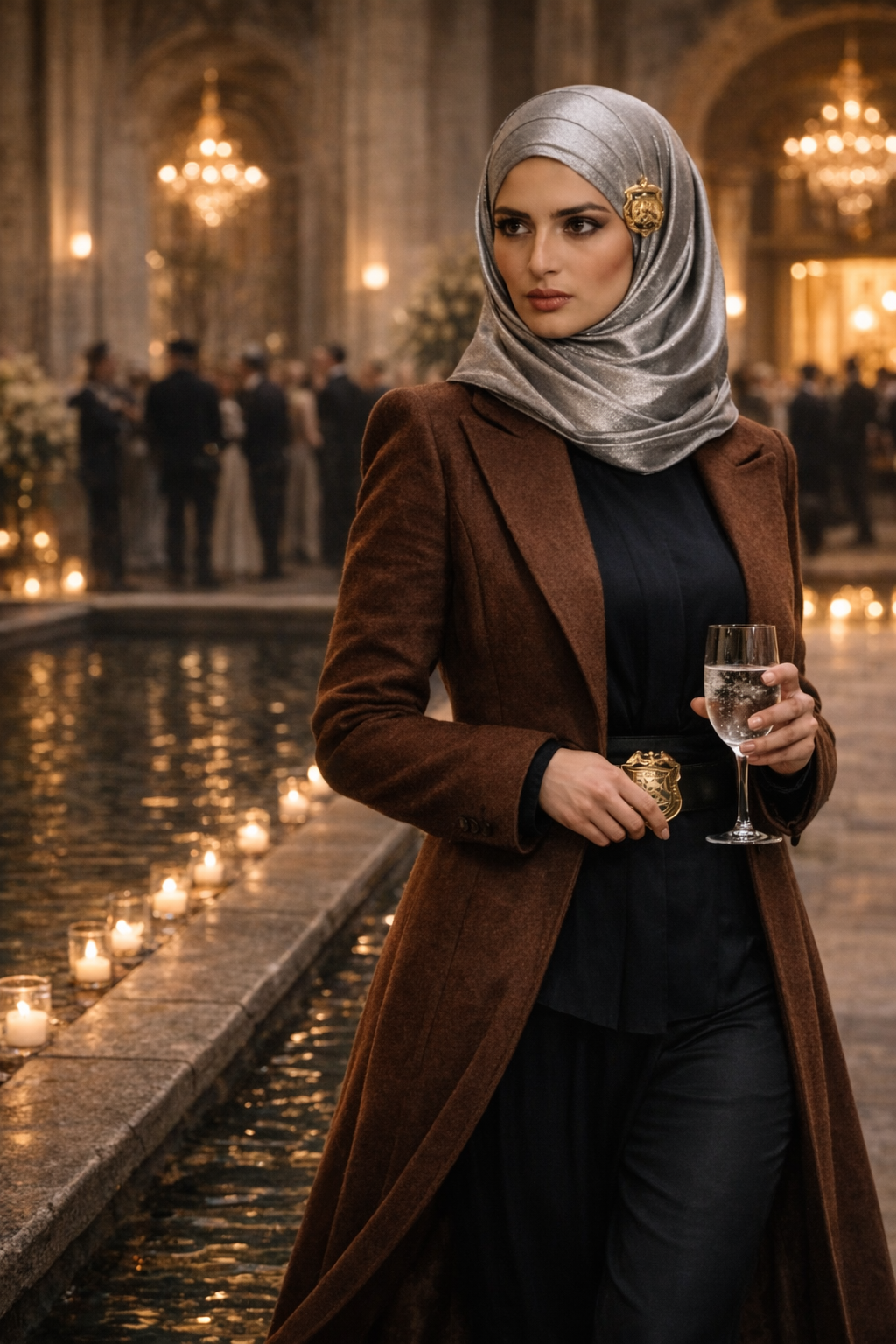
Standing quietly by the edge of the interior reflecting pool, twenty yards away from the Mayor's re-entry point, was Zoya. At thirty-four, she was the youngest NYPD Commissioner in the city's history. She wore a striking metallic silver hijab and a heavy, immaculately tailored brown wool coat. The heavy gold NYPD Commissioner's badge was clipped openly to her belt—a blunt, unavoidable statement of authority.
She held a glass of sparkling water, her eyes sweeping over the crowd. She wasn't looking at the silk dresses or the bespoke tuxedos. She was looking for micro-expressions. She was looking for anomalies.
She found one.
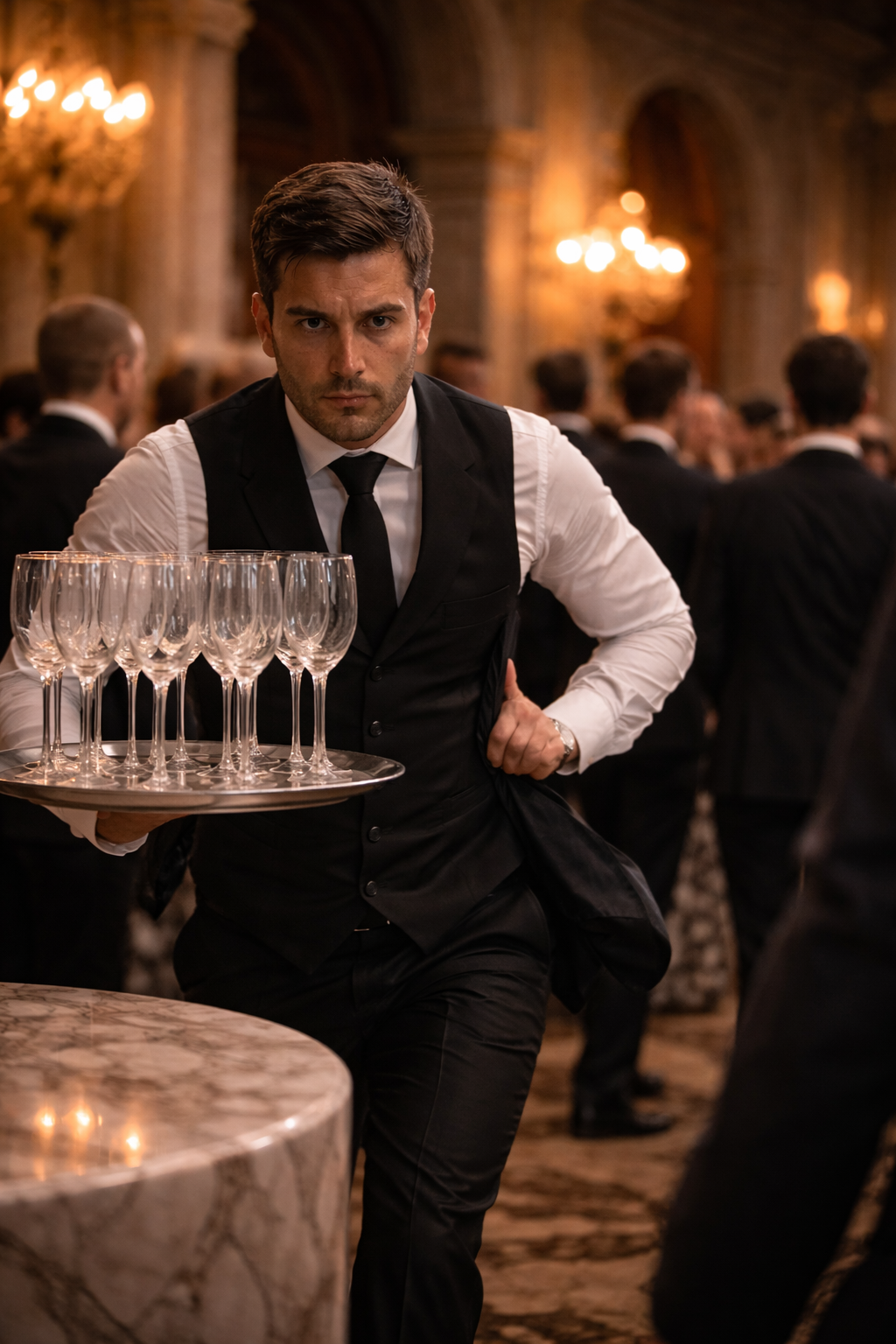
A waiter carrying a tray of empty champagne flutes was moving through the crowd. His uniform was perfect—crisp white shirt, tailored black vest. But his kinetic baseline was entirely wrong. He wasn't navigating the crowd with the soft, apologetic deference of a hospitality worker. He was cutting straight lines. His eyes were completely locked on the Mayor. His right hand hovered rigidly near his waistband, intentionally keeping it clear of the silver tray.
Zoya’s resting heart rate slowed. She didn't reach for her radio. She knew there was no time.
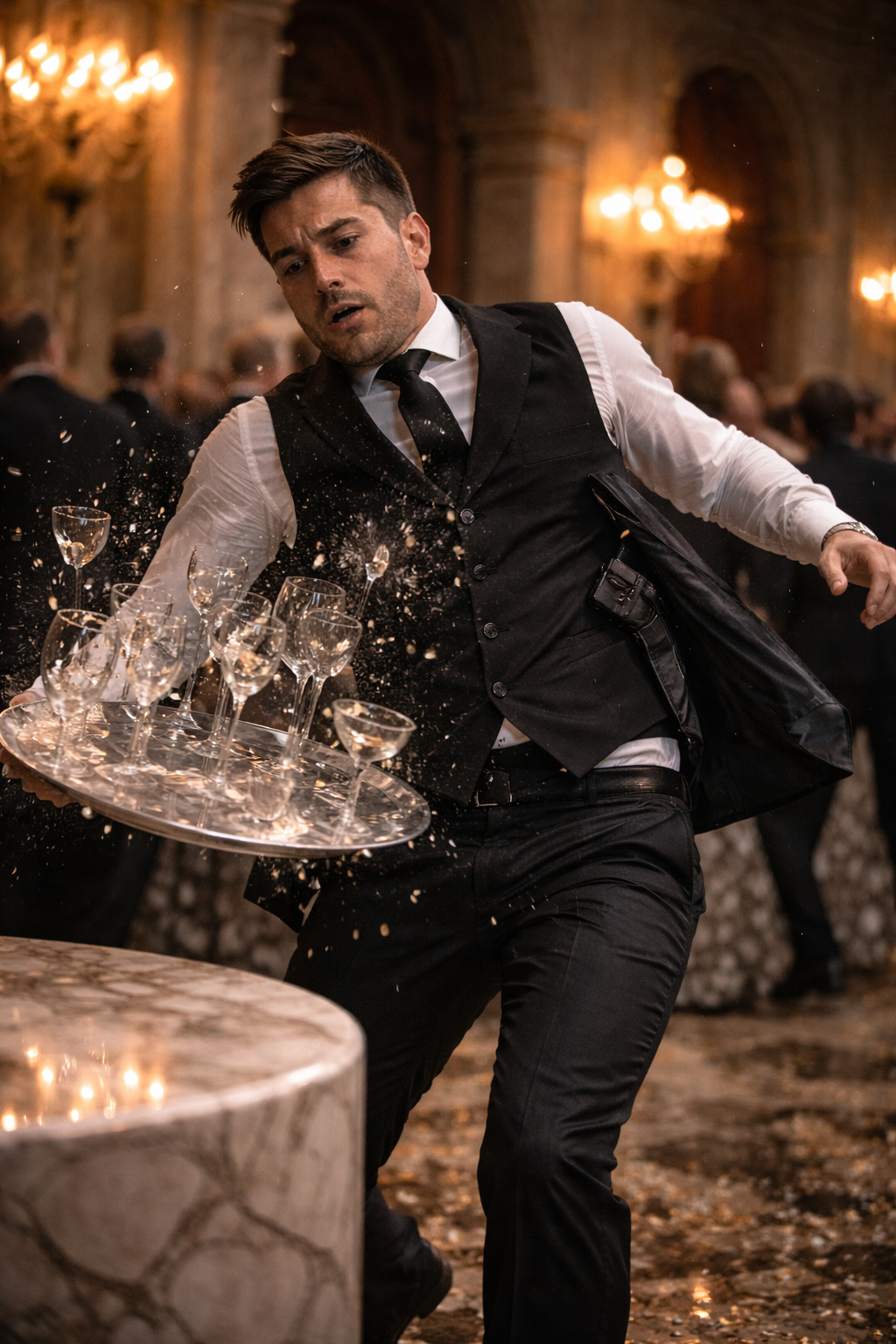
The waiter closed the gap to the Mayor, stepping smoothly around a massive, towering pyramid of crystal champagne glasses. He dropped the silver tray.
In one fluid, heavily rehearsed motion, the man drew a suppressed Beretta 92FS from beneath his vest. He didn't hesitate. He swung the barrel directly toward the Mayor's chest, the movement so violently abrupt that his elbow clipped the edge of the marble table.
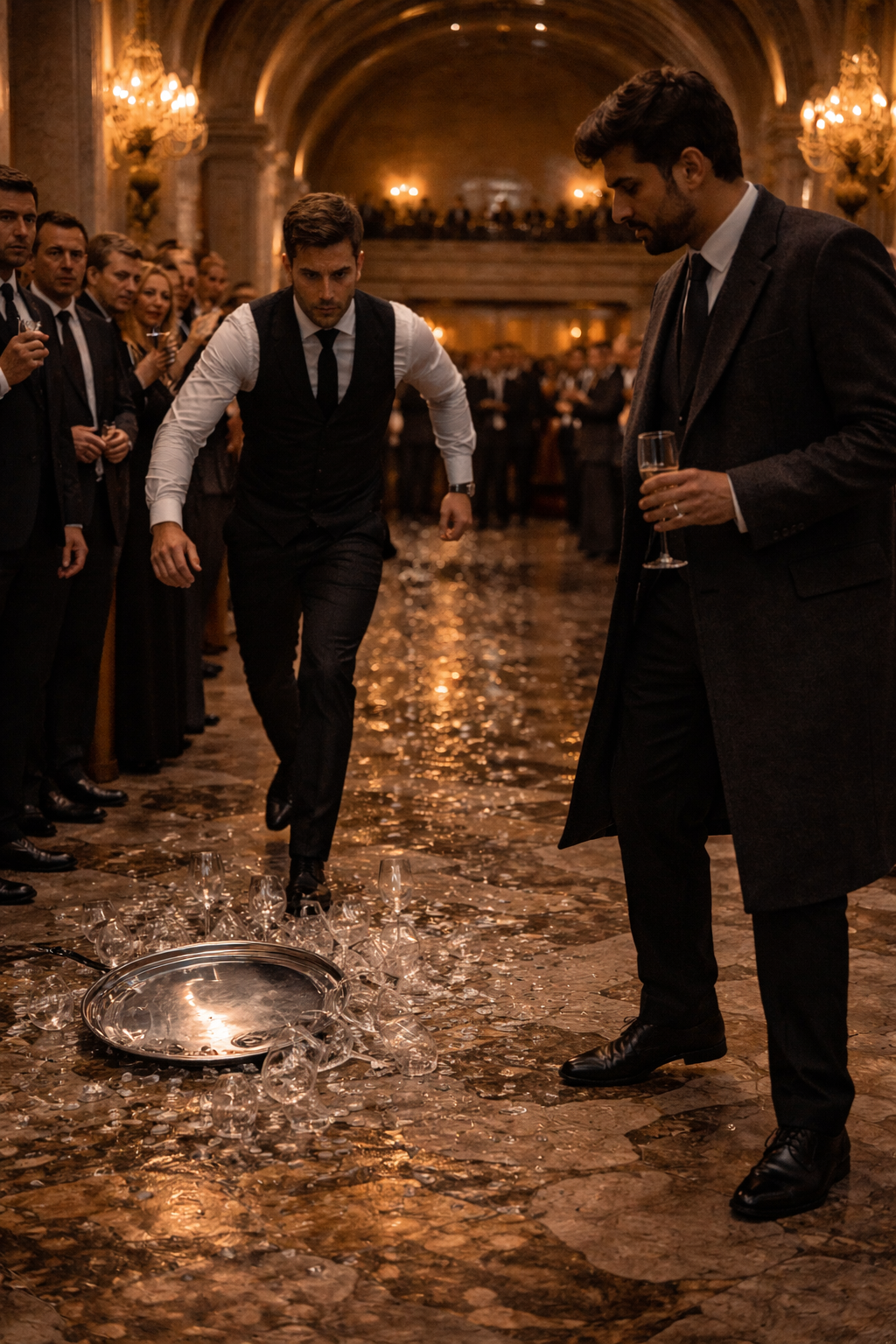
The impact sent the towering pyramid of champagne glasses crashing to the floor in a blinding, chaotic explosion of crystal and sparkling wine. The sound of the shattering glass masked the heavy thwip of the suppressed pistol discharging.
The Mayor’s private security detail panicked, diving for cover as the first round grazed the Mayor's shoulder, sending him spinning to the marble floor in a spray of blood.
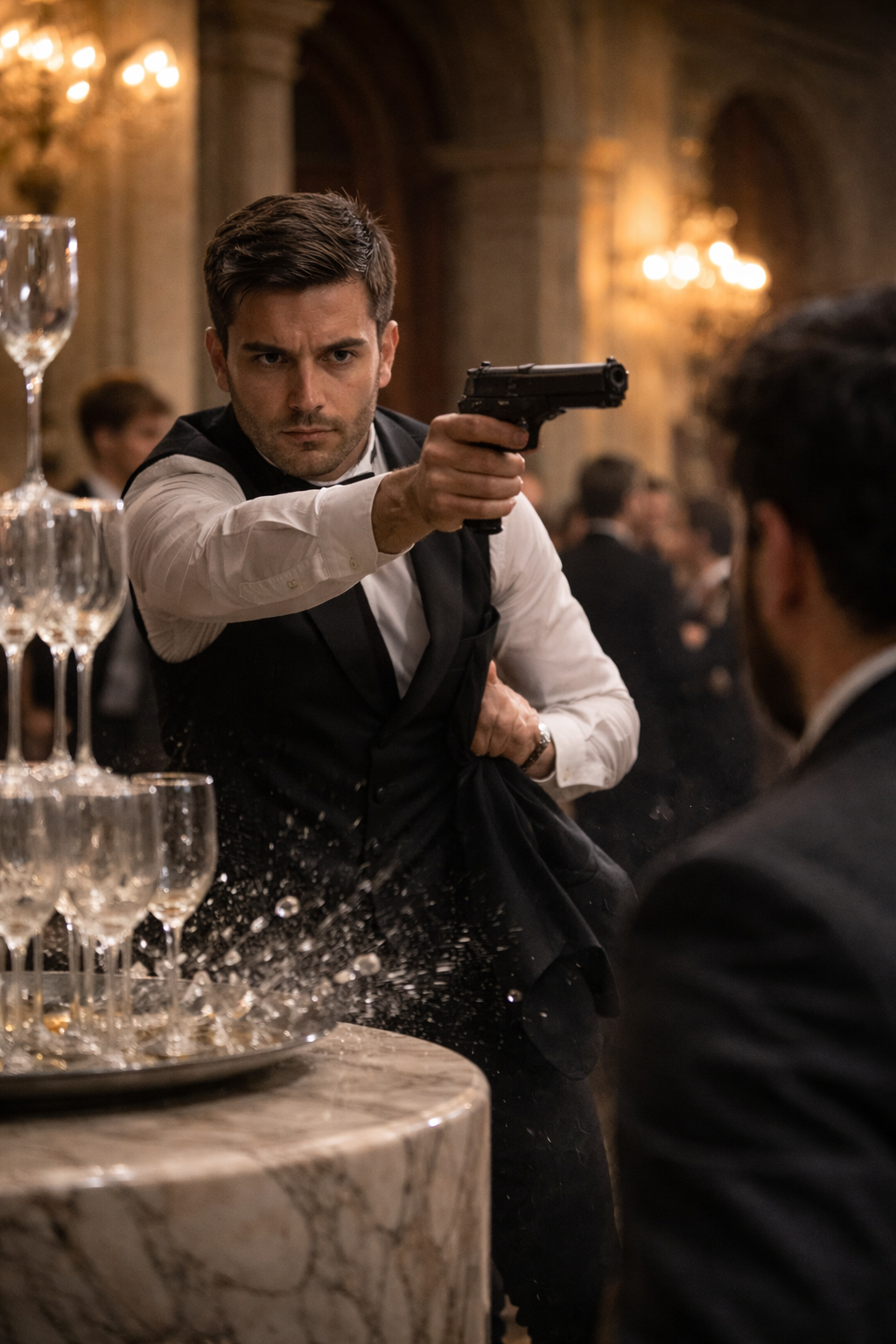
The assassin adjusted his grip, bringing the sights back in line to deliver the fatal headshot.
He never pulled the trigger.
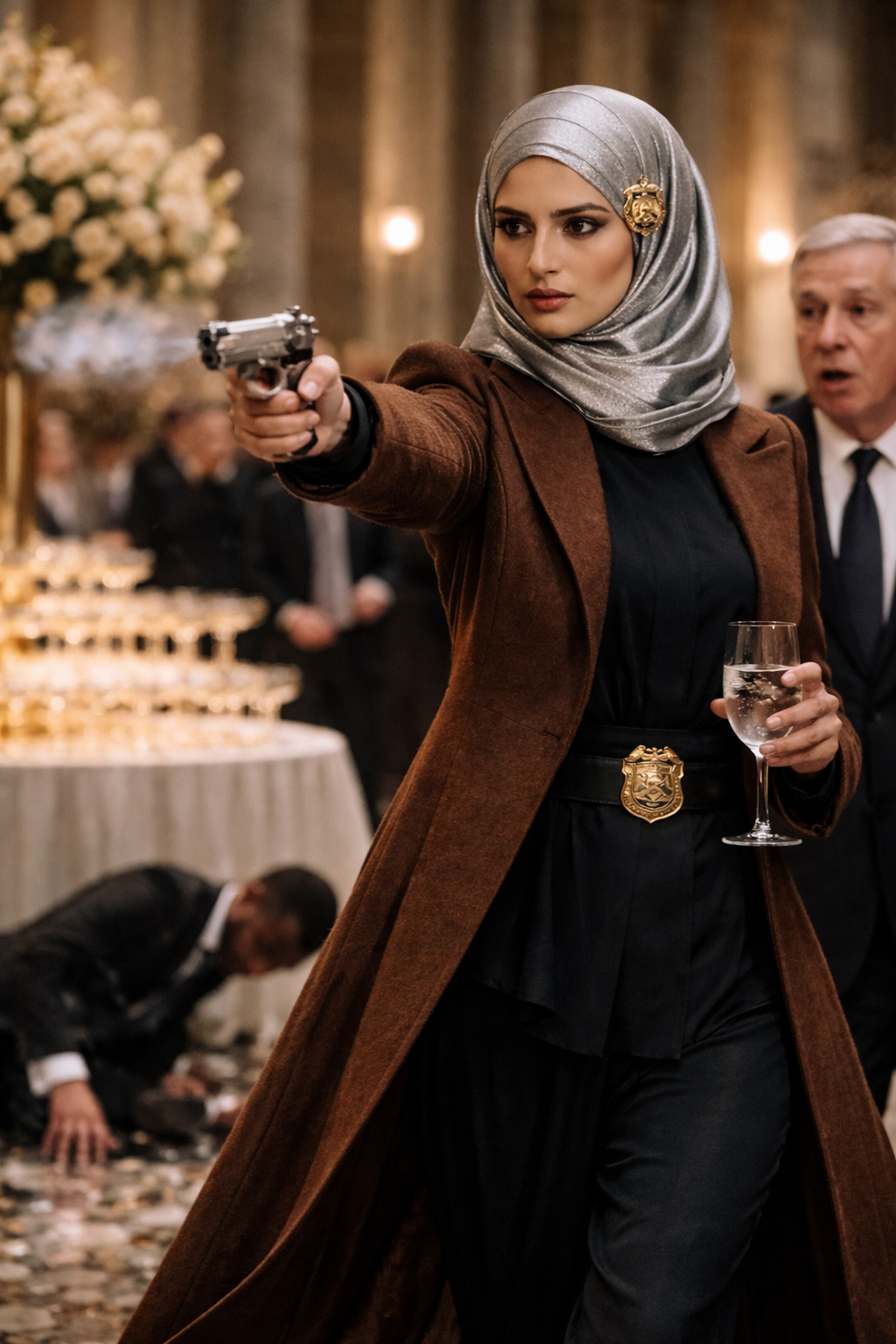
Before the final crystal flute even hit the ground, Commissioner Zoya had already drawn her weapon. She didn't drop her drink. She didn't shout a warning or dive behind a pillar.
Moving with terrifying, absolute calmness, she raised her silver, snub-nosed revolver with one hand, extending her arm with surgical precision. The heavy brown wool of her coat flowed behind her. The room erupted into screaming chaos, billionaires scrambling over each other in sheer terror, but Zoya existed in a vacuum of silence.
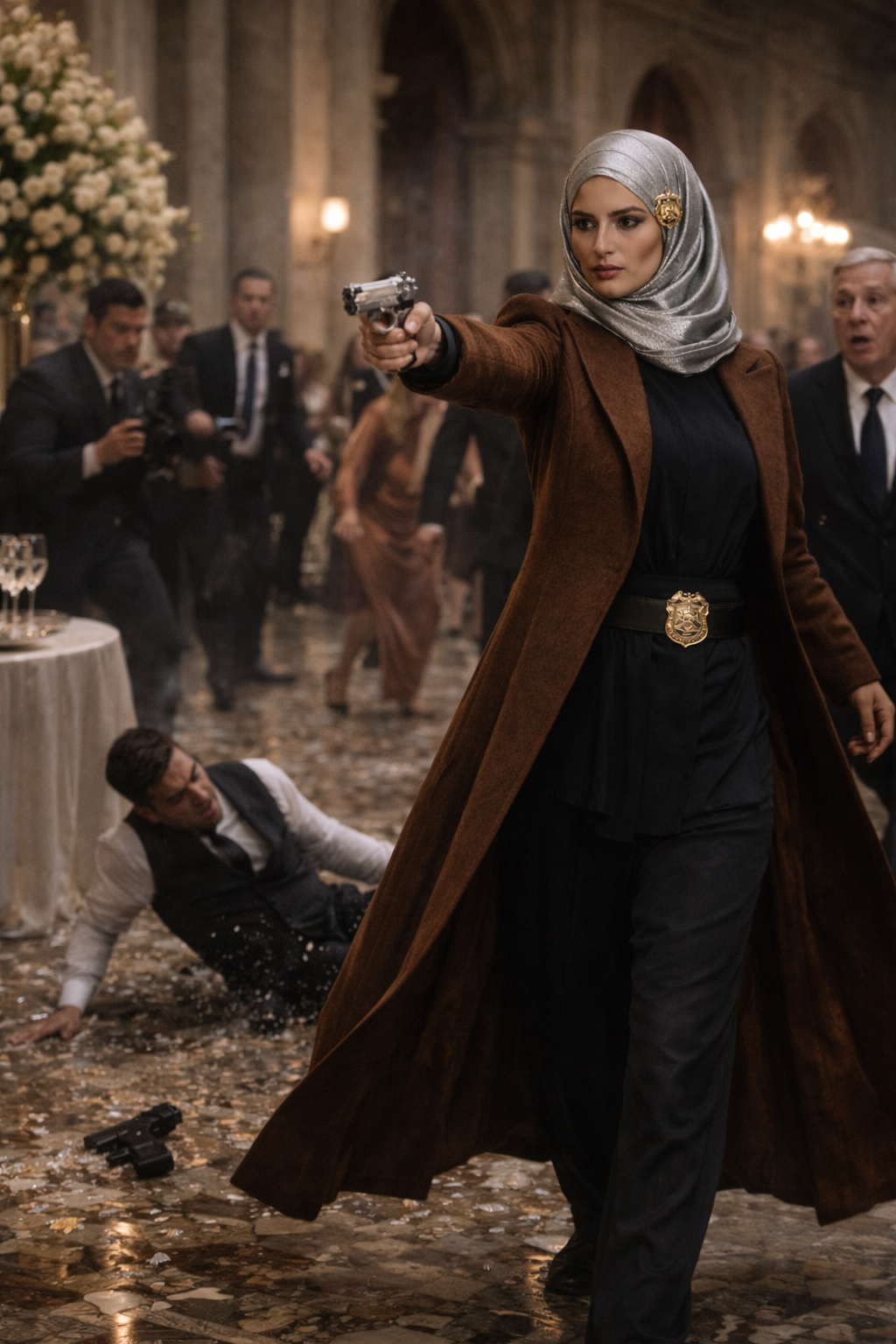
She fired twice.
The unsuppressed roar of the .357 magnum echoed through the vaulted stone ceilings like a cannon blast. The first hollow-point round caught the assassin directly in the center of his chest, shattering his sternum and destroying his momentum. The second round took him in the throat before he even realized he had been hit.
The hitman collapsed backward into the pool of spilled champagne, his suppressed pistol clattering uselessly across the wet marble.
Zoya didn't lower her weapon. She stood perfectly still, the smoke curling from the barrel of her revolver, her eyes locked on the dying man. She took a slow, deliberate sip from the glass in her left hand.
The message to the room—and to whatever syndicate had ordered the hit—was deafeningly clear. The billionaires may own the money, but the Commissioner owned the city.
Tailoring, Power, & Authority