The HALO Suit
High-Altitude / Low-Opening
The Shark of Wall Street · Chapter
The Wolf — Infiltration & Market Manipulation
>> ARCHIVE LINK: Context missing. The Wolf, read in the initial dossier.
Deep in the Carpathian Mountains, the air was cold enough to crack steel. At an isolated, off-the-grid tactical range, The Wolf was working.
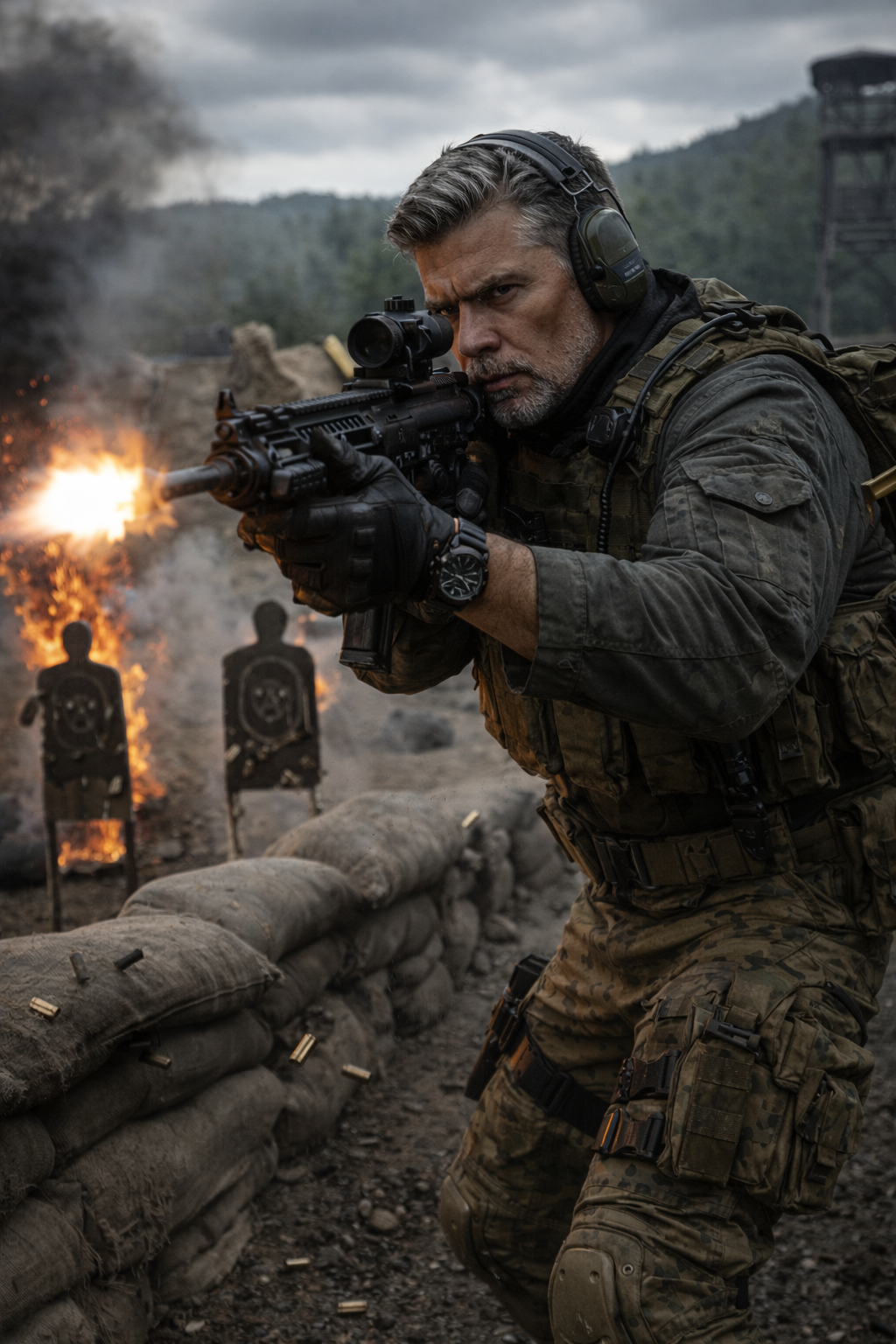
He moved through a gauntlet of steel silhouettes and burning barricades, his suppressed carbine barking in short, muffled bursts. He wasn't practicing. Practice implies a margin of error, a process of learning. The Wolf was calibrating. He was aligning his heart rate, his respiratory pauses, and the micro-twitches of his trigger finger into absolute, mechanical perfection.
He dropped a magazine, reloaded, and fired twice more into a target engulfed in flames. He didn't blink as the heat washed over his tactical optics. He treated violence not as an art, but as a rigid mathematical equation.
When the bolt locked back, he lowered the weapon. He checked his watch. He was ready.
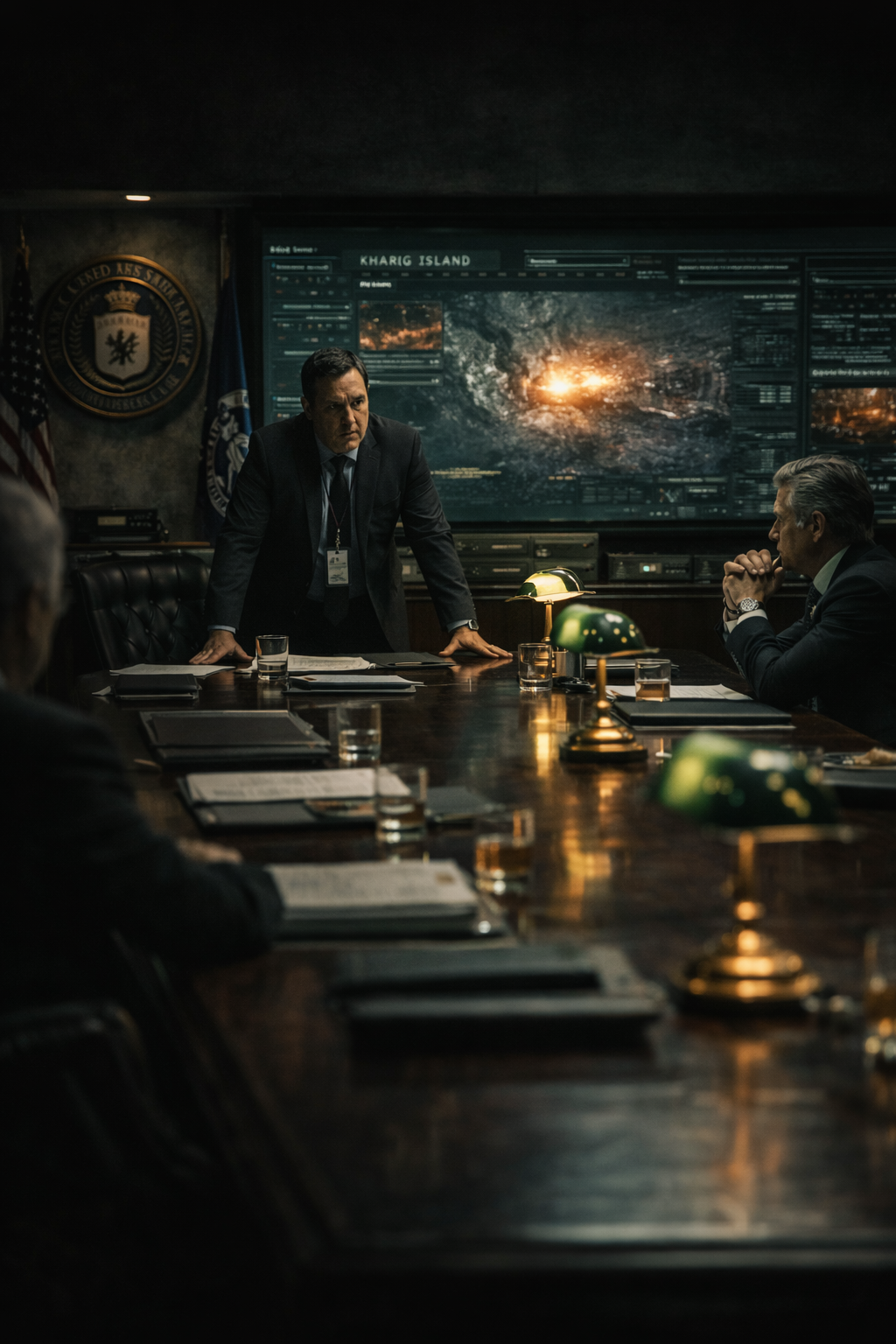
Seven thousand miles away, in a windowless SCIF beneath Washington D.C., a crisis was unfolding. A geopolitical intelligence operative stood at the head of a long mahogany table, addressing a silent representative of The Shark's financial syndicate.
"Kharg Island is too hot," the intelligence officer stated, pointing to a satellite feed of the Iranian oil terminal. "JSOC won't touch it without a Presidential finding. If we send a drone strike, it tanks the global market, but it leaves missile debris. The moment they trace the origin, we trigger a regional war."
The Shark's representative didn't flinch. "We do not need an explosion. We need surgical disruption. We need a localized failure that forces the Iranians to shut off the valves themselves out of sheer paranoia. We just need the market to bleed for forty-eight hours."
"You want to infiltrate the most heavily guarded energy asset in the Persian Gulf, execute a localized disruption without leaving a footprint, and exfiltrate cleanly?" The officer shook his head. "There isn't a SEAL team alive that can guarantee zero attribution."
"We aren't sending a team," the representative replied coldly. "We are sending a phantom. Someone who doesn't exist on paper. A weapon that requires no oversight, no communication, and no extraction protocol."
The intelligence officer stared at the map. "Who?"
"Make the call."
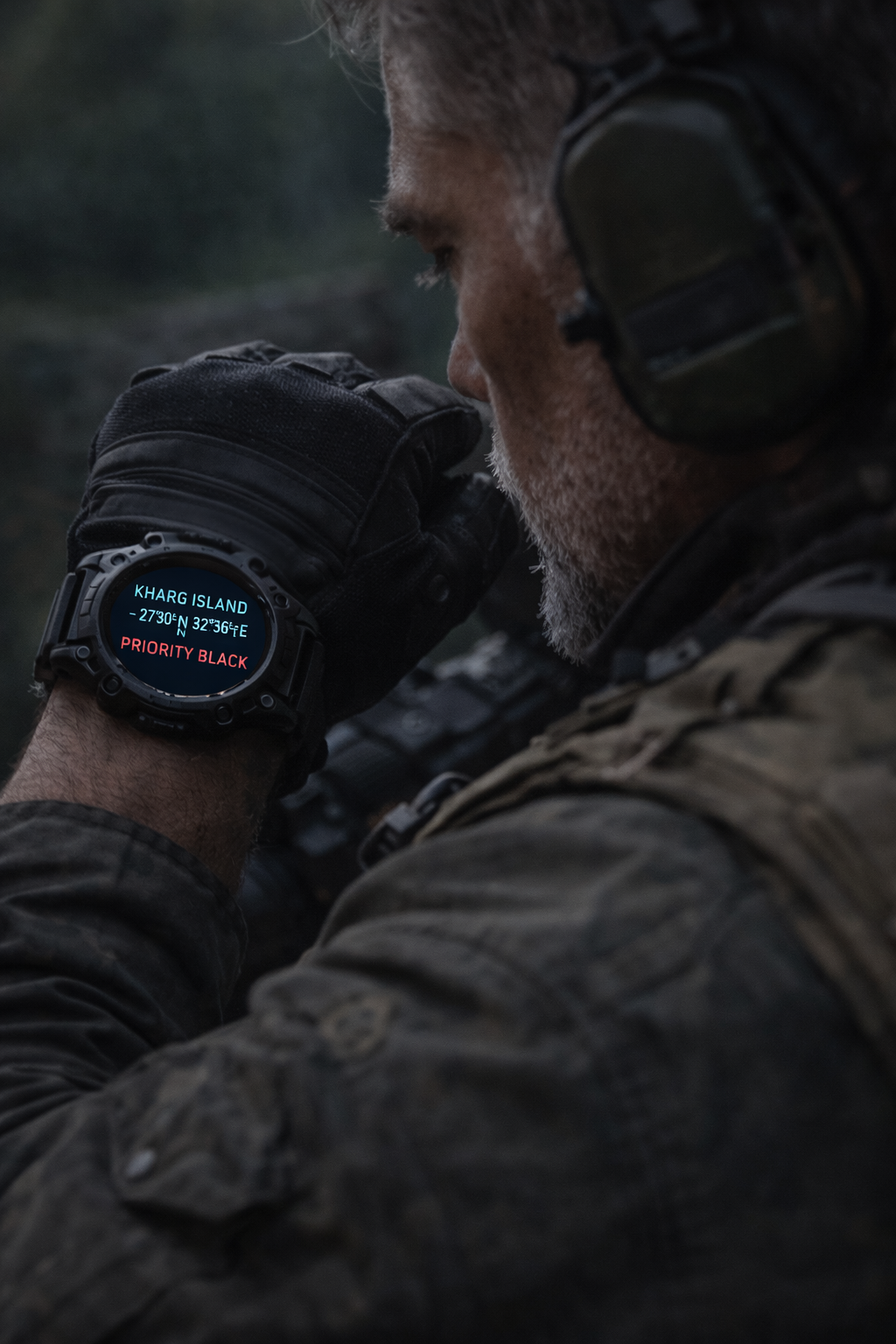
The call didn’t come through a phone. It never did. It came through a secure, hyper-encrypted burst, fragmented and routed through six dead offshore servers before it finally reached the modified tactical watch on The Wolf’s wrist, standing alone in the freezing Carpathian mud.
There was no name attached. No sender. Just a blinking coordinate set against the black digital face, followed by a single line of text:
KHARG ISLAND — 27°30′N 52°36′E — PRIORITY BLACK
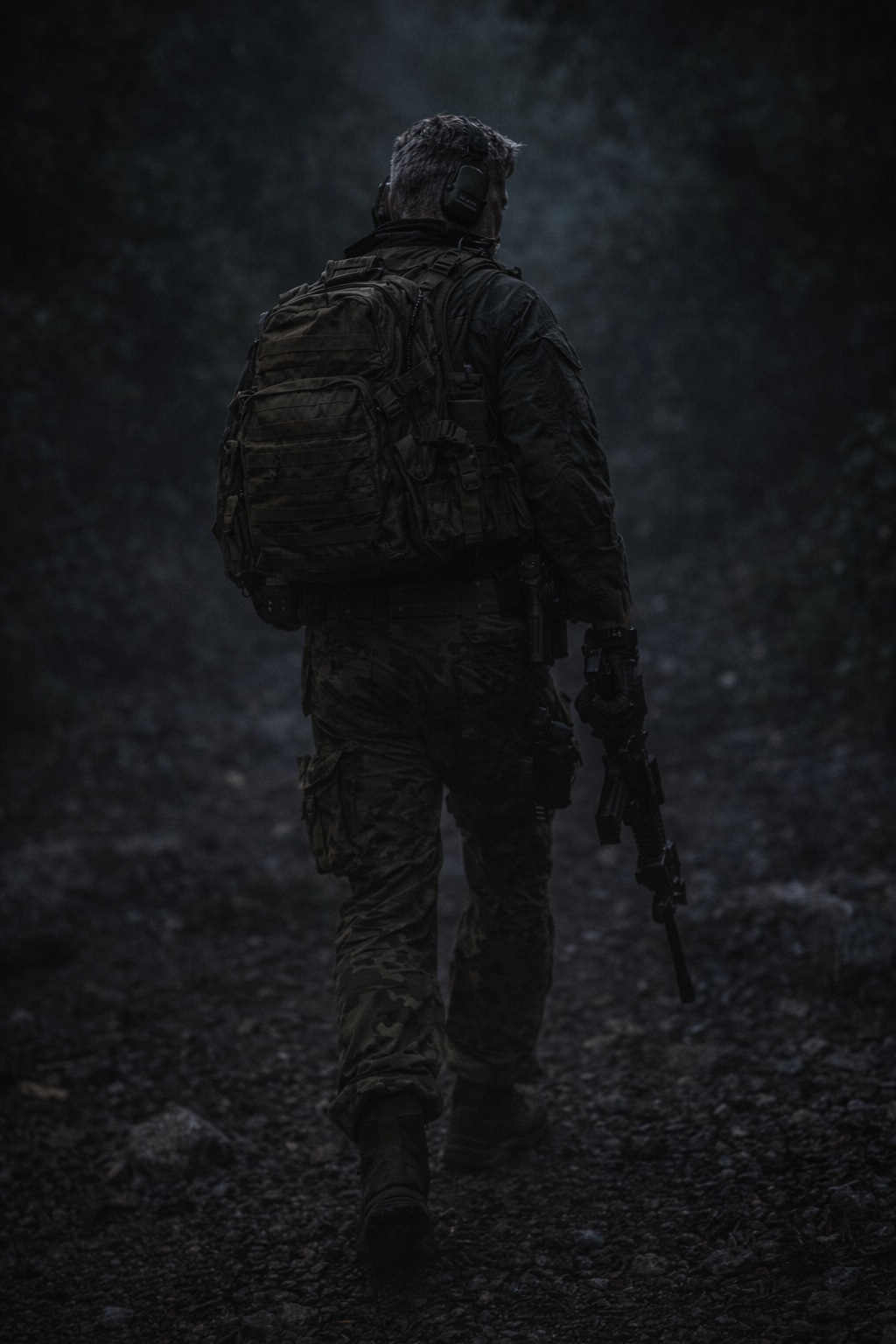
The Wolf didn’t ask questions. He didn't blink. He simply gathered his gear and disappeared into the night. He already knew exactly what that coordinate meant, and more importantly, he knew what the world would look like by tomorrow morning.
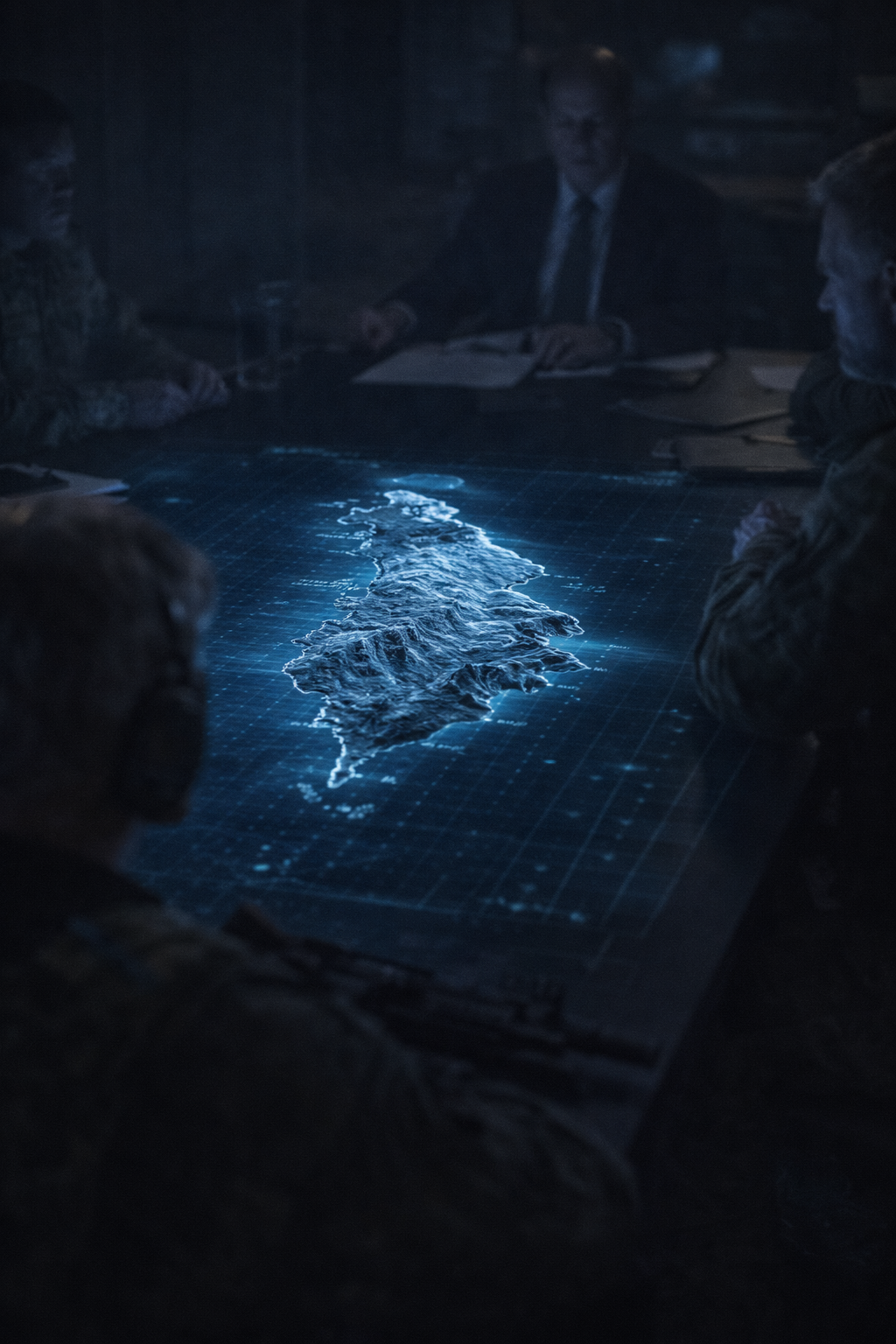
02:10 Hours. The briefing room was dark except for the harsh, blue light of a topographical projection casting long shadows across the table. Floating in the center of the holographic water was a jagged mass of land.
"Kharg Island," a distorted, clinical voice echoed through his earpiece. "Iran’s primary oil export terminal. Over ninety percent of their crude leaves the country through this single, concentrated artery."
The holographic image shifted, zooming in on massive pipelines, towering storage tanks, and colossal shipping terminals stretching out into the Persian Gulf like heavy steel veins feeding a global organism.
"You don’t hit Kharg to hurt Iran," the voice continued, cold and calculating. "You choke Kharg to move the market."
Another voice cut in over the feed. This one was sharper, commanding. "We are not bombing the terminal. That is an act of war. That is escalation. We are inserting you."
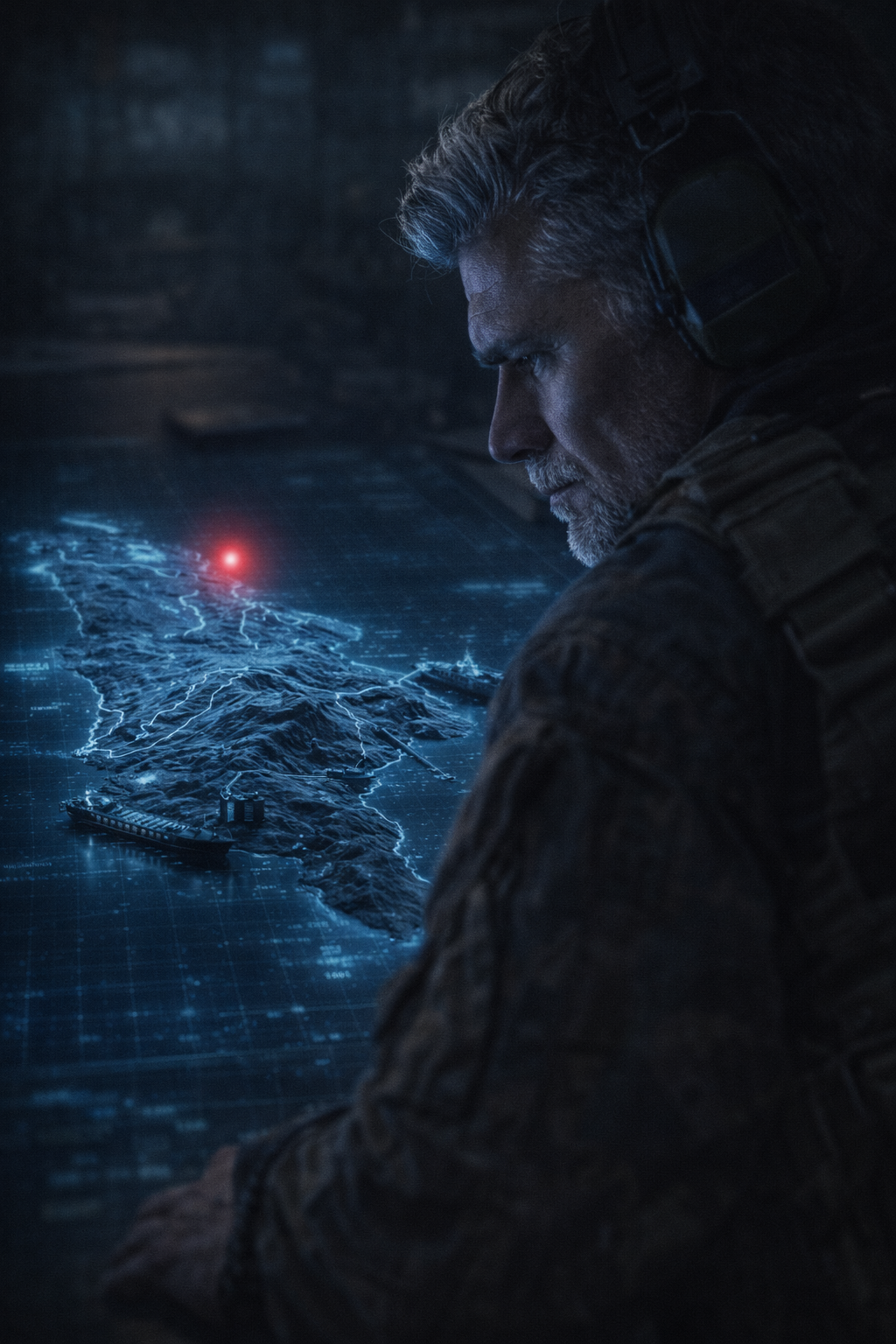
The Wolf leaned forward slightly, the leather of his tactical harness creaking in the silence. That was new. A red dot began to blink near the northern ridge of the island on the projection.
"You will be dropped outside their standard radar coverage. Your objective is not destruction. It is disruption. Precision. Psychological." A heavy pause hung in the air. "You are the message."
The Wolf smiled. Barely. Kharg wasn’t just an island; it was a high-pressure valve for the entire global economy. Millions of barrels flowed through it every single day, stabilizing international markets and anchoring global oil prices. Supertankers lined its terminals like silent, floating giants.
Take Kharg offline—even for a few hours—and the ripple effect is catastrophic. Oil spikes. Shipping routes panic. Maritime insurance premiums explode. Markets bleed. The island wasn’t a military battlefield. It was financial leverage.
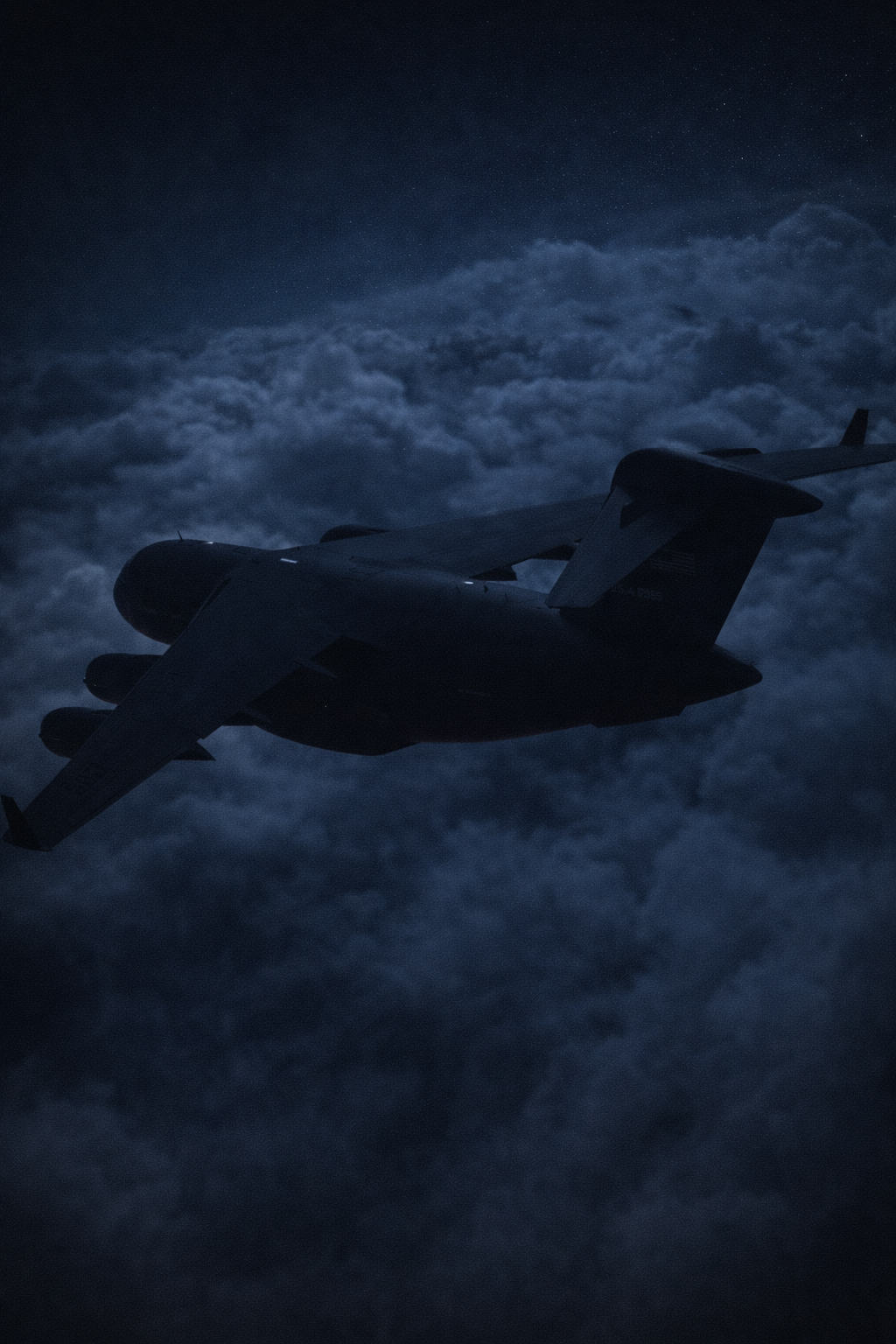
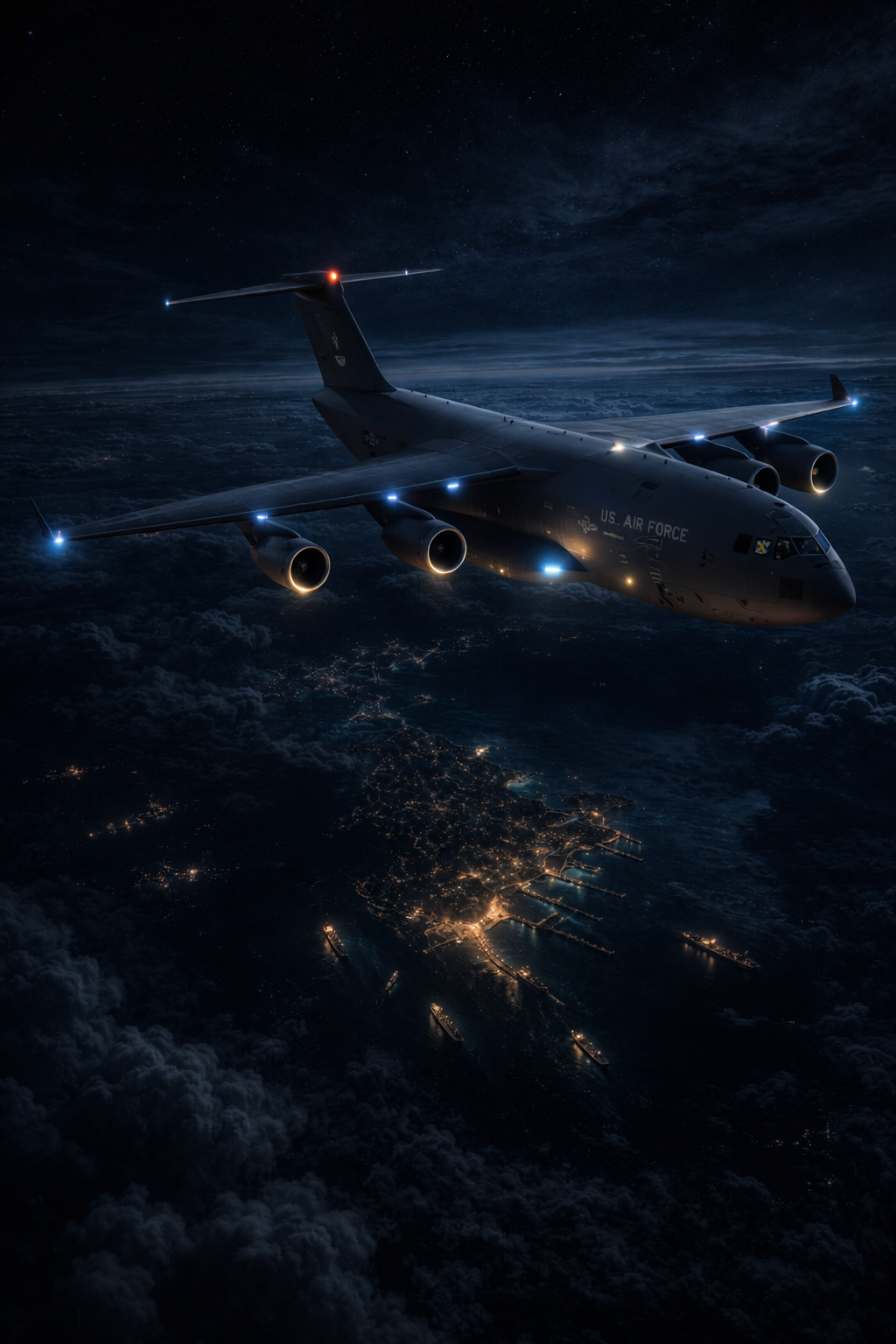
03:40 Hours. The U.S. Air Force stealth transport flew without exterior lights, a matte-black silhouette cutting cleanly through the freezing upper atmosphere. It was flying high, silent, and completely invisible to anything that mattered below.
Inside the pressurized cargo bay, The Wolf sat entirely alone. There was no radio chatter. No strike team. No backup or redundancy. There was only the low, vibrating hum of the jet engines and the faint, sickly green glow of the cabin instrumentation.
Across from him, a silent crew chief moved through the dim light, securing the final heavy latch on his HALO gear. No words were exchanged. They didn't need them. Above the heavy steel door, the digital ramp indicator flashed red:
T–02:00
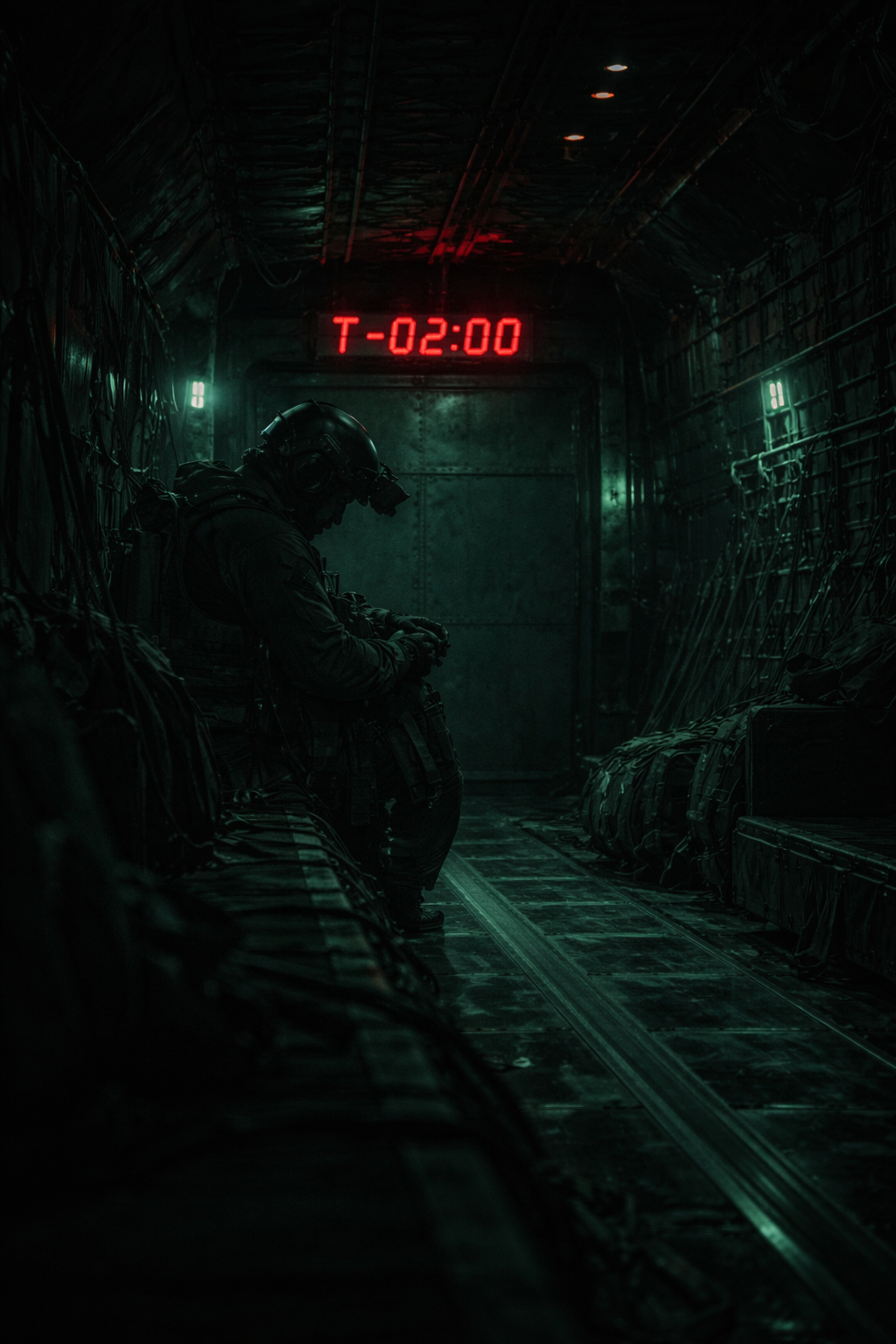
The Wolf ran his gloved hands over his loadout, checking everything once by pure muscle memory. Rifle—clean and chambered. Optics—calibrated to account for the heavy, humid air of the Gulf. Blade—accessible at the hip. Altimeter watch—synced.
He closed his eyes for ten seconds. Not to rest, but to map. He visually assembled the terrain, the wind currents, the Iranian patrol routes, the industrial heat signatures, and his narrow escape vectors. By the time he opened his eyes, the island was already a living, breathing entity in his head.
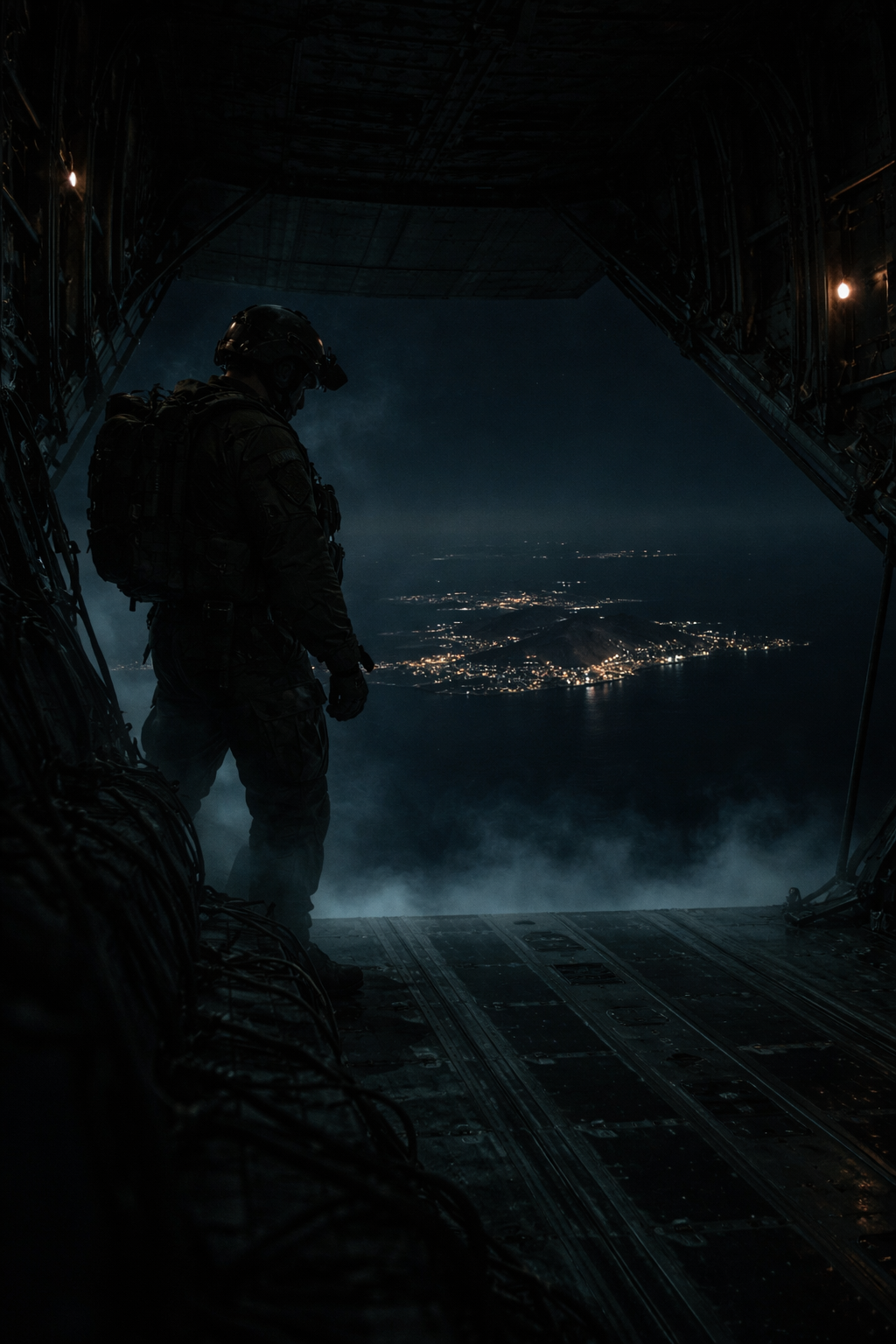
04:12 Hours. The heavy ramp lowered. The night rushed into the cabin—violent, sub-zero, and absolute. Far below, the Persian Gulf stretched out endlessly like a sheet of liquid obsidian. Dead ahead sat Kharg Island, a dark, jagged mass with faint industrial lights pulsing along its edges like a heartbeat.
The crew chief stepped back and gave a single, sharp nod.
That was it.
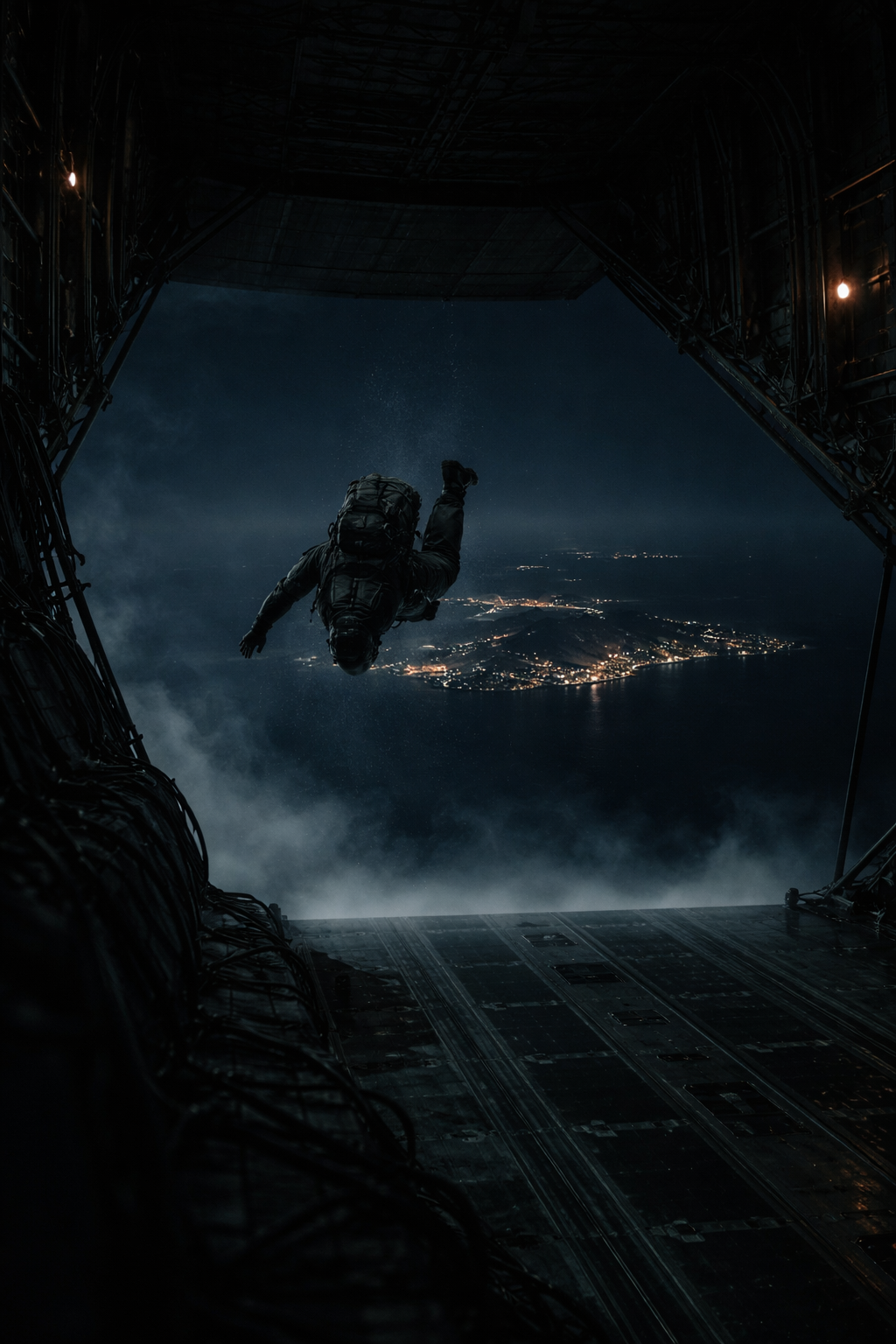
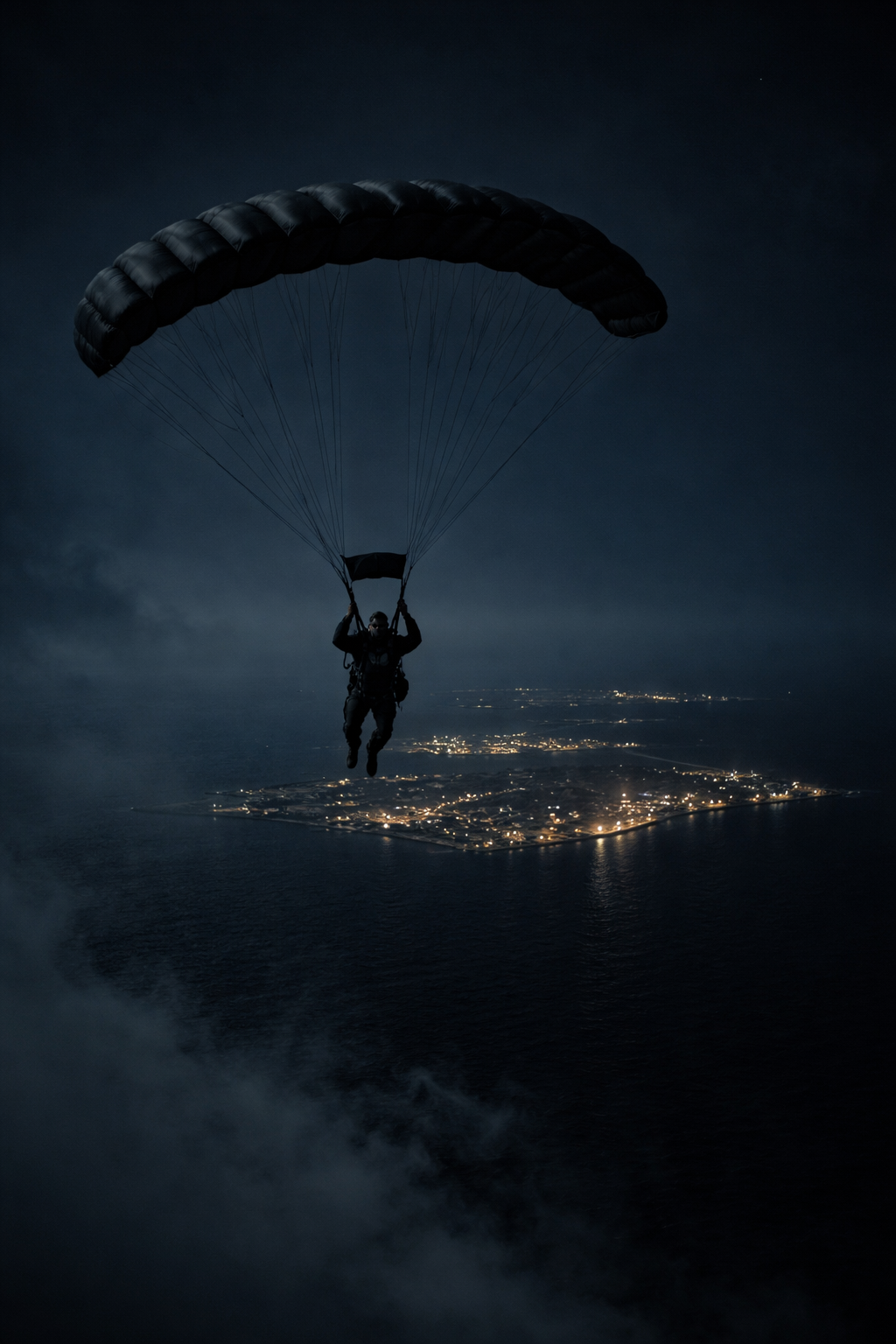
The Wolf stepped off the ramp and vanished into the void. He didn't deploy his parachute immediately. He fell fast, dropping like a stone, accelerating to terminal velocity—much faster than any standard defense radar could confidently classify as a human target.
The wind tore past his helmet, deafening and brutal, as he angled his descent, adjusting his trajectory by pure physical instinct rather than calculation.
At exactly 3,000 feet, he pulled the cord. Snap. The matte-black canopy opened, silent and perfectly controlled. He drifted the rest of the way in total darkness, pulling the toggles to steer his descent toward a dead zone deliberately sandwiched between two overlapping patrol grids.
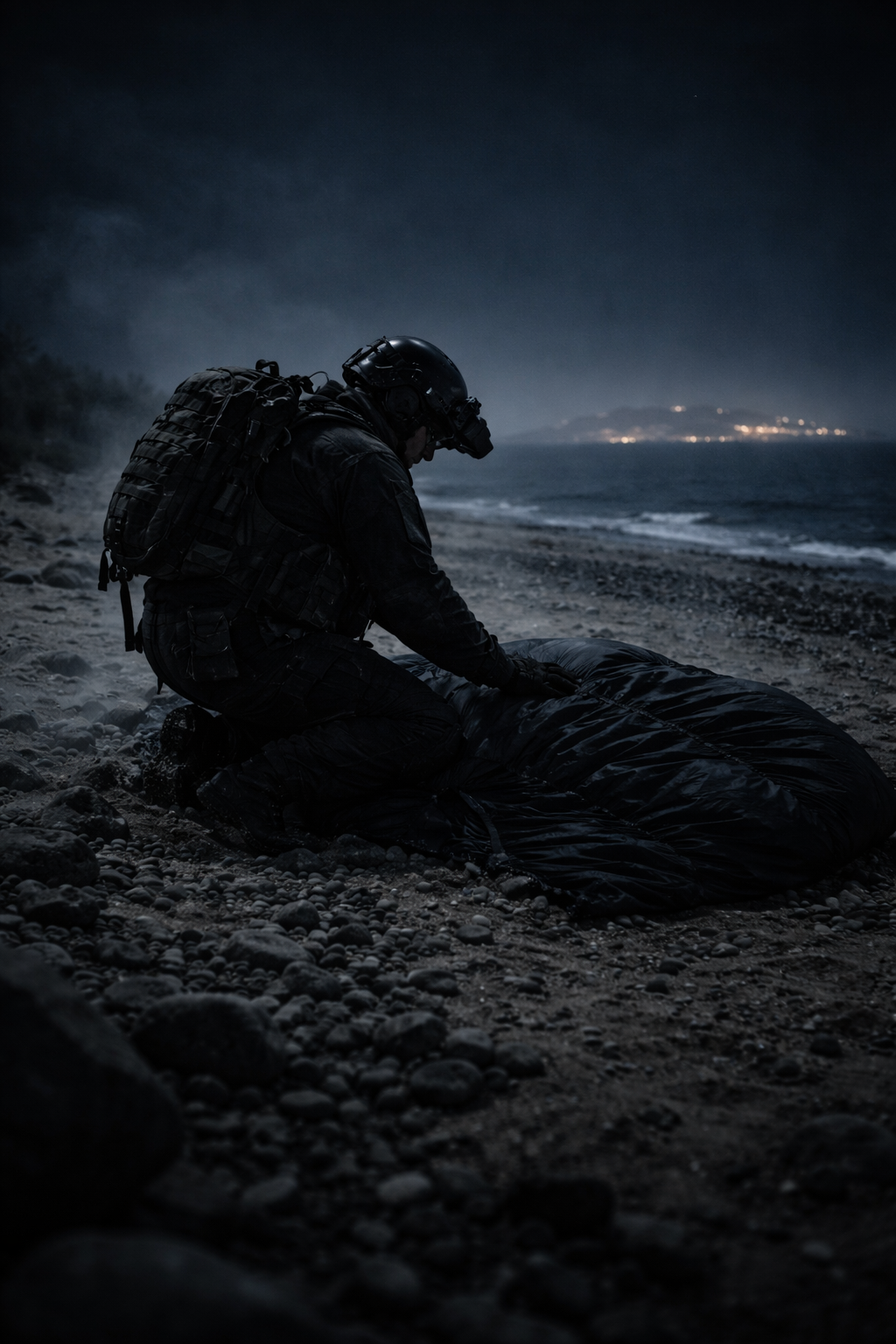
04:19 Hours. He touched down on the rocky sand without making a single sound. The heat of the Iranian day was still trapped in the dry earth. Within seconds, his parachute was buried. There was no trace. No footprint. No arrival. He was simply there.
Kharg was heavily monitored, covered in cameras, seismic sensors, and armed patrols. But it was also fundamentally predictable. That was its fatal weakness. Security systems watch the obvious parameters. Guards patrol the expected choke points. The Wolf didn’t move like a tactical intruder; he moved like a shadow that had always belonged there.
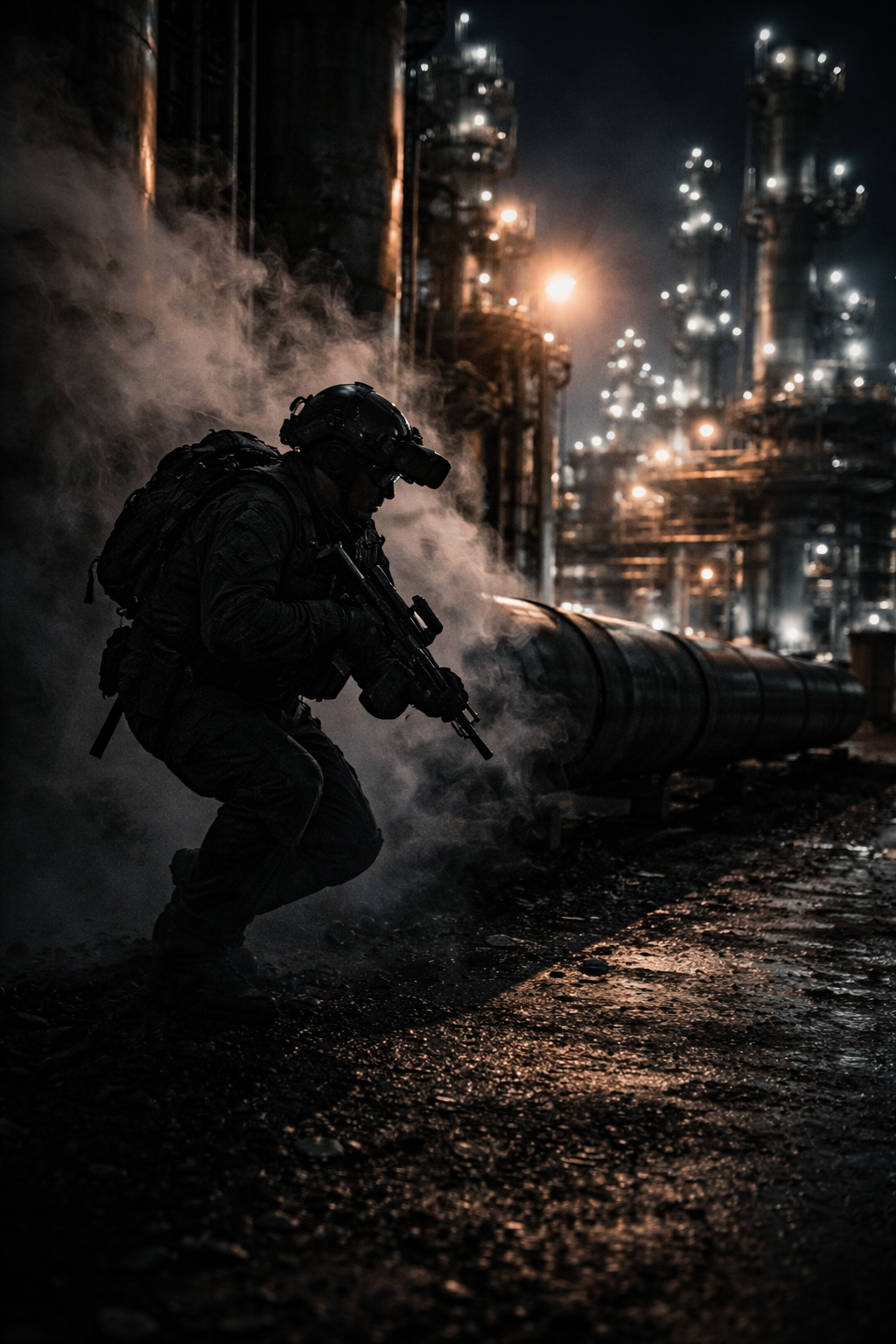
He navigated the sprawling industrial complex by exploiting the environment. He used the harsh, black shadow lines cast between the massive floodlights. He masked his thermal signature by moving directly behind the intense heat distortions venting from the refinery’s industrial exhaust. He slipped through the 40-second timing gaps in the guard rotations. Every single step was calculated to avoid pattern recognition.
He wasn’t here to destroy the terminal. A bombing would bring international retaliation and war. He was here to rewrite their behavior. He was here to make the Iranian command structure feel watched, to make them hesitate, to force them to shut the valves themselves out of sheer paranoia.
In the distance, the colossal oil tankers idled in the deep water. Heavy pipelines pulsed with pressure. Generators hummed a low, vibrating note. Kharg was alive. And now, moving through its veins, so was The Wolf.
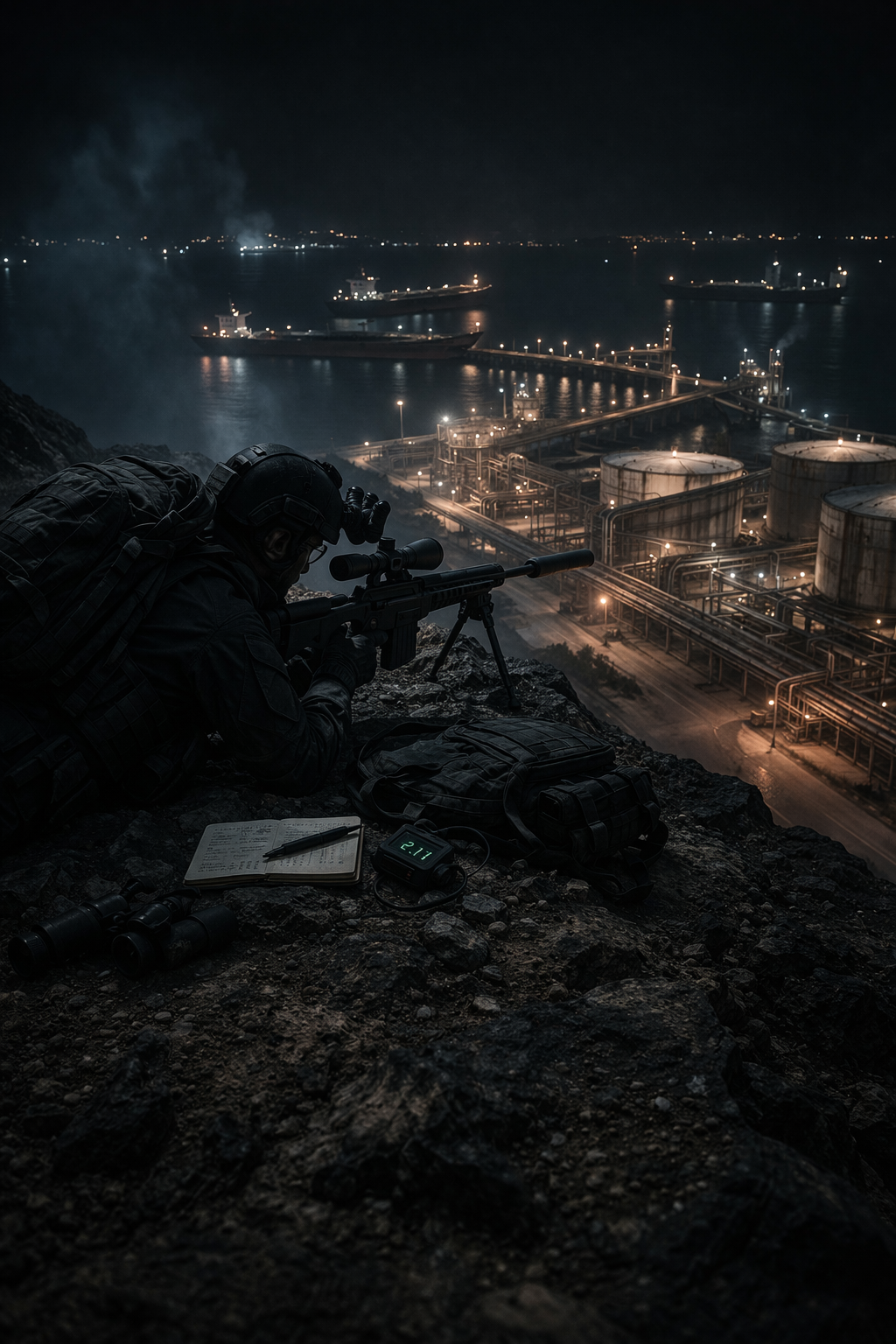
He found his elevation—a rocky ridge overlooking a key primary transfer node. He set the heavy, suppressed rifle down gently on his pack. He adjusted the bipod. He measured the wind speed coming off the Gulf. He waited.
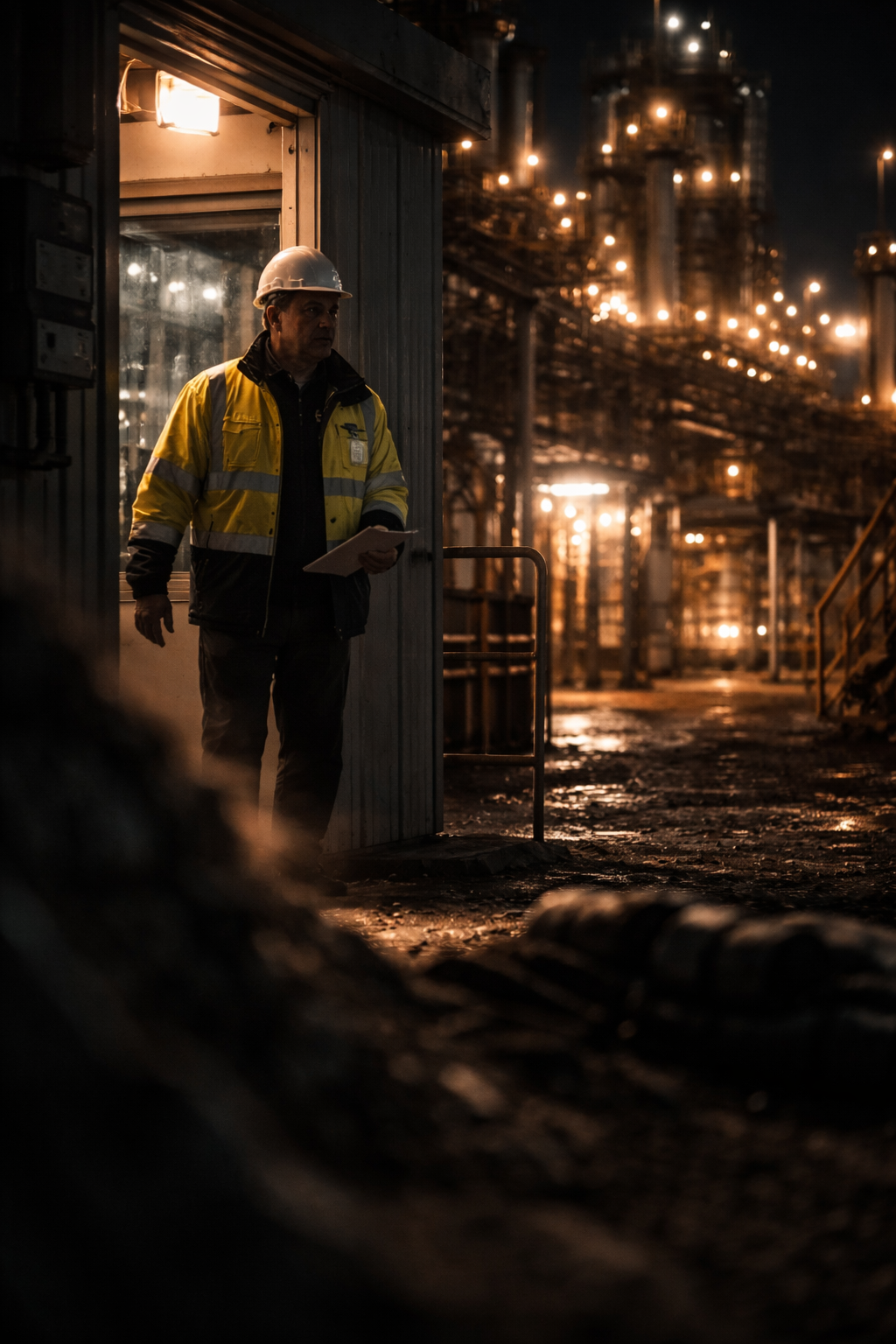
Somewhere below, a night-shift supervisor stepped out of a control booth and into the harsh yellow light. The man was routine, unaware, and completely irrelevant to The Wolf personally—but he was an essential, visible cog in the oil export system.
The Wolf slowed his breathing, bringing his heart rate down to a slow, methodical crawl. His gloved finger rested lightly on the trigger. Not yet. Timing mattered far more than accuracy right now. Because this wasn’t just a kill. It was a global signal.
Looking through the thermal scope, watching the crosshairs settle over the target, The Wolf whispered into his encrypted comms in a low, gravelly tone.
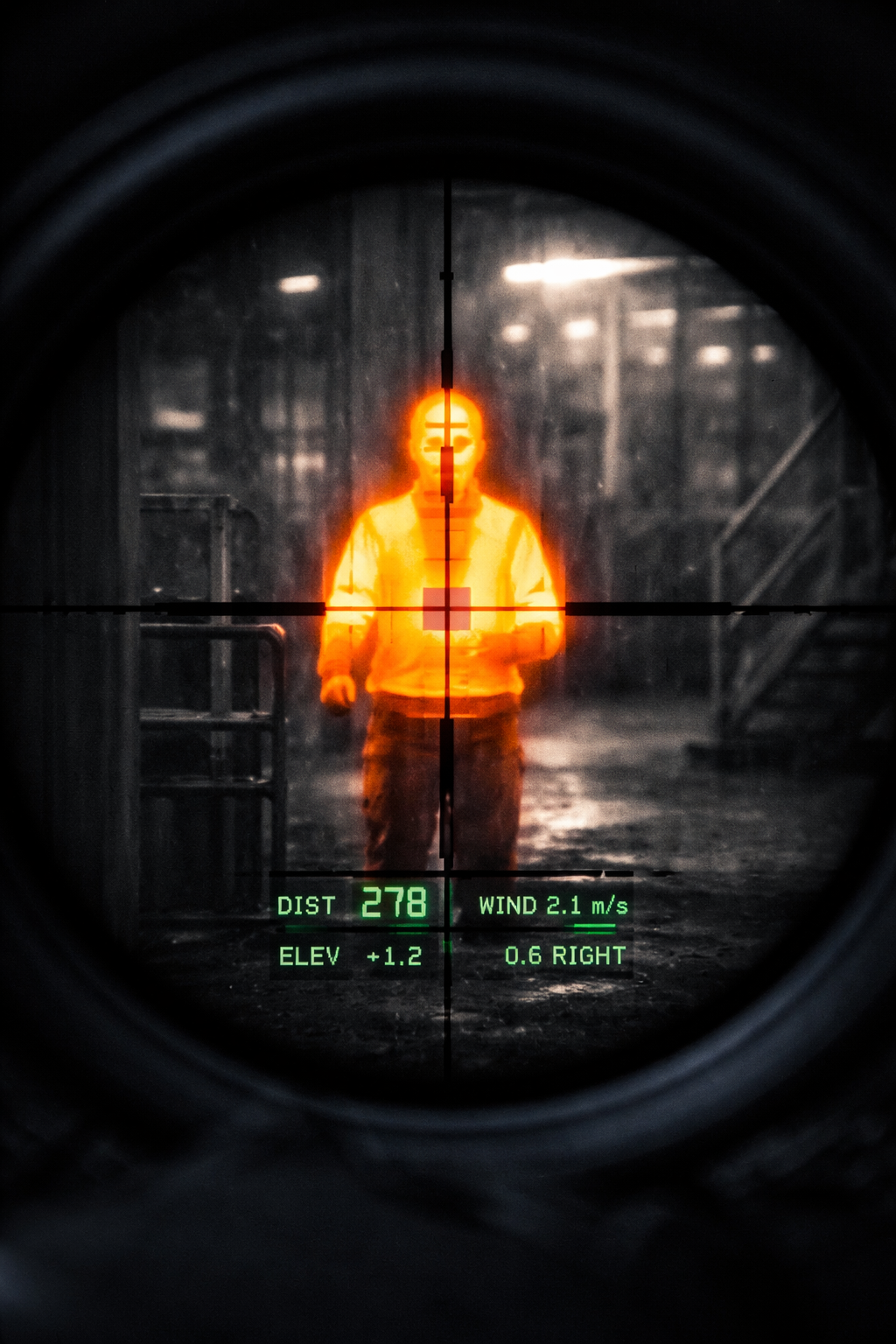
"Send it."
The rifle barely recoiled. The heavy suppressor swallowed the muzzle flash, releasing only a dull, metallic thwip that was instantly drowned out by the roar of the industrial generators.
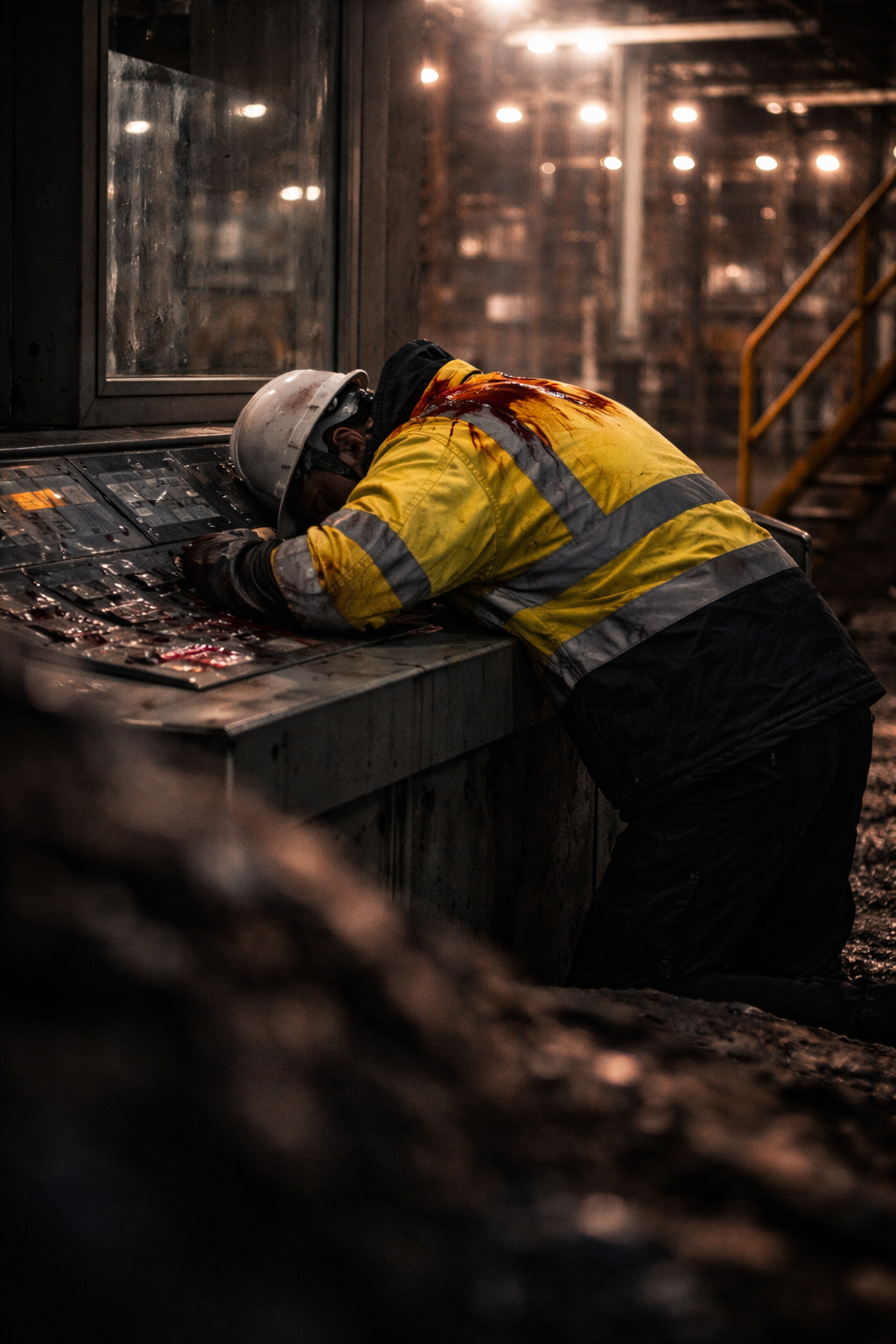
Three hundred yards away, the supervisor dropped. He didn't stumble; his body simply folded as the high-velocity round severed his brain stem instantly. He collapsed forward, his dead weight slamming heavily across the primary pressure control console.
Blood pooled across the dials and illuminated buttons. The Wolf didn't cycle the bolt. He didn't look for a secondary target. He calmly engaged the safety, folded the bipod, and slid the weapon back into his pack. The math was complete.
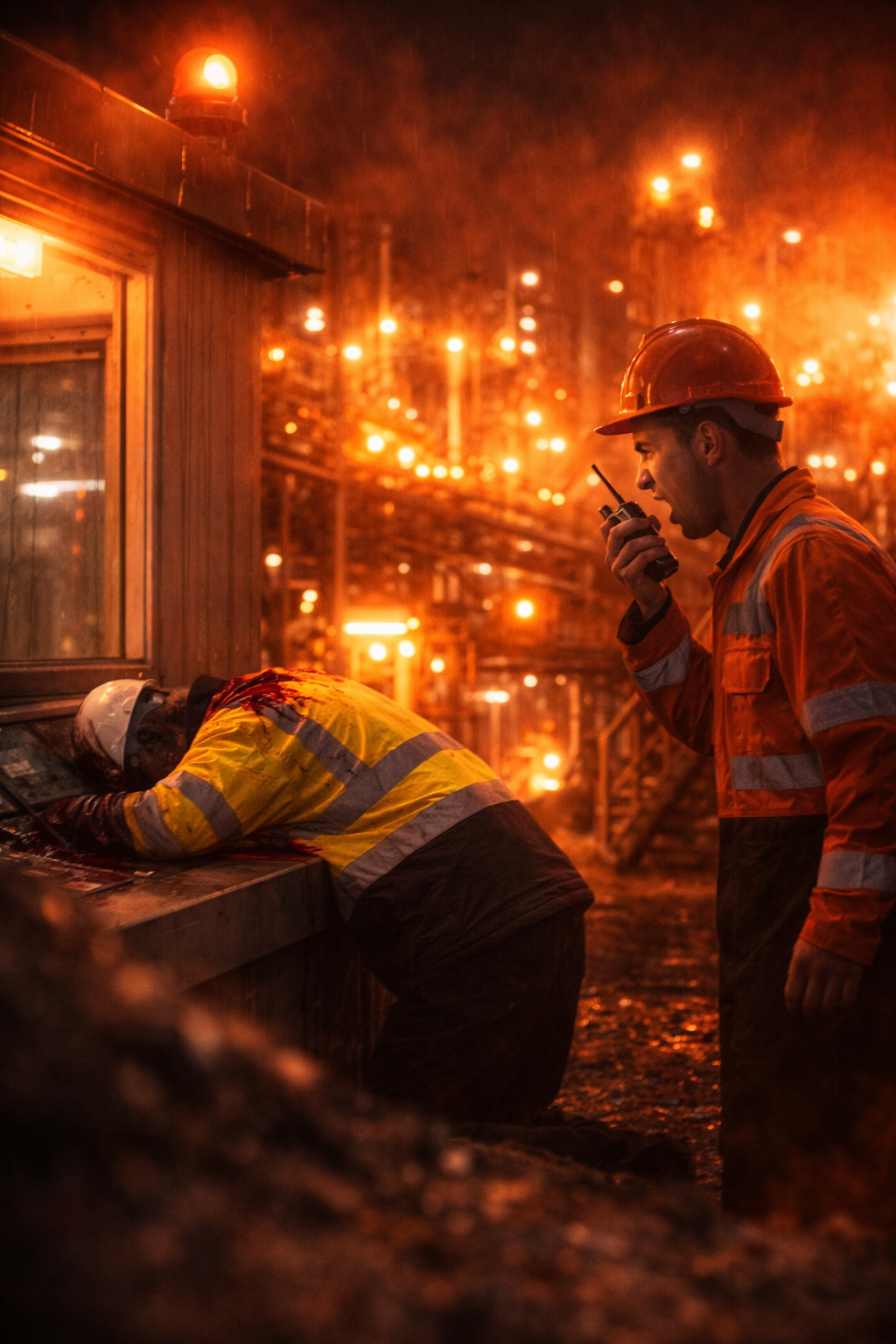
It took exactly forty-two seconds for the anomaly to register.
A junior technician stepped out of the adjacent booth, saw the body draped over the controls, and screamed into his radio. The klaxons began to wail—a high, piercing shriek that cut through the heavy, humid air of the Gulf. Flashing amber lights instantly bathed the entire terminal in a panicked, strobing glow.
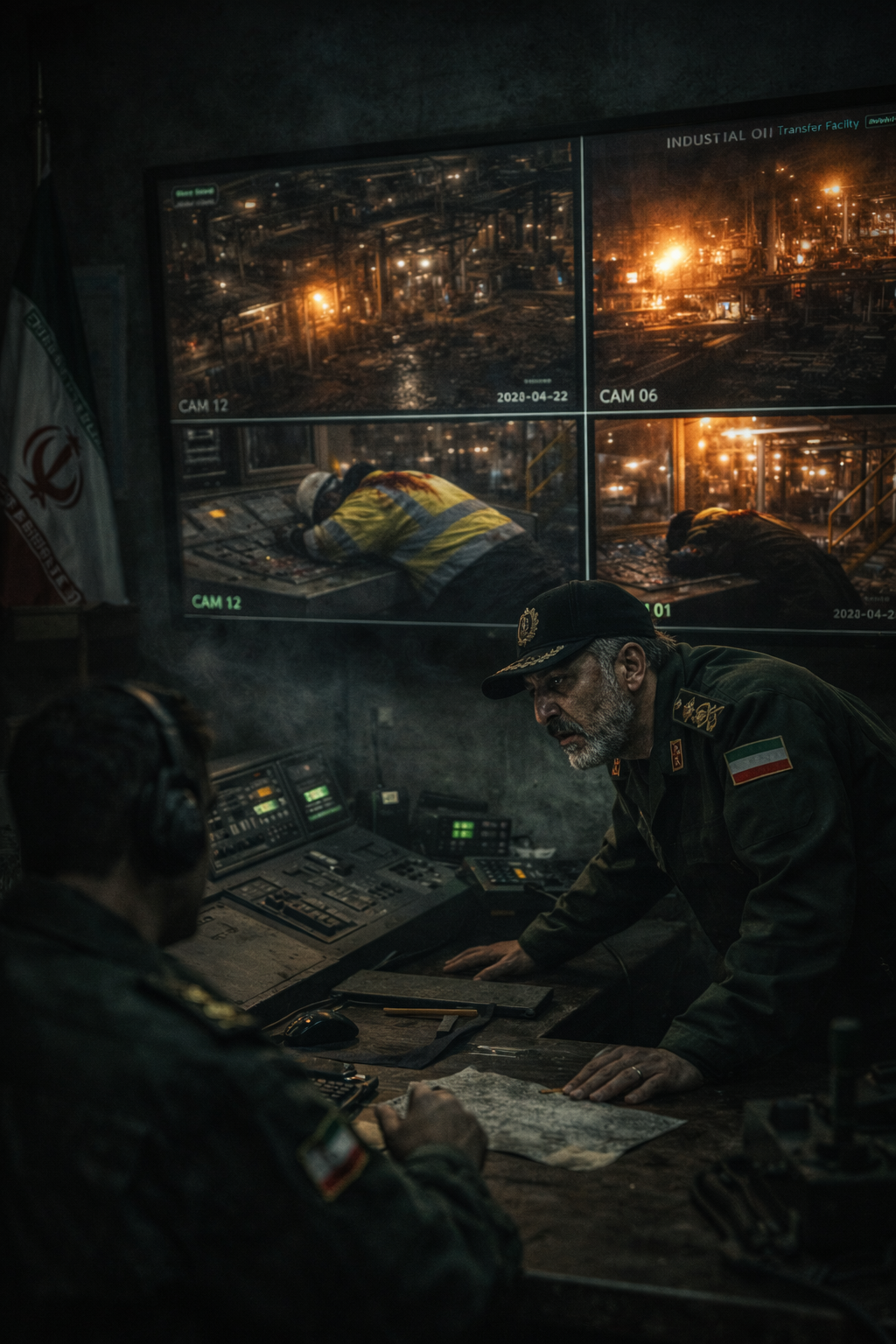
Deep inside the central command bunker, Iranian military liaisons stared at the security feeds in absolute terror. An assassination directly at the primary transfer node. No radar warnings. No maritime interceptions. No explosive breach on the outer perimeter fences.
They didn't see an isolated sniper shot. They saw the terrifying implication of a completely compromised facility. If a hostile ghost was already inside the wire, C4 charges could already be strapped to the main storage tanks. If they kept the highly pressurized crude flowing, a single spark could detonate the entire island.
"Shut it down!" the garrison commander roared over the radio, his voice cracking with panic. "Shut all main valves! Lock down the terminal! Nothing flows until we clear the grid!"
From his rocky vantage point in the dark, The Wolf watched the massive industrial complex begin to die. The deep, heavy thrum of the pipelines began to quiet as the massive steel valves were forcefully cranked shut by the terrified crew. The supertankers idling in the bay blew their deep horns in confusion as the oil flow abruptly ceased.
Kharg Island was choking itself.
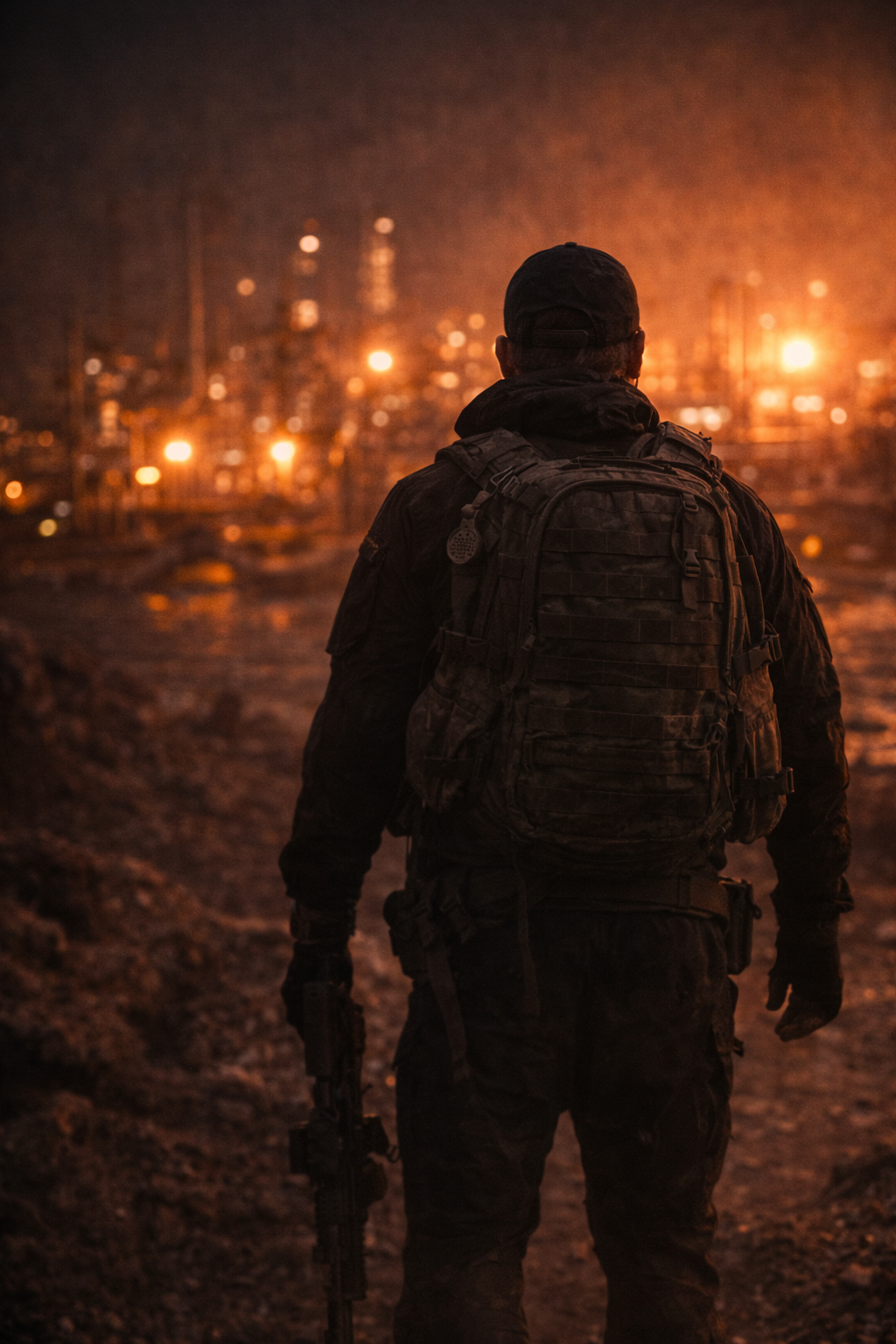
The Wolf stood up. He adjusted the heavy straps of his tactical pack and turned his back on the chaos. He had a three-mile hike to a submerged extraction pod waiting in a dead coral reef, and he needed to be fifty feet underwater before the sun broke the horizon.
By the time the markets opened in London and New York, the sudden, unexplained shutdown of the world's primary oil artery would cause the price of crude to violently spike by twenty percent. The Shark would make billions in the resulting chaos. The Iranian military would spend weeks tearing their own island apart, hunting a shadow that was already gone.
The Wolf stepped backward into the jagged rocks, leaving behind nothing but the dark.
The Wolf moved like vapor through the jagged, volcanic rock formations, putting distance between himself and the dying oil terminal. His heart rate remained a flat, calculated sixty beats per minute. He was exactly 1.4 miles from the submerged coral reef where his extraction pod waited.
He didn't hear the footsteps. He didn't see a shadow. The operative who found him was elite—a Quds Force tracker who had anticipated the escape vector rather than chasing the ghost.
The first warning The Wolf received was the cold, unmistakable ring of a steel gun barrel pressing firmly against the base of his skull, right at the medulla oblongata. A heavy thumb pulled the hammer back with a metallic click.
"Do not breathe," a voice whispered in flawless, unaccented English.
The Wolf froze. Behind him, he heard the faint crackle of a localized tactical radio. The tracker spoke rapidly in Persian: "Target secured. Grid sector four. Send the IRGC rapid response units. I have the saboteur."
The Wolf had a fraction of a second before the IRGC confirmed the transmission. He didn't panic; his mind simply entered the OODA loop—Observe, Orient, Decide, Act.
The barrel was pressed dead center. If he ducked, the tracker would flinch and pull the trigger. He had to clear the muzzle and disable the central nervous system simultaneously.
The Wolf violently collapsed his center of gravity, dropping his weight straight down while simultaneously sweeping his left arm up and back, slapping the outside of the tracker’s wrist. The gun fired, the suppressed round snapping harmlessly through the empty air where The Wolf’s head had been a millisecond prior.
Using the rotational momentum, The Wolf pivoted 180 degrees, stepping inside the tracker's guard. He drove his right elbow upward with crushing, mechanical force, shattering the man's larynx. As the tracker gagged, dropping the pistol to clutch his throat, The Wolf drew his fixed-blade Benchmade knife from his hip and drove it precisely into the subclavian artery beneath the collarbone.
The tracker collapsed silently into the dust. The Wolf ripped the radio from the dead man's vest. The frequency was already screaming with IRGC chatter. The extraction reef was completely burned; fast boats were already swarming the shoreline.
The Wolf tapped his encrypted altimeter watch, sending a single, localized burst-transmission to The Apex submarine: Primary extraction compromised. Need an out.
Three seconds later, Sting Ray’s voice crackled in his earpiece, cold and entirely devoid of panic. "Wolf, the ocean is walled off. But you are in luck. A five-week-old geopolitical conflict just went hot. You have a US military extraction window opening forty kilometers north."
As The Wolf began a grueling, brutal forced march north through the mountains, Sting Ray fed him the intel.
Hours earlier, an American F-15E Strike Eagle had been hit by new, highly advanced Iranian air defenses over Isfahan province. Both airmen had ejected. The pilot had been quickly recovered by a JSOC snatch-and-grab, but the weapons specialist—a highly classified operative holding the rank of Colonel—was still trapped behind enemy lines. The Colonel had sprained his ankle and hidden himself in a deep crevice on a 7,000-foot ridge.
"The CIA is running a massive deception campaign to keep the IRGC off his scent," Sting Ray briefed over the comms. "They are planting fake digital footprints suggesting the Colonel is moving south. Meanwhile, Central Command is aggressively jamming electronics and bombing key access roads around the real location to prevent Iranian armor from getting close."
The Wolf looked up at the night sky. In the distance, the horizon flashed with the silent, thunderous concussions of American airstrikes tearing the asphalt roads to pieces.
"You need to reach that ridge before dawn," Sting Ray commanded. "Piggyback on their extraction. Be a ghost."
Under the cover of darkness, The Wolf slipped past the burning Iranian checkpoints and scaled the jagged, 7,000-foot ridge. As he crested the peak, he saw them through his thermal optics.
It was a near-perfect rescue operation. Roughly one hundred elite U.S. special operations commandos had slipped deep into the mountain range undetected. They had successfully pulled the stranded, injured Colonel from his crevice and moved him to the secret rendezvous plateau.
Then, everything stopped.
Two massive MC-130 transport aircraft, flying in low to ferry the massive commando force out of the hostile terrain, suddenly grounded on the dirt airstrip. A catastrophic mechanical failure cascaded through their hydraulic systems. They could not take off.
Suddenly, over a hundred elite American commandos, a high-value Colonel, and one invisible Wolf were stuck behind enemy lines, waiting to be slaughtered.
"If there was ever a 'holy shit' moment, this is it," a JSOC commander muttered over the open local frequency, his voice tight with adrenaline.

The dawn was threatening to break. Iranian radar had finally triangulated the localized comms. The IRGC was mobilizing.
As the American perimeter teams dug into the dirt, bracing for a massive assault, The Wolf didn't reveal himself. He simply climbed to a higher elevation, deployed the bipod of his suppressed Barrett MRAD, and quietly provided lethal overwatch, systematically dropping Iranian scout snipers before they could even spot the stranded Americans below.
Back in Washington, Central Command made a terrifying, high-risk decision. Instead of sending heavy transports, they ordered additional, much smaller turboprop aircraft to fly into Iranian airspace. They were light, vulnerable, and slow, but they were the only things capable of landing on the short, debris-filled plateau to extract the group in waves.
For two agonizing, tense hours, the commandos held the line. Two Black Hawk helicopters sent for close-air support took heavy Iranian anti-aircraft fire, barely escaping the airspace. A mile to the west, an A-10 Warthog pilot was forced to eject after taking a catastrophic hit over Kuwait.
But the gamble worked.
As the final wave of small turboprops touched down, kicking up blinding clouds of dust, the U.S. troops packed the injured Colonel aboard. Rather than risk leaving highly classified military technology in Iranian hands, the commandos set thermite charges on the disabled MC-130s and four damaged helicopters.
As the brilliant white flashes of thermite melted the massive aircraft into slag, The Wolf slipped out of the rocks. Dressed in matte-black, his face obscured by his HALO mask, he looked identical to a dozen other tier-one operators in the chaotic darkness. He stepped silently onto the ramp of the final departing turboprop.
No one asked for his ID. No one checked his tags.
The aircraft lifted off, banking hard into the sunrise, leaving a graveyard of burning metal and a crippled global oil market in its wake. The phantom had escaped.
The Wolf Toolkit