The Hardware
Suppressed / Close-Quarters / Lethal
The Shark of Wall Street · Dossier
Hector — Framed Lieutenant & Rogue Executioner
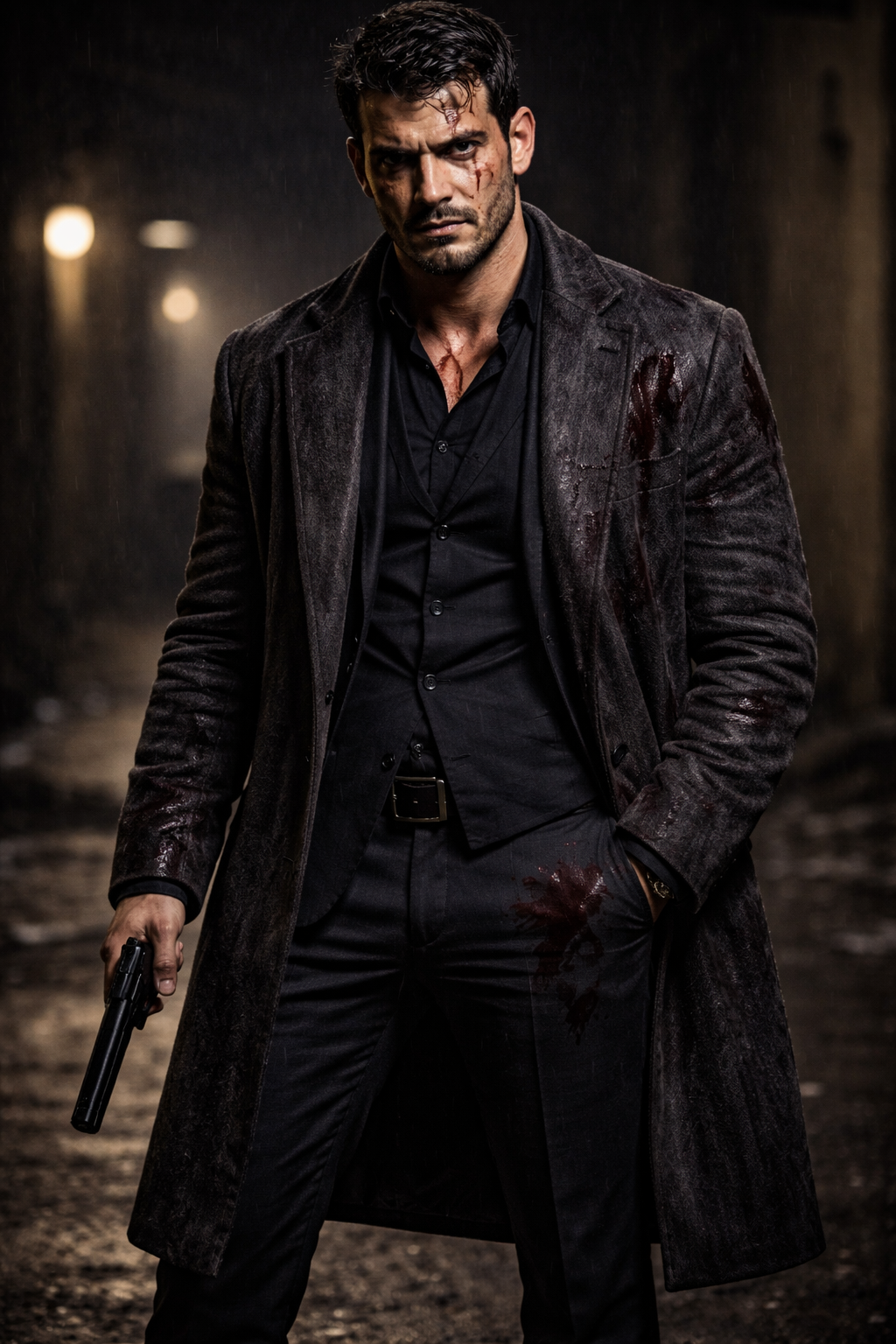
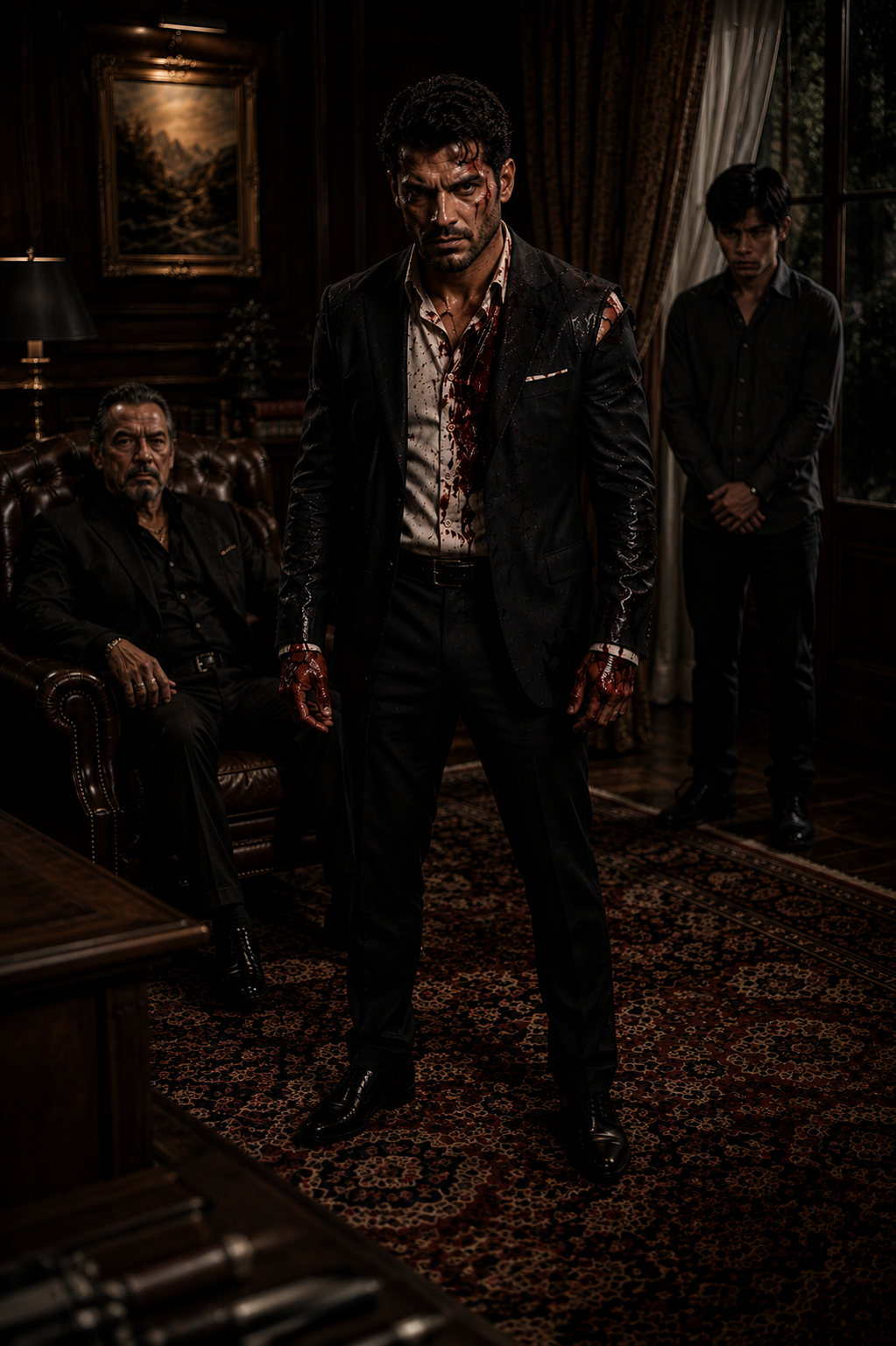
The blood dripping from Hector’s knuckles was ruining a forty-thousand-dollar Persian rug, but he refused to sit down.
He stood perfectly straight in the center of the mahogany study. His bespoke suit was torn at the shoulder, the white shirt beneath soaked in a dark, spreading crimson. In the leather armchair across from him sat Don Alejandro, the patriarch of the Obsidian Cartel. Standing nervously by the window was Mateo, the Don’s biological son—the boy Hector had just pulled from a rival syndicate’s torture house.
"Sit down, Hector," the old man said, pouring a glass of mezcal. "You are bleeding."
"It can be washed, Patron," Hector replied. His voice was a low, even rasp. No panic. No adrenaline. Just the quiet calm of a man who had made peace with the violence he had just committed.
"You took a bullet to the shoulder," Mateo interjected, his voice shaking as he stared at the carnage Hector had brought back with him. "You walked into a warehouse of fifteen men... alone. For me. Why?"
Hector finally shifted his dark eyes to the young heir. The intense, unwavering eye contact made Mateo step back.
"Because your father took me from the streets when I was nothing," Hector said quietly. "Because we grew up in the same house. You are my brother. And I do not let anyone touch my family."
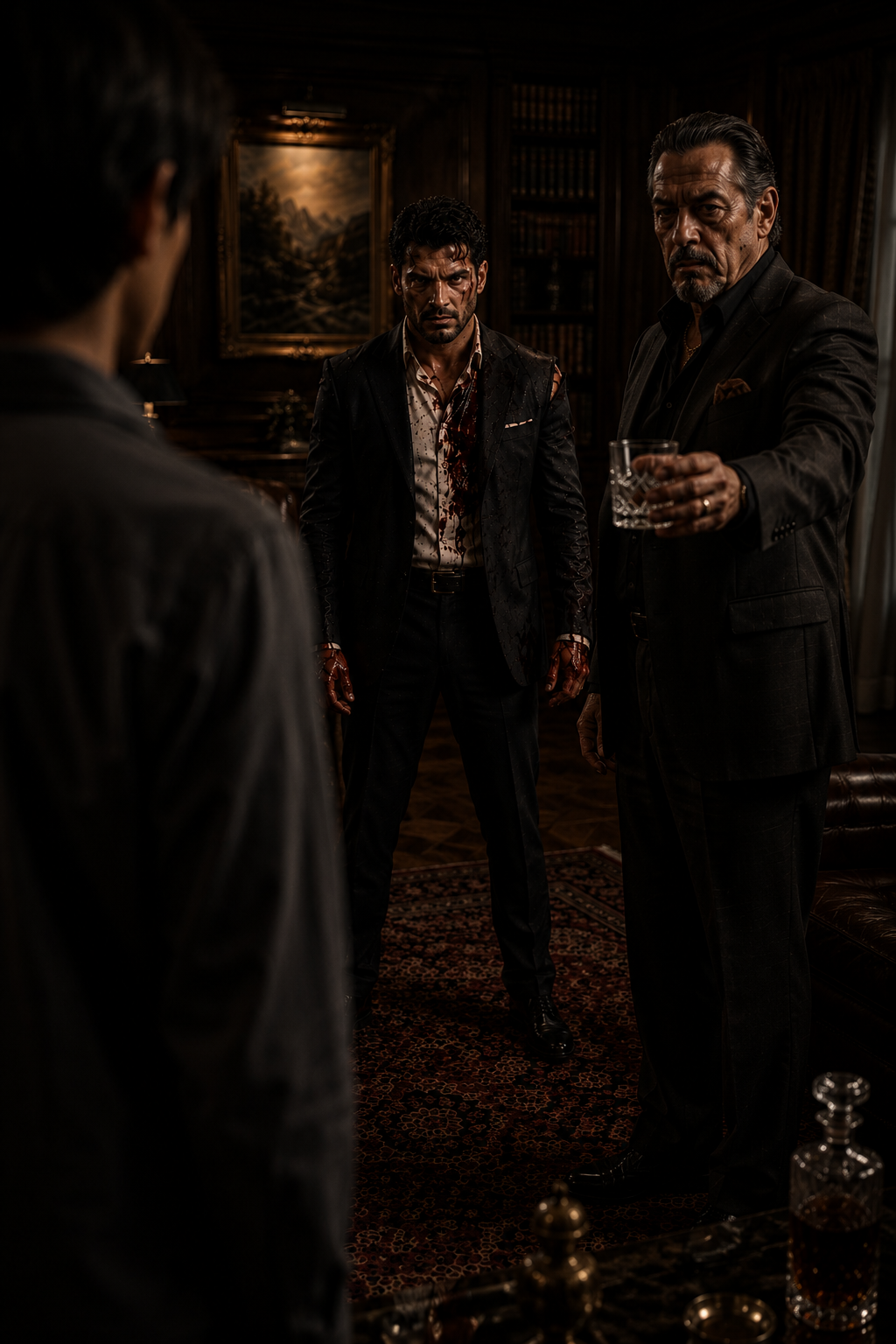
Don Alejandro stood slowly, walking over to hand Hector the glass of mezcal. He looked closely at the young enforcer’s cold, handsome face.
"They offered you money to leave him there," the old man said softly, testing him. "My informants told me. They offered you a fortune to walk away and let them keep my son."
Hector took the glass with his uninjured arm. "Money is just paper, Patron. It burns. It buys things that break." He took a slow sip, not flinching as the alcohol seared his throat. "Loyalty does not burn."
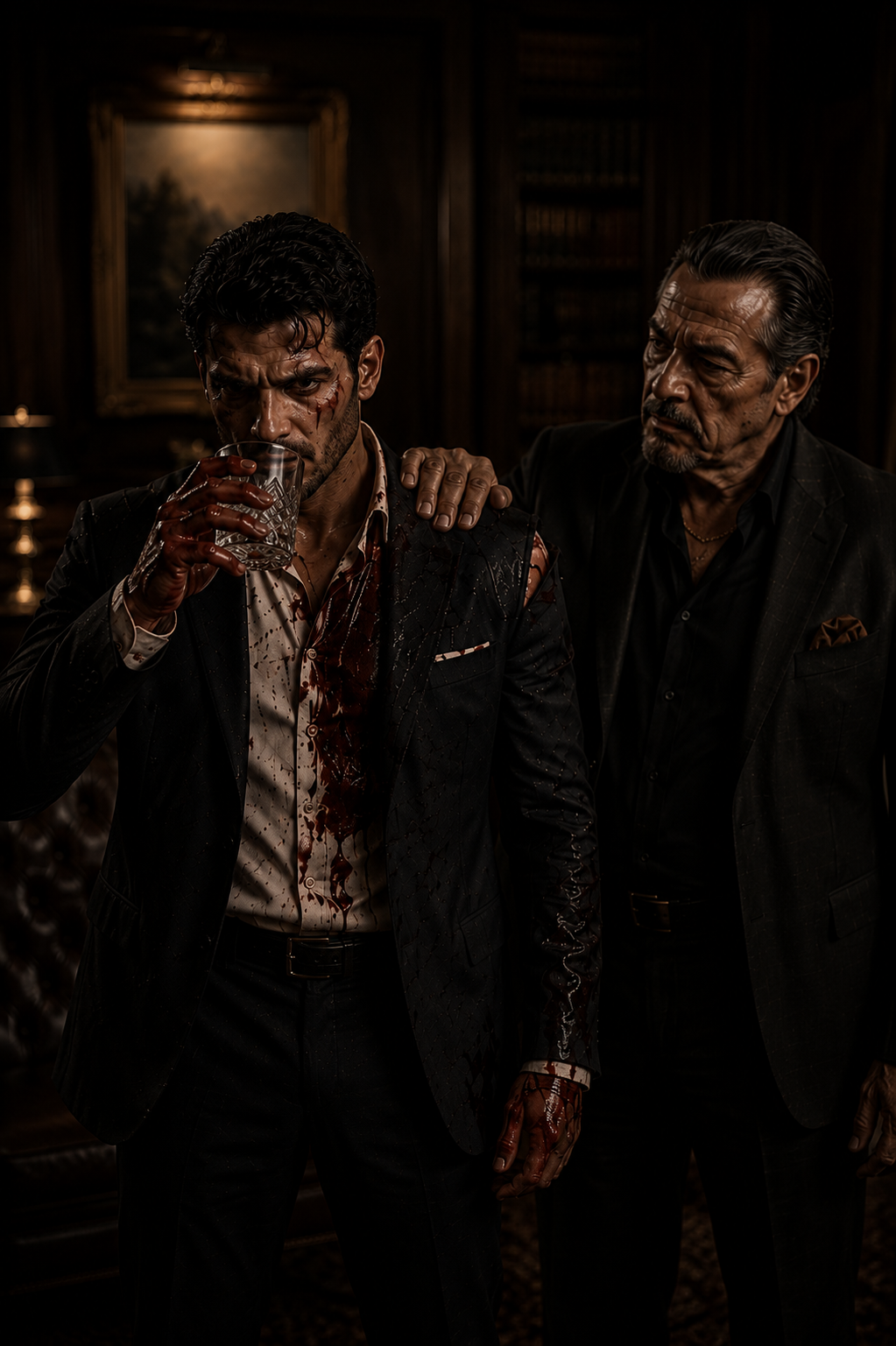
The old man placed a heavy hand on Hector’s uninjured shoulder. "You are my true son, Hector. You are the shield of this family. Whatever you need, whatever you ask... it is yours."
"I ask for nothing," Hector whispered, setting the empty glass down. He reached into his ruined jacket, pulling out a small roll of 3M medical tape. "Just some quiet, Patron. I need to stitch this shoulder before it stiffens."
That was the bond. Unbreakable. Forged in blood and absolute gratitude.
Which was exactly why, years later, the betrayal destroyed him. When the billionaire Tariq Al-Fayed needed a violent scapegoat to cover up a massive, illegal financial hemorrhage on Wall Street, Tariq didn't just frame Hector. He whispered poison into Mateo's ear. Tariq manipulated the new heir into believing Hector was a traitor.
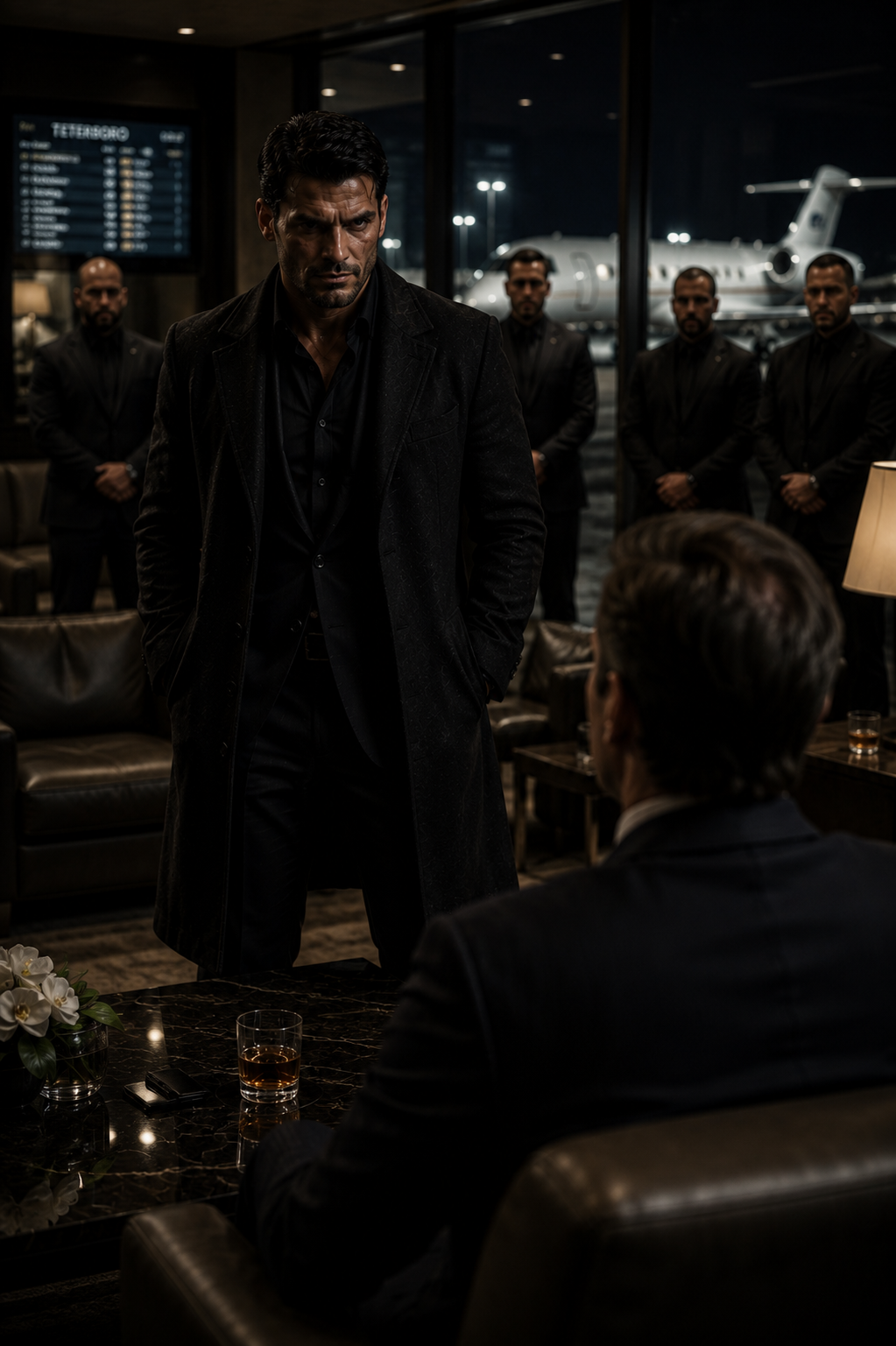
When Hector arrived in the United States to hunt Tariq, he didn't come in guns blazing. He came in like a ghost.
One of Tariq’s Wall Street proxies was attempting to flee the country out of Teterboro Airport. He was surrounded by four highly trained private security contractors in the VIP lounge, waiting for a Gulfstream to fuel up.
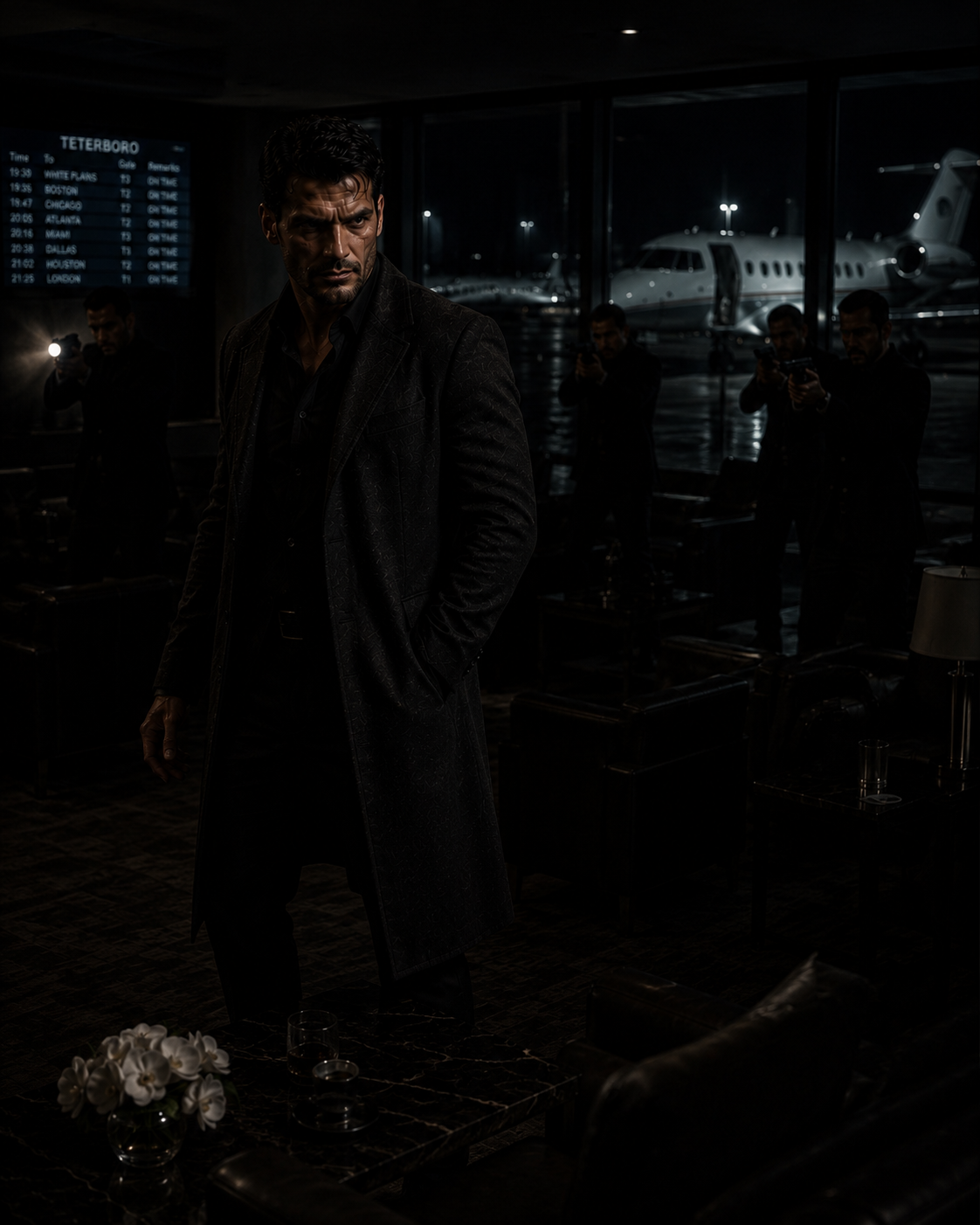
Hector infiltrated the private terminal seamlessly, dressed in a sleek, charcoal overcoat. He located the main breaker for the VIP wing and cut the power. Plunging the room into total darkness, the security contractors shouted in confusion, drawing their weapons blindly.
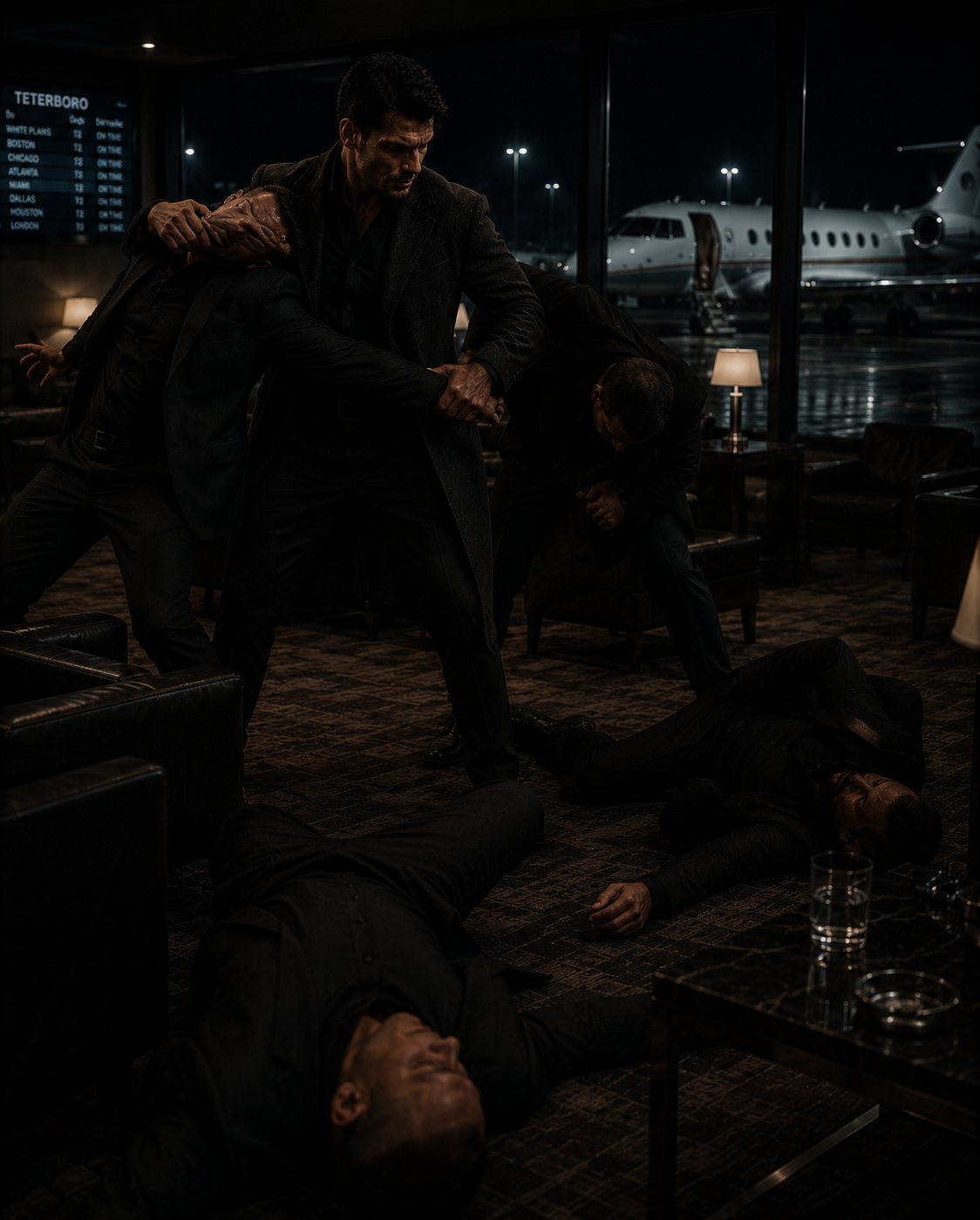
In the pitch black, Hector methodically and silently dismantled the four guards. He moved with terrifying fluidity—fast, brutal, and utterly silent. He used close-quarters joint locks and precise strikes, neutralizing the entire detail in under a minute without firing a single shot.
When the emergency backup lights finally flickered on, casting a dim red glow over the unconscious guards, Hector was sitting casually in a leather armchair across from the proxy. He was straightening his tie, breathing heavily, with a single drop of blood on his cheek.
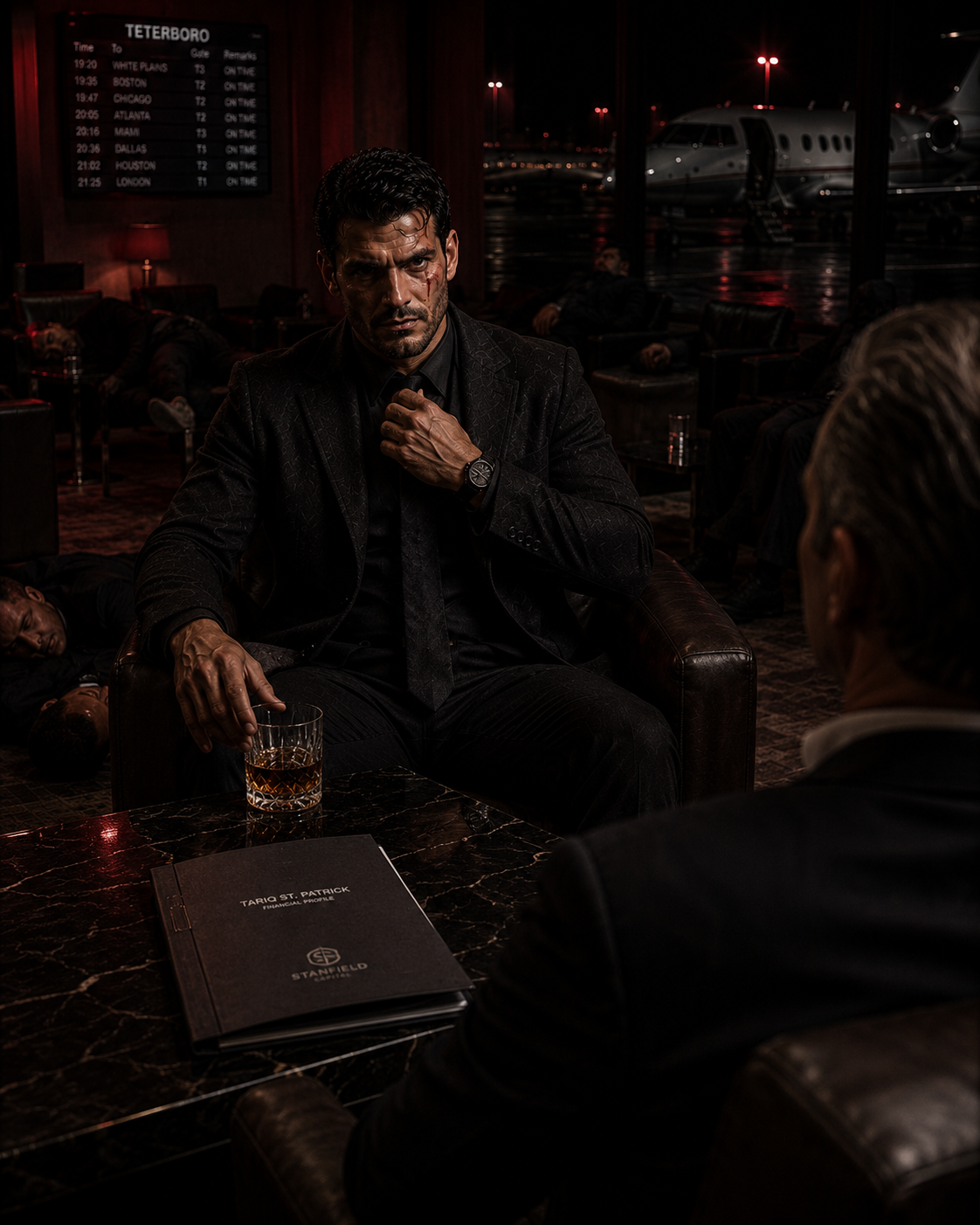
He poured himself a glass of the proxy's expensive scotch, slid a dossier across the glass table, and calmly whispered, "You are going to tell me exactly where Tariq Al-Fayed is keeping his money."
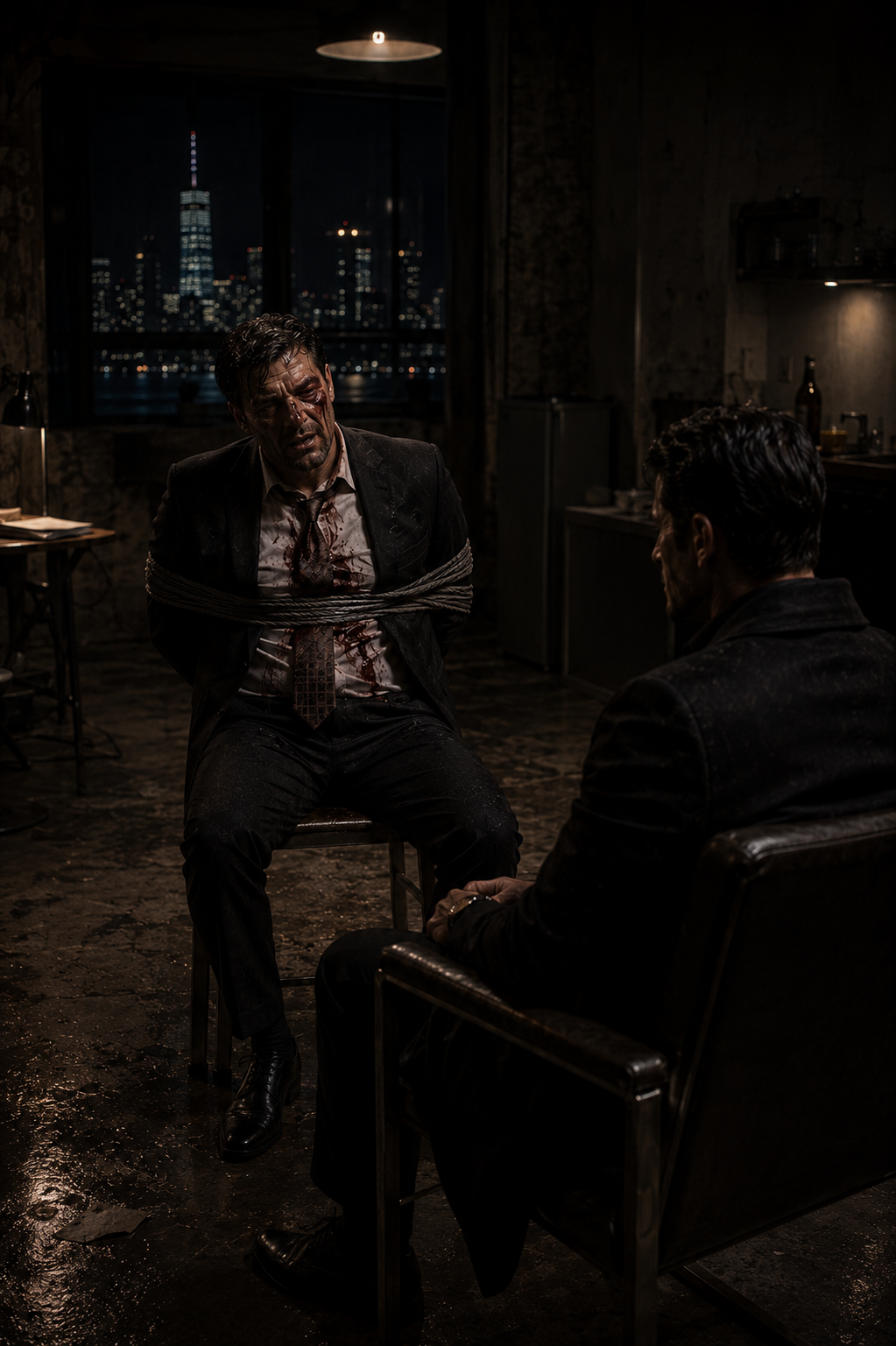
An hour later, the Wall Street bagman was tied to a steel chair in the center of a stripped-down apartment, hyperventilating. His left eye was swollen shut, and his designer tie was soaked in his own blood. He had expected to be tortured. He had expected shouting, threats, or a gun to his head.
Instead, the terrifying cartel lieutenant was sitting across the room under a single hanging bulb, quietly threading a small sewing needle.
Hector had his bespoke jacket draped over his lap. He was methodically stitching the tear in the shoulder where a guard's knife had grazed him earlier. He moved with a practiced, rhythmic grace, his dark eyes focused entirely on the fabric.
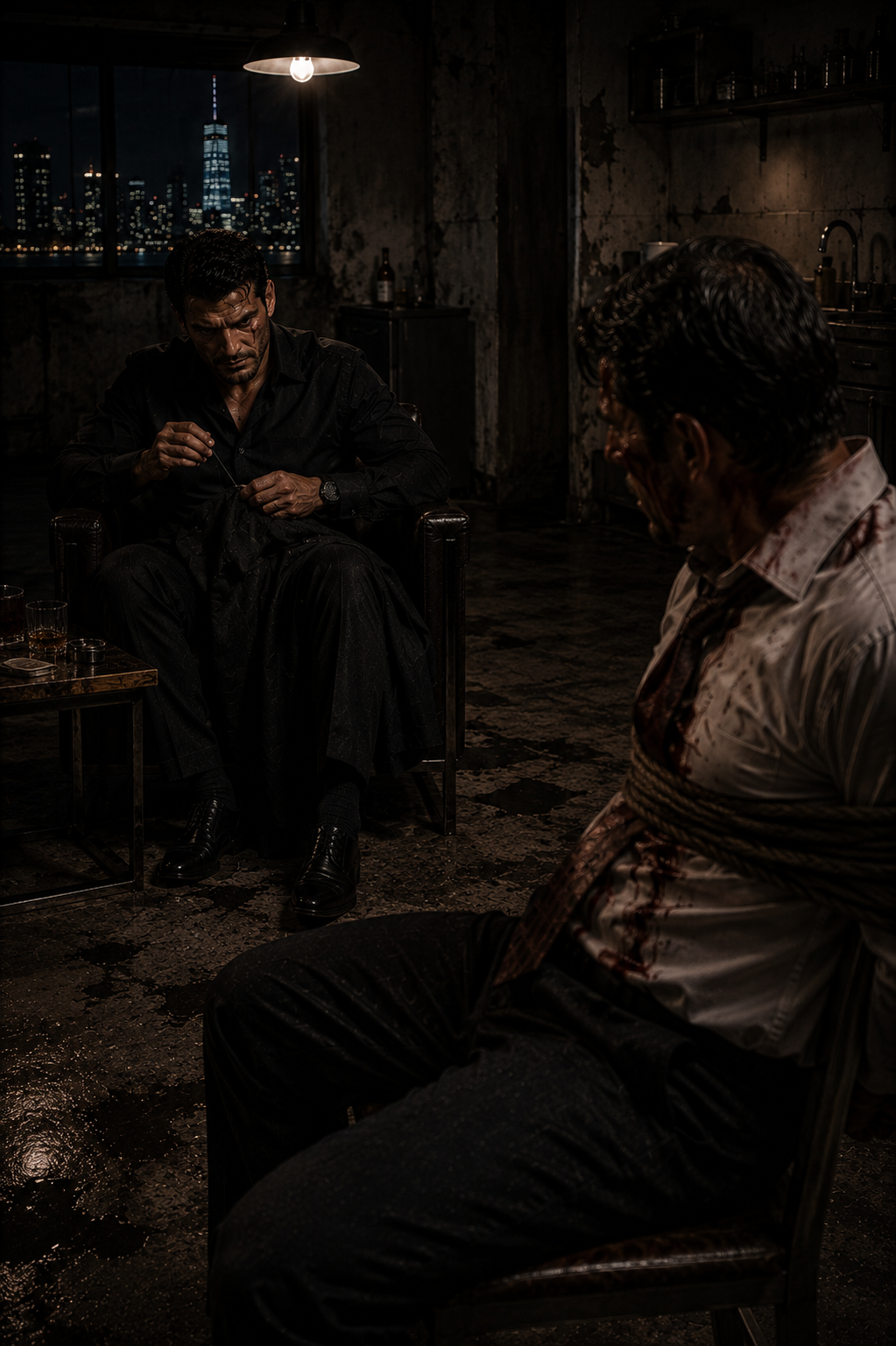
"Please," the bagman whimpered, the sound echoing off the bare concrete walls. "Tariq doesn't tell us anything. We just move the offshore accounts. I don't know where he is."
Hector didn't look up. He pulled the heavy thread taut, tying off a perfect, invisible knot. "My father was a master tailor in Culiacán," he said. His voice was a low, mesmerizing rasp that forced the bleeding man to strain to hear it.
The bagman blinked, confused and terrified by the shift in conversation. "What?"
"He made suits for politicians. Bankers. Cartel bosses," Hector continued, biting the end of the thread to snap it. He smoothed his hand over the repaired shoulder. "He taught me that every man, no matter how powerful he believes he is, is just fabric. And every piece of fabric has a seam. A point of stress."
Hector stood up slowly. He slid the perfectly repaired jacket over his broad shoulders, adjusting the lapels. The fit was flawless. He walked over to the tied-up man, his footsteps making absolutely no sound on the concrete.
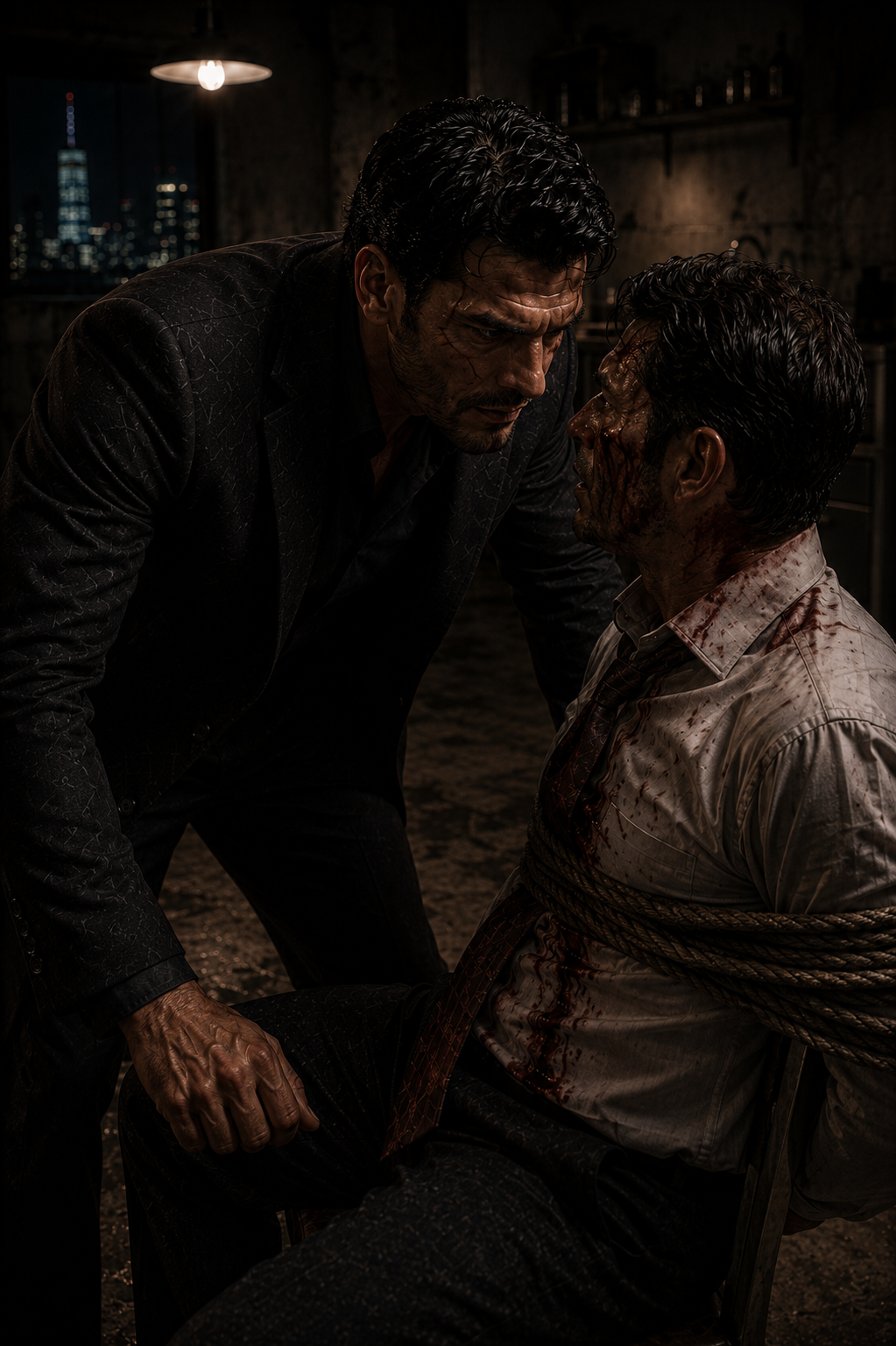
He leaned down, resting his hands on the arms of the bagman's chair. He was so close the banker could smell the faint scent of gun oil and expensive cologne.
"If you find the seam, and you pull the right thread..." Hector whispered, his dark eyes locking onto the terrified man, "...the whole suit falls apart."
The bagman squeezed his eyes shut, a tear cutting through the blood on his cheek. "I swear to God, I don't know what Tariq's seam is. I swear."
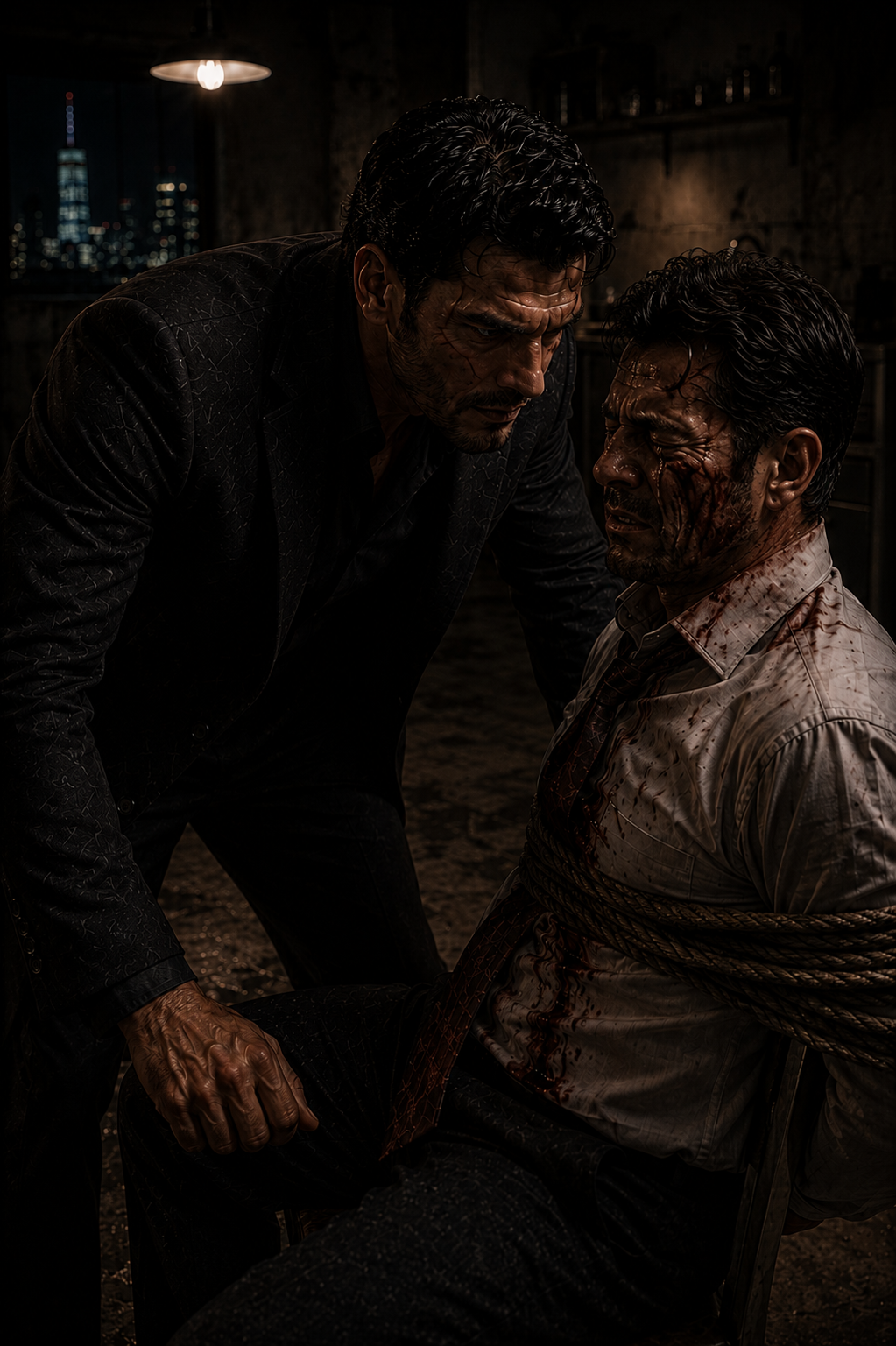
"I know you don't," Hector replied, his voice dropping to a terrifyingly gentle volume. He reached into his pocket and pulled out a burner phone, sliding it into the breast pocket of the bagman's ruined shirt. "But Tariq has a brother. Khalid. And Tariq just used his brother's sovereign wealth fund to finance a massacre in Iran."
Hector stepped back toward the shadows of the doorway, melting into the darkness until only his silhouette remained.
"When Tariq's head of security calls that phone looking for you," Hector commanded softly from the dark. "You are going to tell him that Crown Prince Khalid has discovered the missing funds. You are going to pull the thread. And I am going to watch Tariq Al-Fayed unspool."
The Shark was a genius of digital manipulation. When Sloane needed a distraction to break Tariq Al-Fayed, he framed Hector, the most loyal lieutenant of the Obsidian Cartel. He dropped doctored ledgers onto Nicolás Reyes's desk, convincing the cartel boss that Hector was secretly funding the enemy.
Reyes, blinded by rage and paranoia, didn't ask questions. He sent a Gulfstream full of elite sicarios to Macau to execute his best friend.
It was supposed to be a flawless, clean assassination. The Shark’s algorithm calculated a 99.8% probability that Hector would be dead within three minutes of the breach. But an algorithm cannot calculate pure, animal survival instinct.
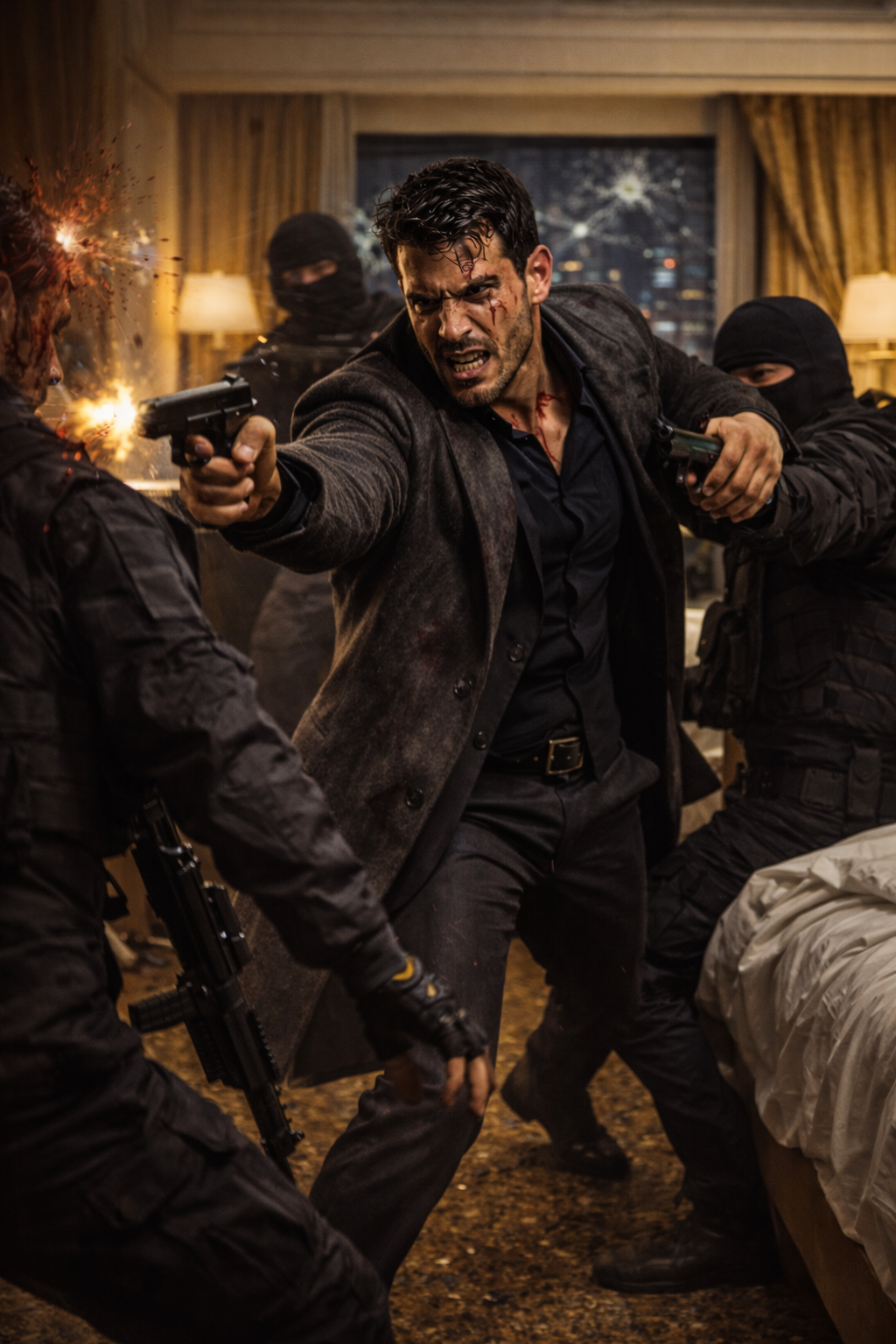
When the hit squad kicked in the door of Hector's Macau hotel room, they expected a soft, terrified banker. Instead, they found a man who had survived the most brutal gang wars in Sinaloa before he ever touched a ledger. Hector didn't freeze. He moved.
The ensuing firefight lasted less than forty seconds. Hector used the darkness, his intimate knowledge of cartel tactical sweeps, and sheer, terrifying violence to dismantle the four men sent to kill him. He took a grazing 9mm round to the ribs, but by the time the smoke cleared, the hit squad was dead on the marble floor.
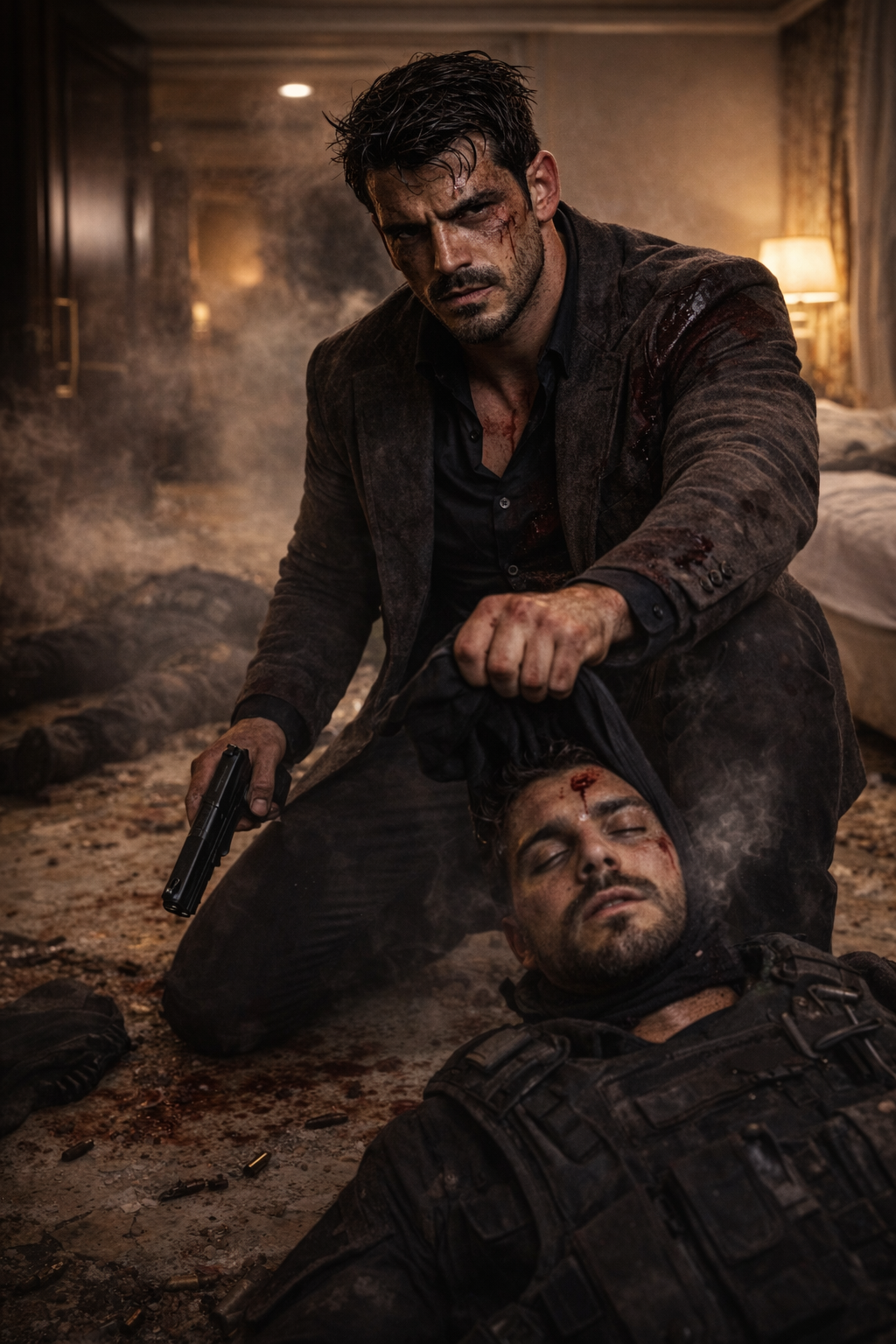
Hector pulled the mask off the squad leader. It was a man he had trained himself in the Sierra Madre mountains.
Hector sat on the edge of the bed, bleeding through his tailored linen suit. His own family had just tried to put him in the ground. Why? He dragged the squad leader's encrypted sat-phone from his tactical vest and hacked the recent data logs. He found the file Reyes had sent them—the doctored ledgers, the fake biometric signatures, the undeniable "proof" of his betrayal.
Hector stared at the screen. He wasn't a cyber-expert, but he wasn't a fool. The code was too clean. The routing numbers were too perfect. This wasn't cartel work. This was the exact same digital fingerprint of the ghost who had stolen their three billion dollars.
The Shark had framed him.
If Hector called Reyes to explain, he would be dead before he finished the sentence. The cartel was gone to him. He was a dead man walking.
But dead men have nothing left to lose.
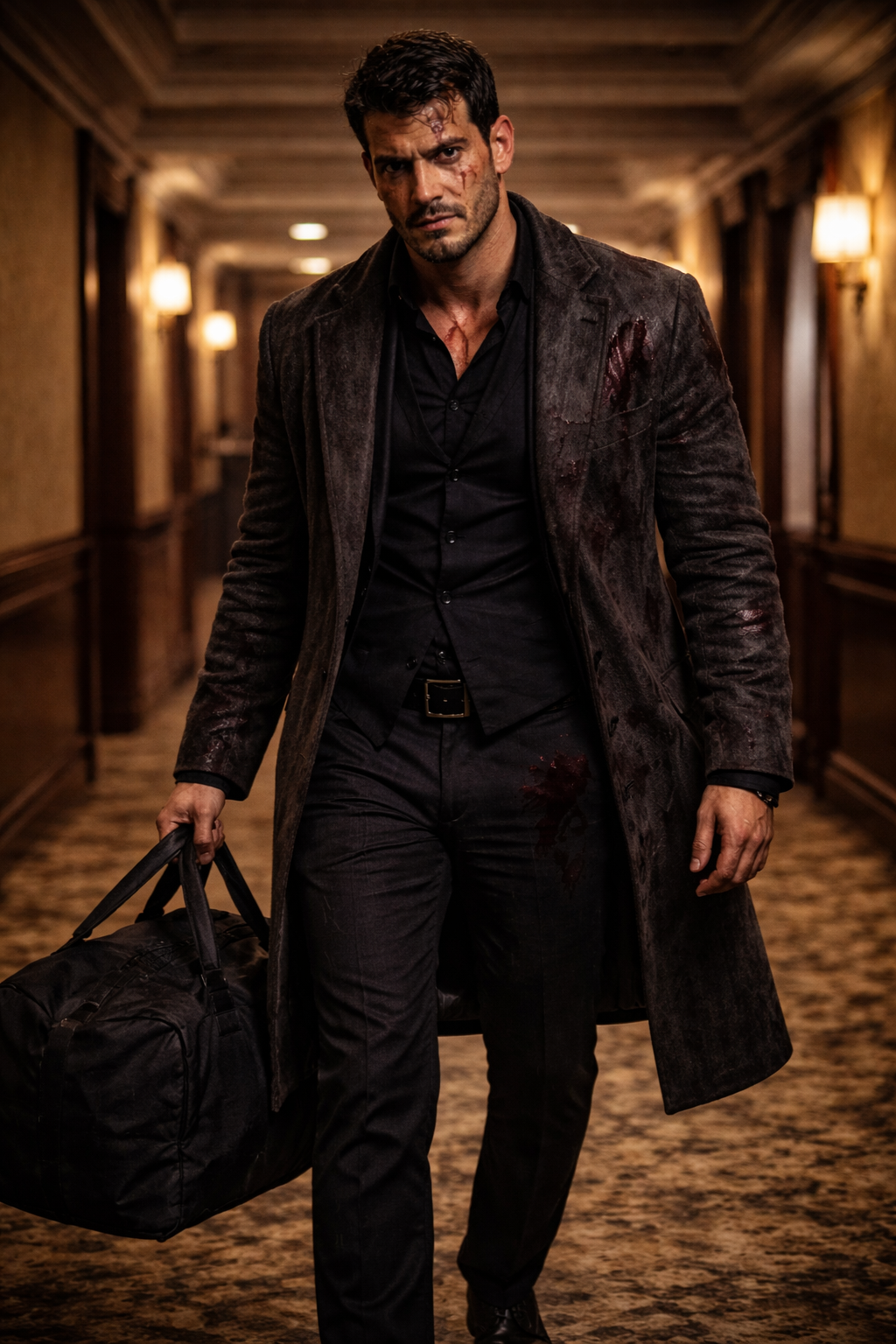
Before leaving the hotel, Hector didn't run into the night. He went down the hall. Tariq Al-Fayed's operation was currently collapsing under the weight of Stix Stox's retail swarm. The Macau Whale's security forces were in total disarray. Hector seamlessly slipped past the panicked guards, blew the biometric lock on Tariq's emergency vault, and packed twenty million dollars of untraceable bearer bonds into a duffel bag.
He patched his ribs with superglue and duct tape, bought a new, heavy wool coat to hide the blood, and paid a triad smuggler for a seat on an unregistered cargo flight out of China.
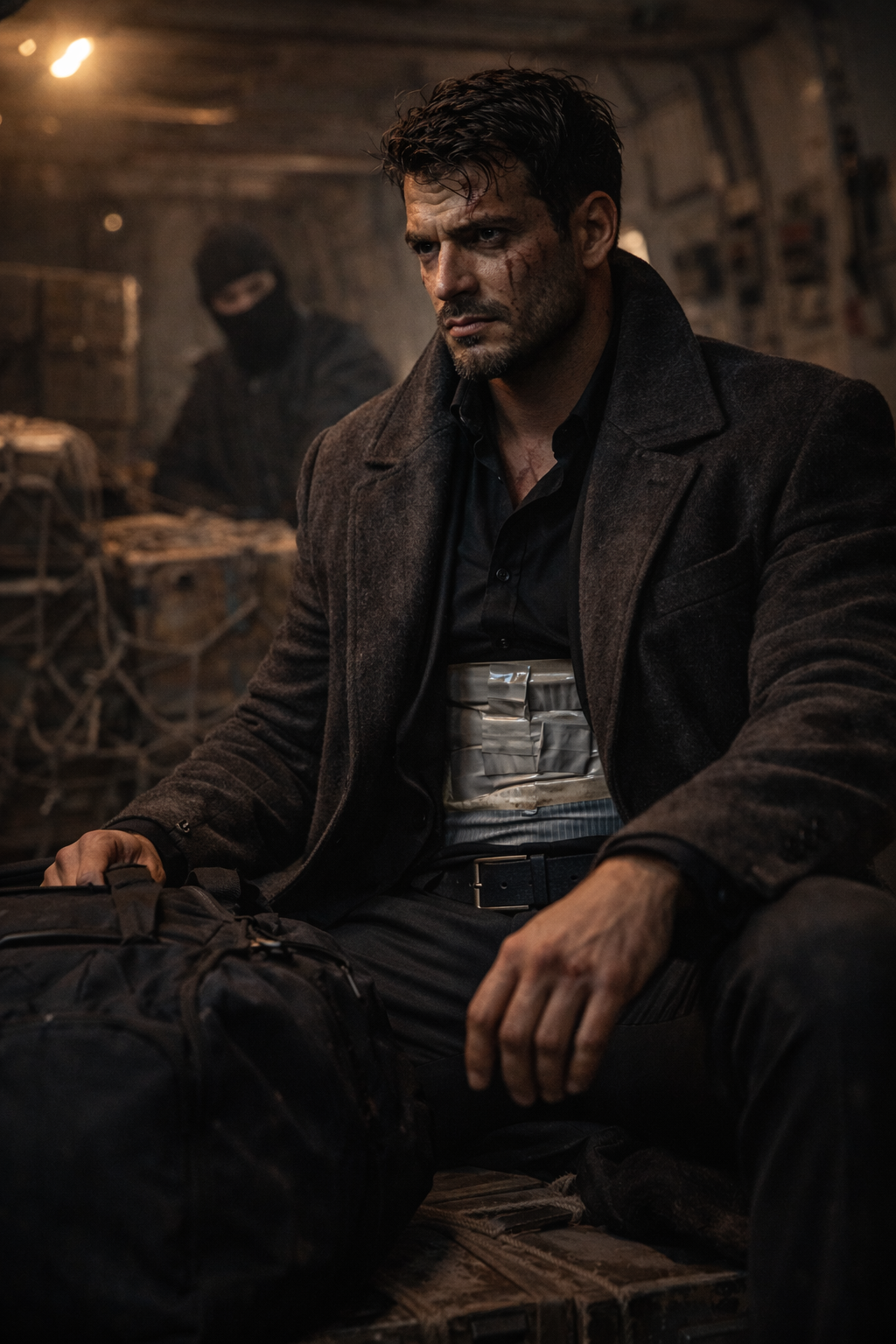
The Shark had manipulated billionaires, extorted royalty, and weaponized the internet. But he had made one fatal miscalculation: he had left a wounded, highly trained cartel executioner alive.
Hector is no longer a lieutenant. He is The Revenant. He has twenty million dollars, a burner phone, and a singular, obsessive purpose. He is currently touching down at Teterboro Airport in New York. He doesn't care about the stock market, gamma squeezes, or global real estate.
He is going to find the AT&T long lines building. He is going to bypass the biometric security. And he is going to show the digital ghost of Wall Street what analog violence truly looks like.
The Revenant Toolkit